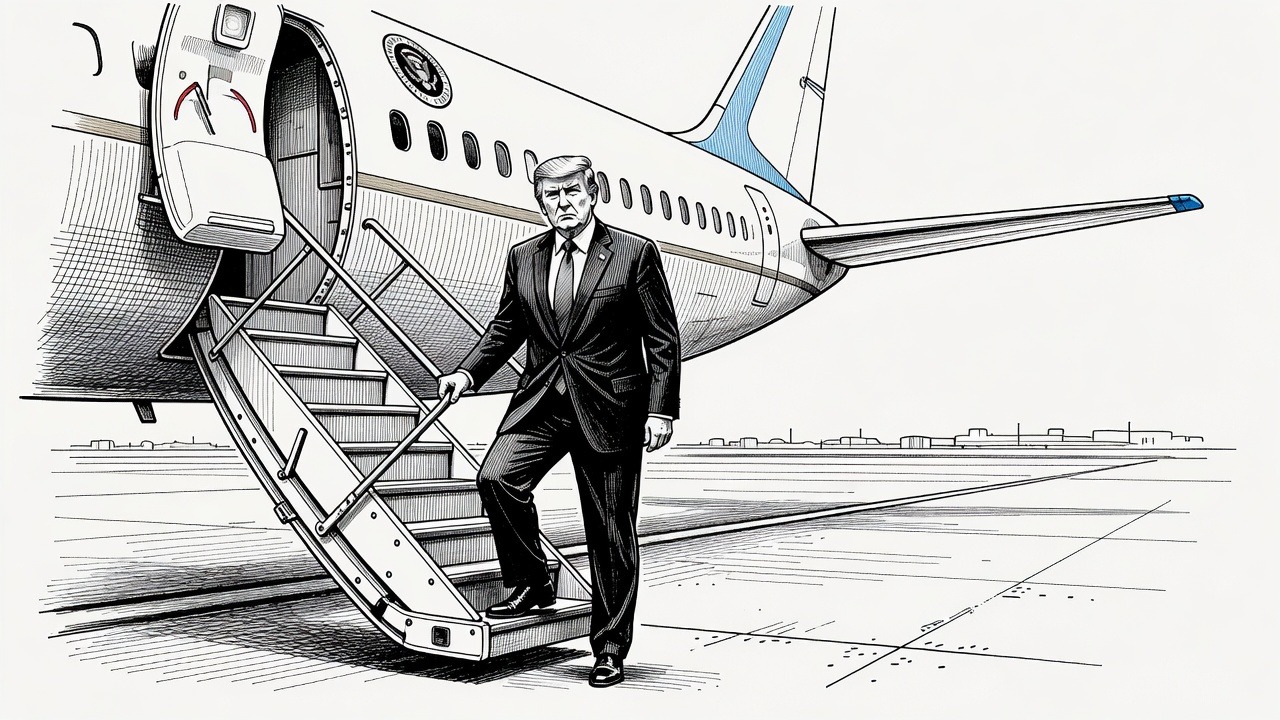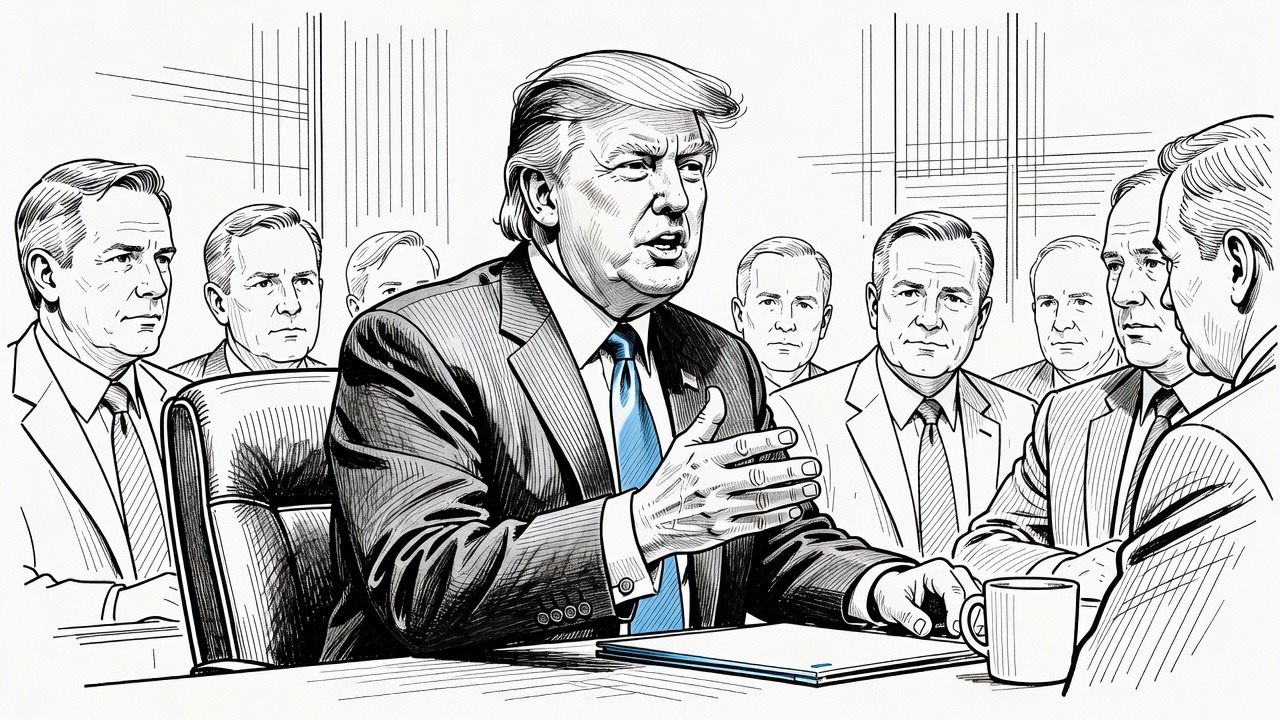
The most revealing detail in this story is not the rule itself. It is the reason the rule took so long. The president of the United States said he didn't want to offend China before flying there to meet its leader. Think about what that sentence admits. Controls on the most strategically important technology on earth were held in a drawer because they might spoil the mood of a summit.
The loophole being closed was never a secret. Chinese firms have been renting access to American-made chips in data centers in Southeast Asia for years, and everyone in Washington who follows this knew it. The Treasury Secretary reportedly went after the Commerce Secretary over delays in enforcement. That is a Cabinet-level fight over whether to enforce a policy the government already claims to have. The rule arrived only because someone lost an argument inside the building.
This is what governing by transaction looks like. It is also not new. This administration threw out the Biden-era framework for chip diffusion, then allowed Nvidia to sell scaled-down chips to China in exchange for the government taking a 15 percent cut of the revenue. Legal scholars have noted that the Constitution bars taxes on exports. Whatever you call the arrangement, it treats a national-security license as a product with a price. And Nvidia's chief executive has had remarkable access to the president while lobbying for those sales. If the rules bend toward whoever has the best seat at the table, they are not rules.
Liberals have a temptation here, and I want to resist it. We are not obliged to cheer every escalation against Beijing, or to pretend that chip controls are a cure for anything. Export controls are a blunt tool. They can accelerate Chinese self-sufficiency, and they treat a rivalry between two great powers as if it were a morality play. Honest people on the Left disagree about how much of this is prudent security and how much is a new Cold War dressed up in silicon.
But that is exactly why the process matters so much. If the country is going to take a position on who may use the most powerful computing systems, the decision should be made openly, by standards that can be defended, with Congress involved and a record the public can read. Instead we get a policy that flips depending on a summit calendar, a lobbying push, or which Cabinet secretary last got the president's ear.
The cost also falls on people who had no vote in any of this. Singapore, Malaysia, Indonesia, Thailand and Brazil now face new licensing requirements, because their data centers sit in the path of a fight they did not start. Governments in those countries spent years courting investment in digital infrastructure. They now learn that access depends on how Washington's moods run in a given quarter. This is a strange way to build the trust that any durable alliance depends on, and it hands Beijing an easy argument that American commitments are provisional.
The larger point is about who gets to decide. A handful of companies control the physical infrastructure of the AI economy, and a handful of officials decide whom they can sell to. The public, whose tax dollars funded the foundational research and whose labor markets and information environment will absorb the consequences, is mostly a bystander. Democrats should say plainly that they want a different arrangement: transparent export law, enforcement that does not wait on a summit, and a flat ban on turning licenses into revenue streams or favors.
The administration is right, for now, to shut this door. It deserves no credit for needing a bureaucratic brawl and a presidential confession to do it. National security that can be postponed to avoid awkwardness was never being treated as security. It was being treated as leverage, and leverage is something you spend.