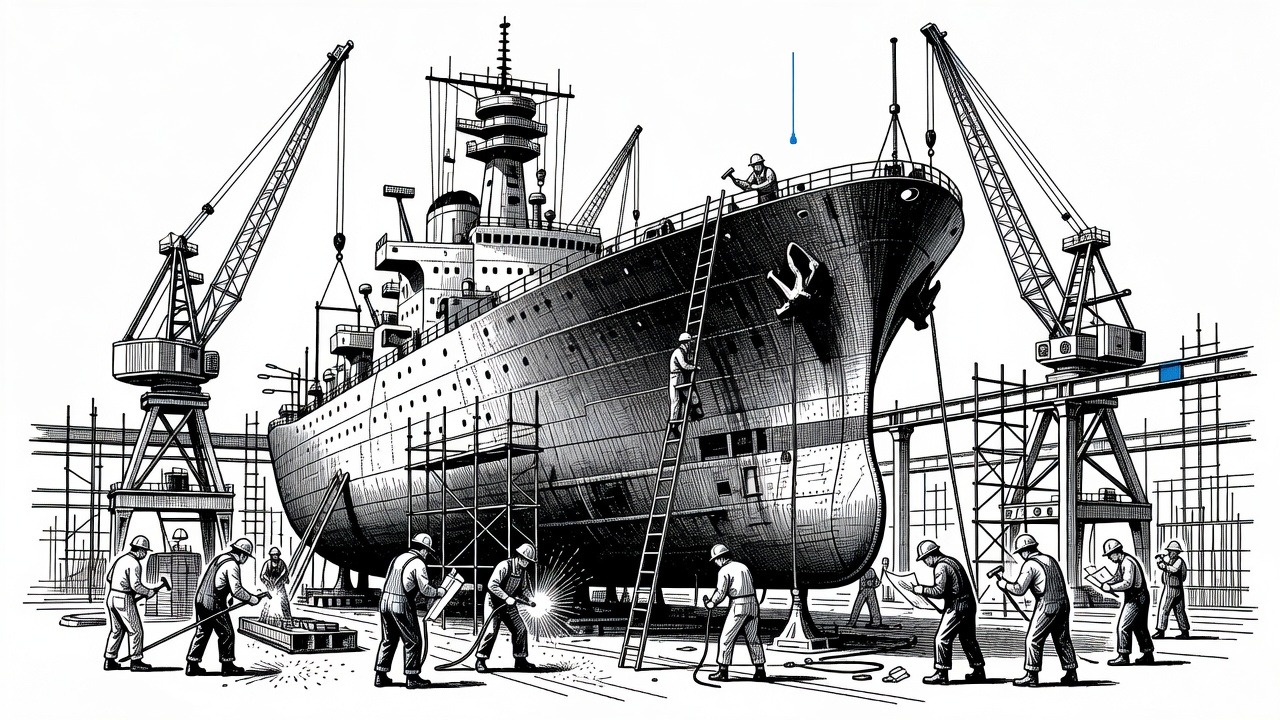
Hung Cao told senators this week that America must close its shipbuilding gap with China, and that South Korean and Japanese shipbuilders can help rebuild American yards. The first half is right. The second half comes with a question the hearing barely touched: rebuilt for whom?
The diagnosis is not controversial. China's shipyards out-produce ours by an absurd margin. Our own Navy can't deliver Virginia-class submarines at the pace it has promised, and the Columbia-class program is running late. Nobody on either side of the dais disputes that the industrial base has hollowed out.
But how did it hollow out? Not because Americans forgot how to weld. Over three decades, the defense industry consolidated into a handful of prime contractors with captive customers, thin competition and every incentive to extract rather than invest. Yards were starved of capital while the money went to dividends and buybacks. Skilled workers were laid off in the lean years and never replaced. Today shipyards compete with fast-food chains and warehouses for new hires, then act surprised when they can't staff a second shift. This is a failure of ownership and priorities, and a government that treats it as a mere engineering problem will end up paying more to repeat it.
So when Cao points to Seoul and Tokyo, I'm glad some senators of both parties pushed back and said warships get built here. Korean and Japanese yards are formidable, and partnering with allies is not treason. Fine. But there is a real difference between an ally teaching American workers to build better ships and an ally's balance sheet buying the right to profit from our rearmament. The first is industrial policy. The second is a lease on our own national security.
If foreign capital is coming into American yards, the public should name its price. Wage floors and apprenticeship pipelines. Domestic steel and components, and real limits on the buybacks that drained these yards before. Public equity or clawbacks when taxpayers underwrite the buildout. Union neutrality, at the very least, since the people who actually weld hulls ought to have a say in the yard they're rebuilding.
The administration Cao serves makes this harder to trust. It speaks the language of national renewal, yet it has put tariffs on steel and aluminum, the raw materials of every hull. That raises costs for the very yards it says it wants to revive. It talks about American workers while treating the federal workforce as disposable. You can't claim to be rebuilding the industrial base while making it more expensive to build in and less stable to work for.
Democrats have their own accounting to do. The shipbuilding crisis didn't start in 2025. Democratic administrations and Congresses signed off on the consolidation, tolerated the cost overruns and funded the programs that slipped. Anger at the Right shouldn't become an alibi. Bipartisan neglect built this mess, and a serious opposition should offer a plan instead of a rebuttal.
That plan is not complicated. Treat shipbuilding as the public good it is. Use the Navy's purchasing power to demand capacity, not just hulls. Invest in the workforce before the contracts arrive, not after the delays. Welcome allied expertise, but on American terms and with American workers holding real stakes.
Cao is a decorated veteran, and his sense of urgency sounds sincere. Senators should confirm only if he's willing to say who benefits from the rebuild and what the public gets for paying for it. The Navy doesn't need another speech about China. It needs someone willing to take on the contractors who got comfortable while the fleet shrank.
How it may affect me
If you live near a shipyard or in a supplier state like Virginia, Maine, Mississippi or Connecticut, this decides whether new jobs come with real wages, training and union rights. Everyone else pays through the defense budget, so delays and cost overruns eventually show up in your taxes.