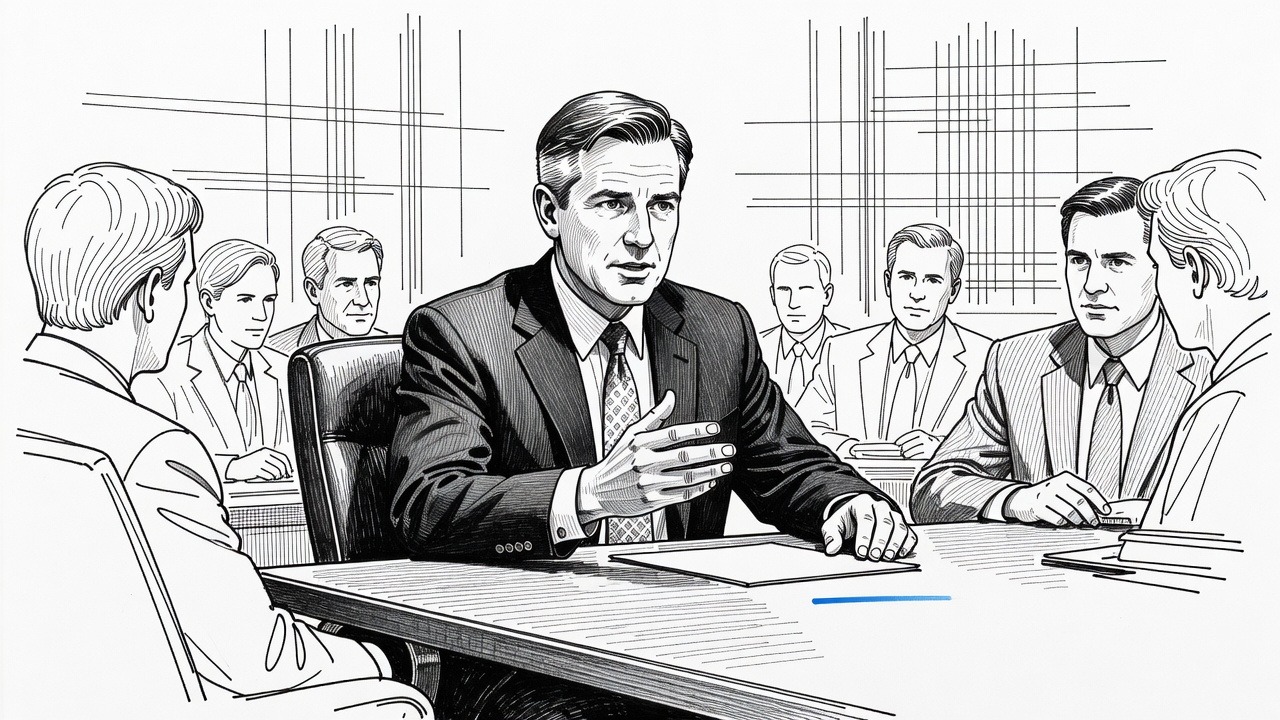
Kevin Warsh wants the Federal Reserve to have a smaller footprint. Look at what is actually shrinking: the statements, the press conference, the advance guidance, and now an entire voting meeting. The footprint he is cutting is the public's view of the institution that sets the price of every mortgage, car loan, and small-business credit line in America.
Grant the best version of his case. Forward guidance can become a crutch, with markets demanding to be told the future and the Fed obliging. A committee that has boxed itself in with promises loses room to maneuver. Strategy reviews are legitimate, too. The Fed should think hard about its framework after the inflation shock of recent years. Seven voting meetings instead of eight is not a coup.
But "flexibility" is a word that always needs a second noun. Flexibility for whom?
The people who profit from Fed ambiguity are not the ones living with its consequences. A bond desk with a team of Fed-watchers, a hedge fund with a macro strategist, a bank with a Washington office: these players can trade through uncertainty. They can even profit from it. A family deciding whether to lock a mortgage rate, a contractor deciding whether to take on a loan for equipment, a worker whose employer is deciding whether to hire: they cannot. Predictability is a public good, and the Fed spent decades building it. Dismantling it in the name of humility hands an edge to sophisticated money and leaves everyone else guessing.
Then there is the question of why now, and under whom. Warsh was installed by a president who has made no secret of wanting lower rates and who has treated the Fed as an obstacle to be bullied. In that setting, less communication does not read as neutral technocratic tidying. A central bank that explains itself less is harder to hold to its stated reasoning. When rates move, or fail to, the public needs to be able to ask whether the decision followed the data or followed the pressure. Shorter statements, shorter Q&A, and a nonvoting meeting with no statement at all make that question harder to answer. Independence is only defensible if it is accountable, and accountability depends on a paper trail the public can read.
This is also where the Left has to be honest with itself. We spent years demanding that the Fed answer for its mandate, especially the employment half, and we were right to. Defending its independence from presidential meddling is not the same as defending its secrecy. A Fed that explains how it weighs jobs against inflation can be pushed, by voters, by Congress, and by public argument, to take workers seriously. A Fed that goes quiet becomes a priesthood, and priesthoods have historically been kind to creditors.
The strategy meeting itself deserves particular suspicion. Discussions about the Fed's long-term approach, such as how much unemployment it will tolerate, what inflation it will chase, and how much balance-sheet power it wants, are among the most consequential political choices in the economy. Making them behind a closed door with no post-meeting statement is backwards. These are exactly the conversations the public should be able to see.
If Warsh wants a less intrusive Fed, he can start with its power, not its press releases. Instead the institution is moving toward being less legible while keeping every ounce of its authority over the economy. That is not humility. It is a bid for discretion, and discretion without disclosure is just power.
How it may affect me
Less Fed guidance likely means more rate surprises around meetings, which can swing mortgage, auto, and variable-rate credit costs with less warning. If you are weighing a rate lock, refinance, or business loan, build in more cushion and don't count on the Fed to signal its next move in advance.