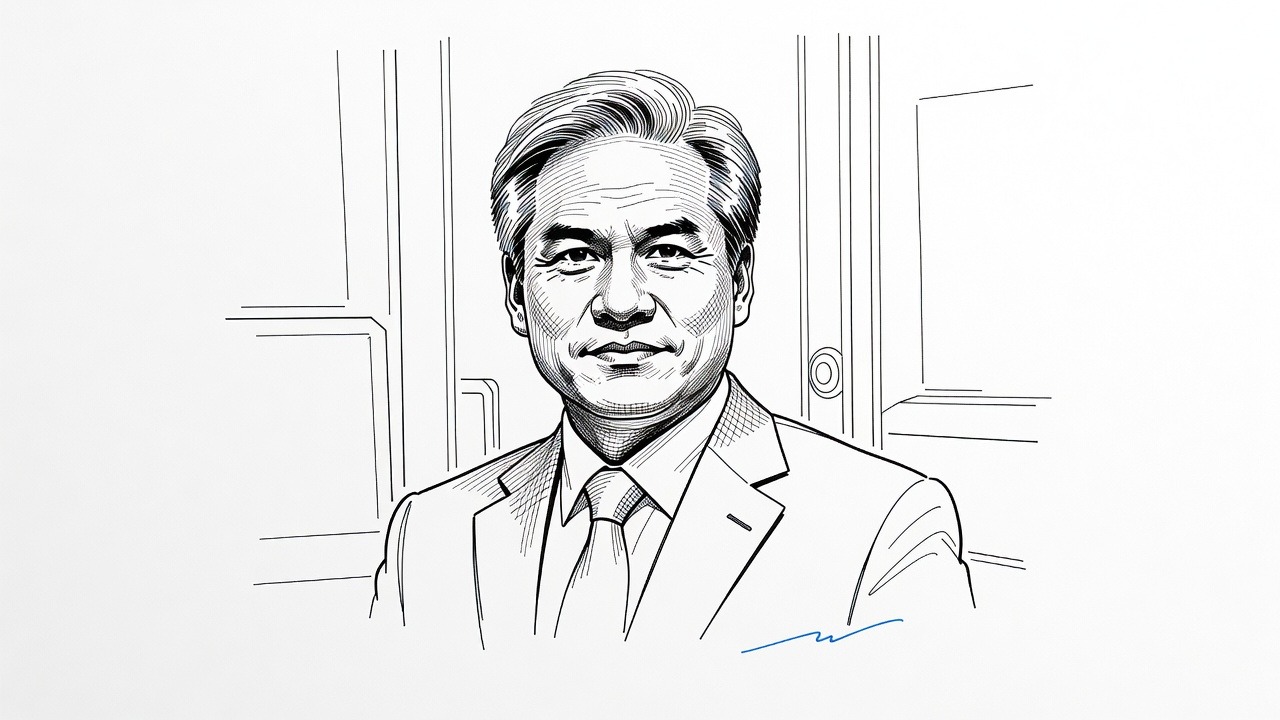
Before anyone rushes to the verdict, remember what we actually have: allegations. Lawmakers describe a woman tied to a Singapore firm as a suspected Chinese intelligence asset, and they say her relationship with Jensen Huang needs explaining. That is not proof that Huang knowingly compromised anything. A letter from a committee chairman is not a finding of fact, and the Left, which has spent years warning about guilt by insinuation, should say so.
But the larger scandal doesn't depend on how Huang's personal story ends. It is how America's most consequential technology-security policy was made.
For years, the question of which chips China could buy was supposed to be a national security judgment. Under this administration it became a negotiation. Nvidia's chief executive lobbied hard, won access to the president, and got export policy bent in his direction. Reports said the government would take a cut of sales, 15 percent on one chip and 25 percent on another. Think about what that arrangement means. Washington made itself a financial partner in the very transactions it is supposed to be policing. A regulator with a revenue share has a conflict of interest, however much it calls the deal pragmatism.
That is what makes the congressional posturing so rich. Chairman Moolenaar says the inquiry will examine Huang's lobbying on export rules. Fine. Lobbying should be examined. But Huang did not win those rules over the objections of the people running the executive branch. They were persuaded, flattered, or simply in agreement. If the lobbying was a threat to national security, the question is why the administration was so receptive, and what it knew while it was being lobbied.
Democrats are right to demand exactly that. Did officials have intelligence about this relationship before they loosened restrictions? Was it flagged and ignored, or never reviewed? An administration that treats export controls as a bargaining chip has every incentive not to look closely at the friends of the man across the table. If the answer is that nobody asked, that is a failure. If the answer is that somebody asked and was overruled, it is worse.
There is also an uncomfortable lesson for the Left. Democrats have been loud about chip controls, and some, like Elizabeth Warren and a number of House China hawks, did press for tighter limits while Nvidia fought them. But the party's broader instinct has too often been to treat Silicon Valley's biggest winners as allies against Trump rather than as concentrated private power with its own agenda. Huang's company is worth trillions of dollars. It writes the rules of the AI economy and lobbies like a sovereign state. A sensible Left should be suspicious of that regardless of who is in the White House.
So here is what accountability should look like. Don't hold this behind closed doors. A classified briefing may be necessary for the intelligence details, but the public deserves an open hearing on the lobbying, the access, and the revenue-sharing deals. Committees should demand the administration's records on how the intelligence was handled and when. And if Republicans want to be taken seriously as China hawks, they should be willing to question the president's own deal-making as hard as they question a departed executive.
Huang resigning, with an interim CEO already in place, will tempt Washington to treat this as a story about one man's fall. It isn't. When a handful of executives can lobby their way into national security policy, and the government takes a share of the proceeds, the person at the top changes and the arrangement stays. That arrangement is what Congress should be investigating.