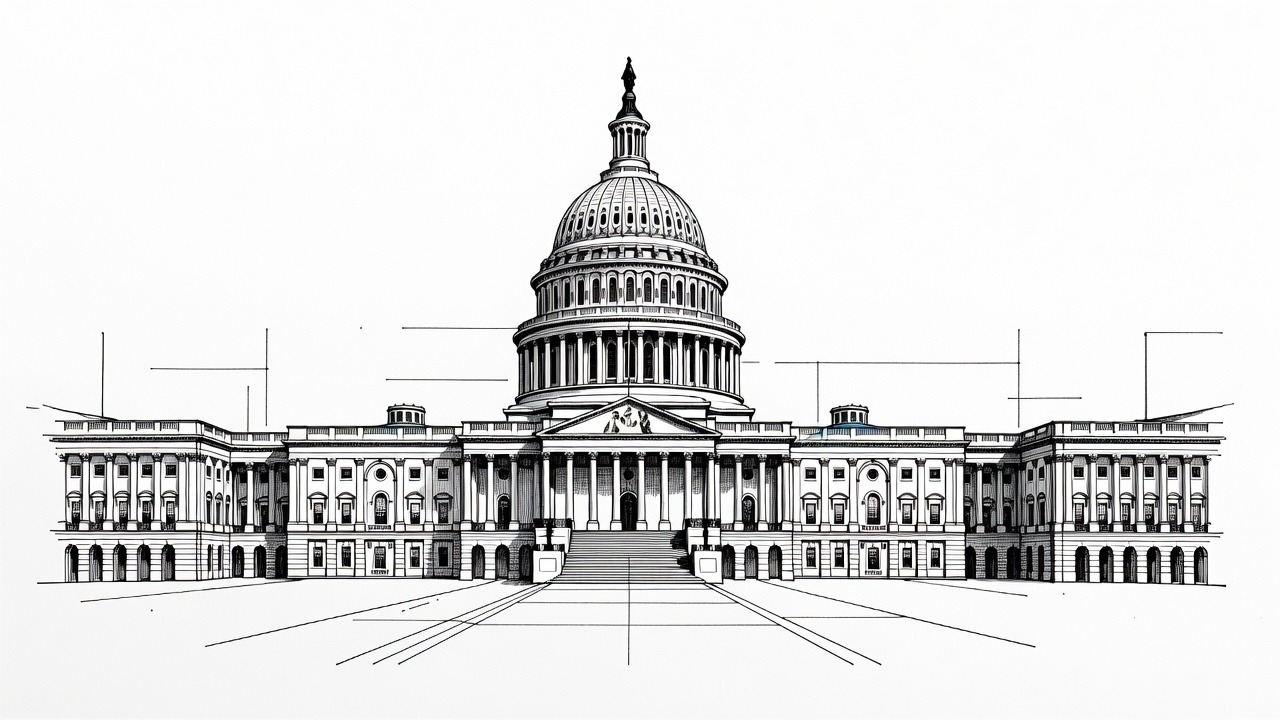
Jim Jordan has not yet been sworn in as leader of a minority, and he is already telling you what Democrats will do to him. They will, he says, investigate and take legal action against political opponents. It is a remarkable thing to hear from the man who built his career on exactly that.
Consider who is warning about weaponization. Jordan chaired the Judiciary Committee and ran the Select Subcommittee on the "Weaponization of the Federal Government," a panel whose purpose was to turn congressional power on the previous administration and its perceived allies. He ignored a subpoena from the January 6 committee. His party has spent years treating oversight as a partisan weapon when the target was a Democrat, and as persecution when the target was anyone else. Now he wants the public to believe that oversight is a form of retaliation, and that it is coming for his side.
The tell is the phrase "legal action against political opponents." Congress doesn't prosecute anyone, so Jordan is borrowing the language of a different branch. That is telling, because in this era the sharpest examples of prosecutorial power aimed at enemies have come from a Republican White House, which has publicly pressed its Justice Department to go after named adversaries. When the party in power pushes for indictments of its critics, it has no standing to call the opposition's subpoenas vengeance. Jordan is running the oldest play in the book: accuse the other side of your own conduct before they have done anything, so that any accountability they attempt will look like confirmation.
Democrats should not fall for it, and they should not fall for the opposite error either.
The opposite error is a real temptation on the Left. Some will want a mirror-image revenge tour, with hearings as theater and subpoenas as payback. That would be a mistake, and not out of squeamishness. Oversight is worth something only because it is tied to facts. Investigate the use of public money, the conflicts of interest, the contracts and pardons, the decisions made behind closed doors. Follow the paper. Do it with a clear public purpose and a clean record of process, so that when Republicans scream "retribution," the evidence answers for itself. Democrats have too often been timid in power and then surprised that the other side was not. Being serious does not mean being weak. A majority that declines to investigate a government of its opponents is not being gracious. It is abdicating a constitutional duty.
The second thing to notice is the vote. House Republicans chose Jordan over Scalise, 106 to 73, by secret ballot. After a defeat, a party that wanted to rebuild its appeal to the voters who just rejected it might pick a deal-maker. This one picked its most committed combatant. Seventy-three members preferred the alternative, which suggests some of them know what the choice signals. But the choice was made, and it tells us the minority will be run as a resistance operation rather than a governing alternative.
Then there is the lame duck, which deserves more attention than it will get. Jordan wants full attendance so Republicans can push their priorities "while Republicans still hold congressional majorities." Translated: there is a window of weeks in which a party the voters have just demoted can still act as if it has a mandate. Whatever gets rushed through in that window will be passed by lawmakers the public has already judged, and the newly elected majority will inherit it. Democrats should scrutinize every item, ask who benefits from the timing, and make plain which ones were jammed through after the country had spoken.
The voters did not hand out a mandate for revenge, and Democrats should not claim one. They did hand out a mandate for accountability. Jordan's early campaign to blur the two is not a prediction. It is a defense strategy, and the right response is to ignore the label and do the work.