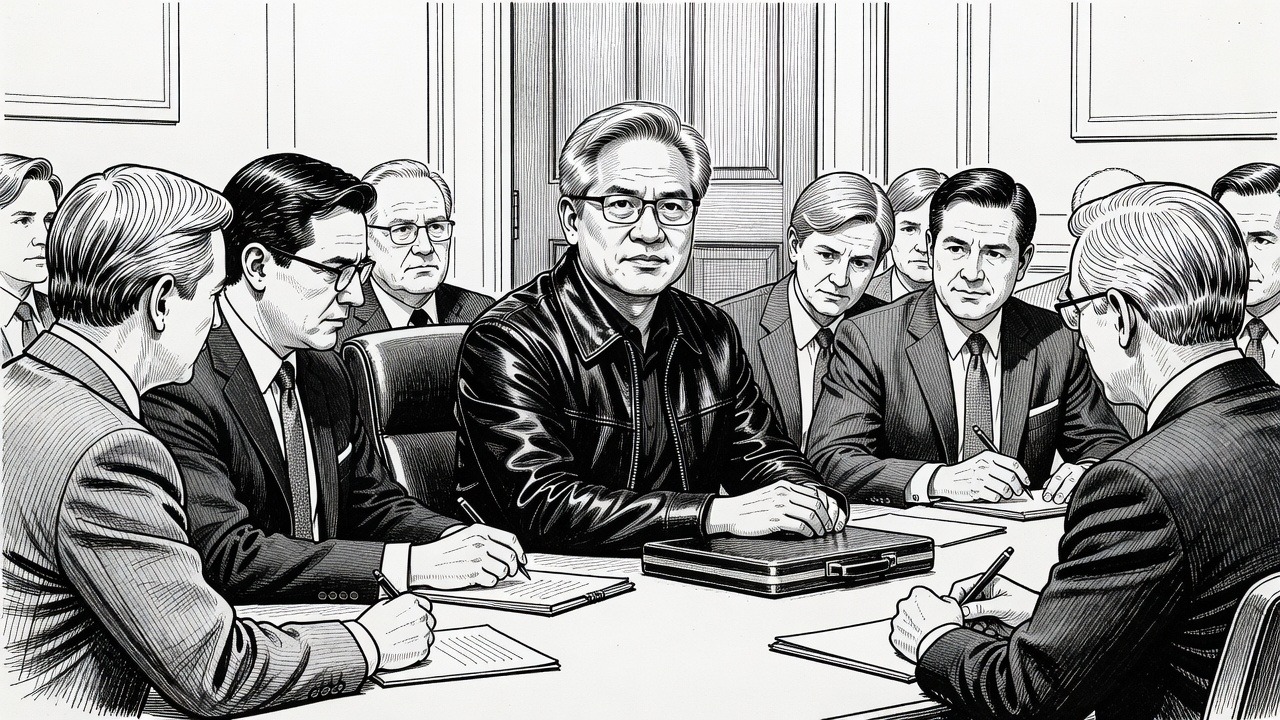
Jensen Huang should go to the closed-door briefing. Nobody who runs the company that sells the picks and shovels of the AI era gets to treat questions about Chinese intelligence as an imposition. If the allegations are as described, with the Ministry of State Security recruiting an executive to gather information and perhaps nudge Nvidia's stance on export controls, Congress has every right to ask what the company knew and what it did about it. Hakeem Jeffries is right that this needs a full briefing.
But the Republicans threatening subpoenas should be asked the question they are avoiding. Why is a spy's influence over Nvidia's *position* on export restrictions the frightening part, when Nvidia's position has already been rewarded at the highest level of the government?
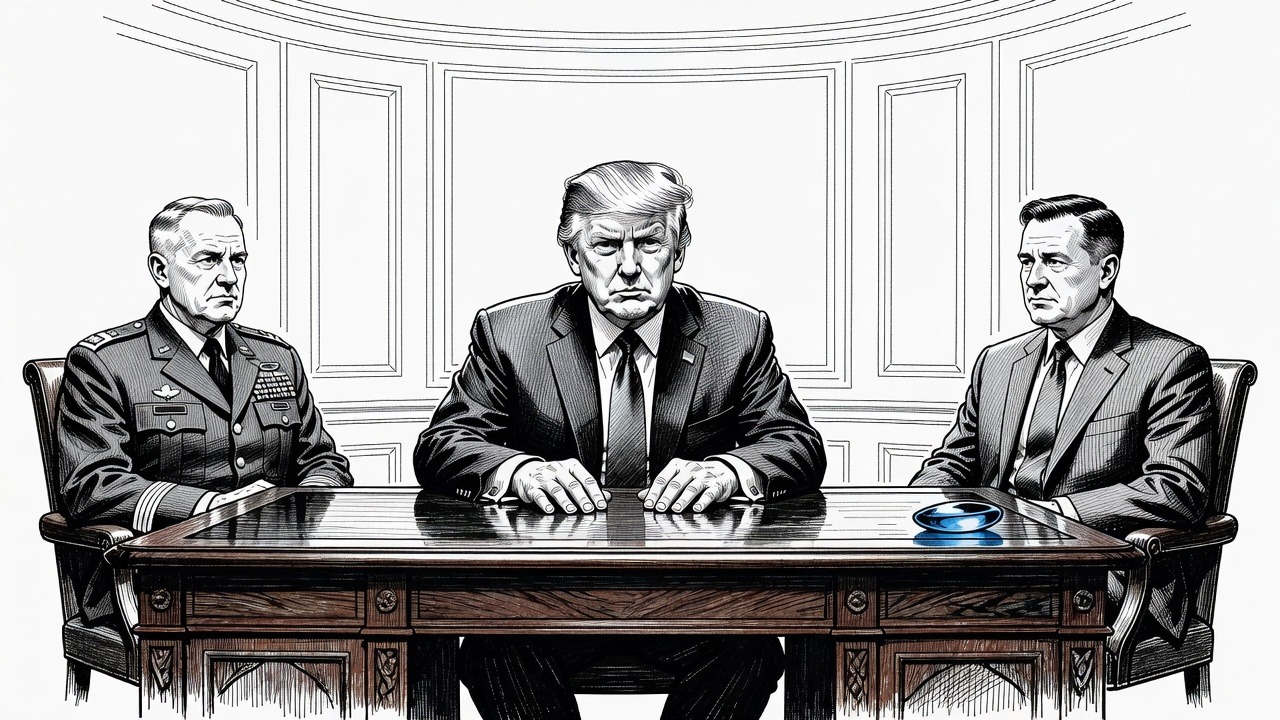
This is the same administration that reversed course on selling advanced chips to China and then arranged for the government to take a cut of the proceeds. Under that deal, export controls stopped being a security doctrine and became a toll booth. The country's technological edge over a strategic rival was put up for negotiation, and the company with the most to gain had a direct line to the person deciding. Now we are told the danger is that a foreign intelligence service might have tried to shape Huang's views. His views were already shaping policy, in the open, through ordinary access to the Oval Office. A spy would hardly need to work that hard.
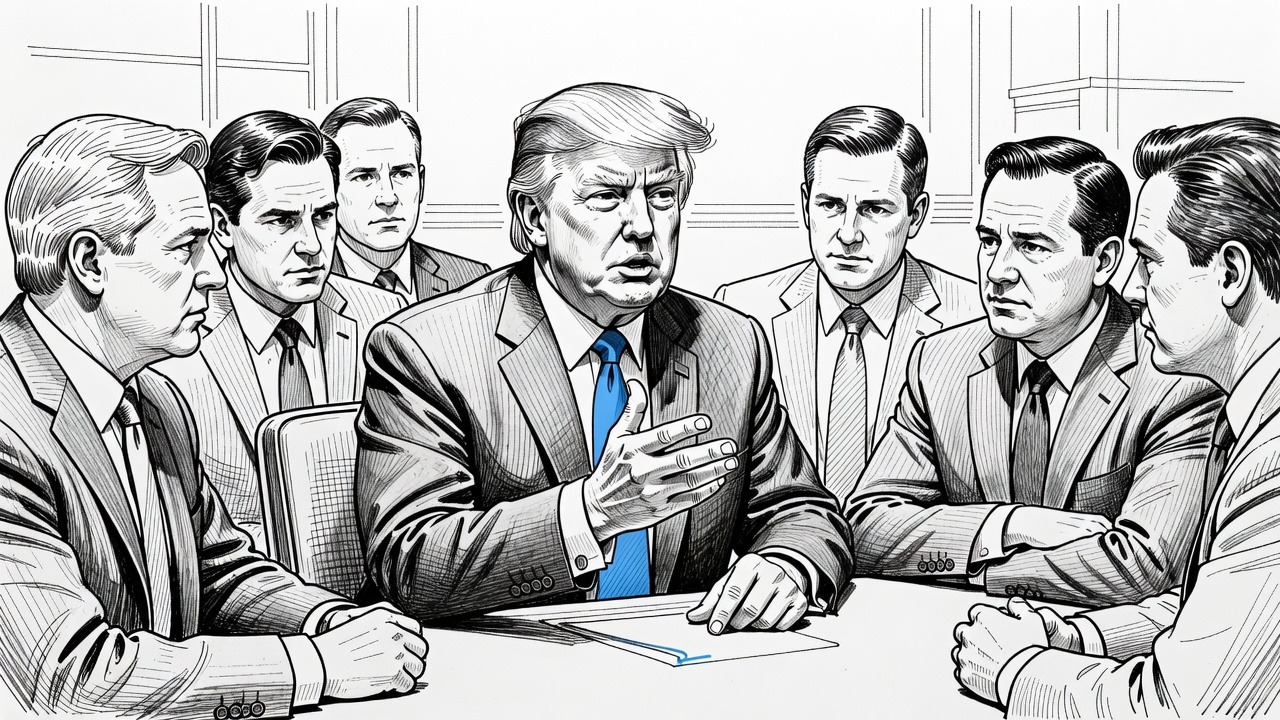
Then there is the president's contribution. Donald Trump says Huang told him he didn't know the woman was allegedly a spy. That settles it, apparently. The commander in chief has taken a billionaire's word on a counterintelligence question, and the billionaire is a man who has been lobbying him on the very chip policy at issue. Any Democratic president who did this would be accused of treason by lunch. Republicans spent years demanding that officials be treated as security risks over far thinner associations. Their concern now arrives conveniently late, and it falls on a single executive rather than on the policy that made him so important.
Nor should we accept Nvidia's reassurance at face value. Its independent directors opened an inquiry and found no sign that trade secrets or national security information were compromised. That may be true. But a company's board investigating its own chief executive is not an independent finding, and it cannot be the last word on a matter of intelligence. The board has obvious reasons to conclude that everything is fine: Nvidia's market value is built on the belief that Huang is indispensable. Congress exists precisely to ask questions that a board with a stock price to protect will not.
The Left should also be careful about how it does this. Alice Huang's alleged role as a recruited asset is an allegation reported through intelligence accounts, and Beijing denies it. Suspicion of Chinese Americans and Asian American executives has a long, ugly record in this country, and "China hawk" politics has too often slid into treating ethnicity as evidence. Our standard should be conduct, documents, and what a briefing actually shows, not surnames or associations. Demanding rigor is the opposite of going easy on Huang. It is the only way to avoid a witch hunt that helps no one.
What the country needs from this episode is not a perp walk. It needs a rule. Decisions about which chips go to which adversaries should be made by an accountable process with published criteria, congressional oversight, and no revenue-sharing arrangement that gives the government a financial stake in selling. They should not be made by whichever CEO has the president's ear, however charming or however vetted.
Bring Huang in. Ask him everything. Then ask the administration why it built a system in which the biggest national security vulnerability was never a woman in Singapore. It was a policy that treats the nation's strategic advantage as something to be bargained over, with a cut for the house.