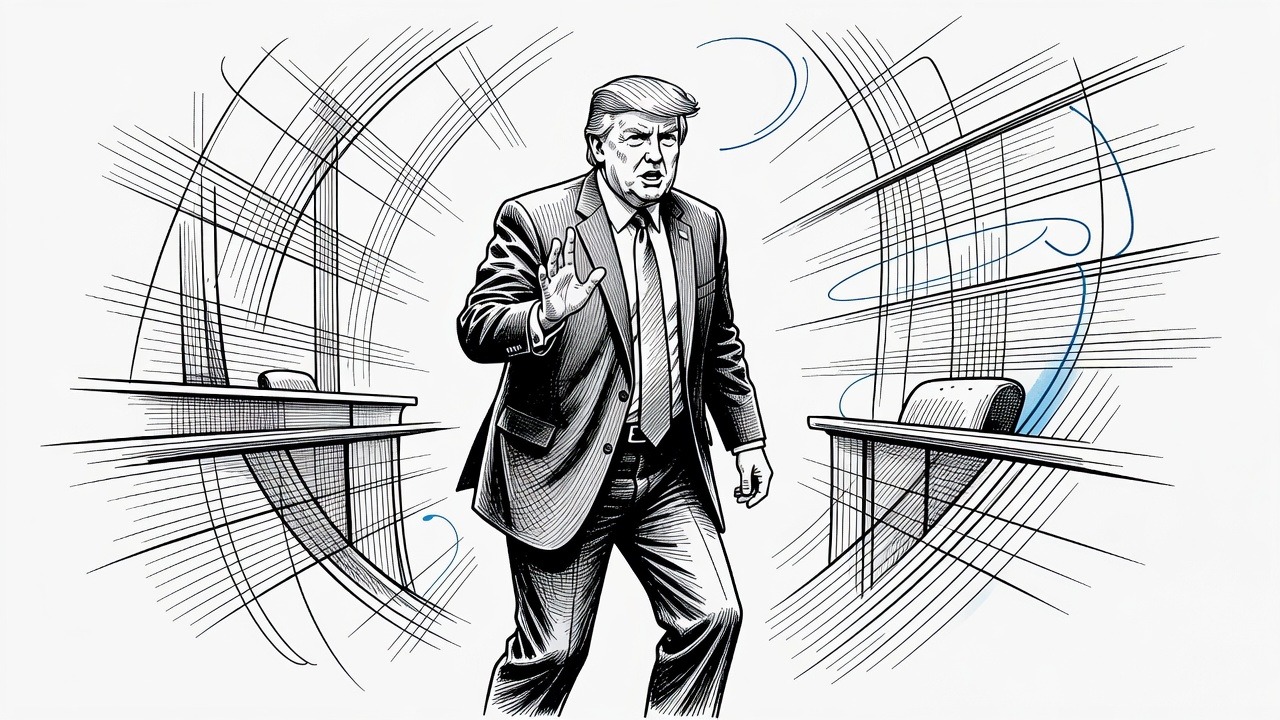
California has not executed anyone since 2006. For nearly two decades, the state has told 548 people they will be killed and told the families of their victims that justice is coming. Then it has done nothing. That is not a functioning criminal justice system. It is a theater of vengeance with the final act cancelled, and the audience has been paying for the tickets ever year.
Newsom's commutation ends the performance. The usual objection is that voters twice, in 2012 and 2016, declined to abolish the death penalty. That is true, and it deserves a real answer rather than a shrug. The answer is that the clemency power exists precisely so one accountable official can say no to the state's most irreversible act when the machinery has failed. The people who wrote California's constitution anticipated this. A governor using a constitutional power is not a coup against democracy. He is the executive branch doing a job voters handed it, and he will answer for it at the ballot box like everyone else.
Now consider what the machinery has actually produced. A system that sentences hundreds of people to die and cannot carry out the sentences. A death row populated disproportionately by people who were poor, who had overworked court-appointed lawyers, and whose victims' race shaped how hard prosecutors fought for a death verdict. Nationally, well over a hundred people have walked off death row after being exonerated. Each of those is a case where the state came close to killing an innocent person and was saved by luck, a stubborn lawyer, or a DNA test that happened to exist. The right question for death penalty supporters is not whether the guilty deserve it. It is whether they trust this state, these prosecutors, and these defense budgets to be right every single time. Nobody honestly can.
The moral center of this decision is also the hardest part. Newsom acknowledged that it may reopen wounds for victims' families, and he should not be mocked for saying so. Some of these men did monstrous things. Their victims were real, and the grief is not rhetorical. But the death penalty has never delivered what it promised those families. It delivered decades of appeals, hearings, headlines and false hope. Life without parole delivers something less theatrical and more certain: the person never walks free.
The Left should not congratulate itself too quickly, though. Newsom is a lame duck with national ambitions, and a governor who truly believed this should have done it years ago rather than after a moratorium that left people in limbo. Courage that arrives at the end of a career is better than none, but it is not the same as leadership. And the fine print matters: 382 of these commutations need approval from the state Supreme Court, because those prisoners have more than one felony conviction. The court now has to put its own name on the decision. It should.
The larger task is what comes next. Life without parole is not a gentle sentence. It is death by incarceration, and a movement that rightly says the state should not kill must also ask why it is comfortable locking people away with no hope of review, no matter how they change or how old they grow. Ending the death penalty was the easy moral line to draw. The harder one is to stop pretending that the only alternative to execution is permanent disposal.
But today's question is simpler. Should a government that makes mistakes, and has proved it again and again, hold the power to kill its citizens? California has spent two decades answering no in practice while pretending yes on paper. Newsom has finally made the law match the reality. Good.