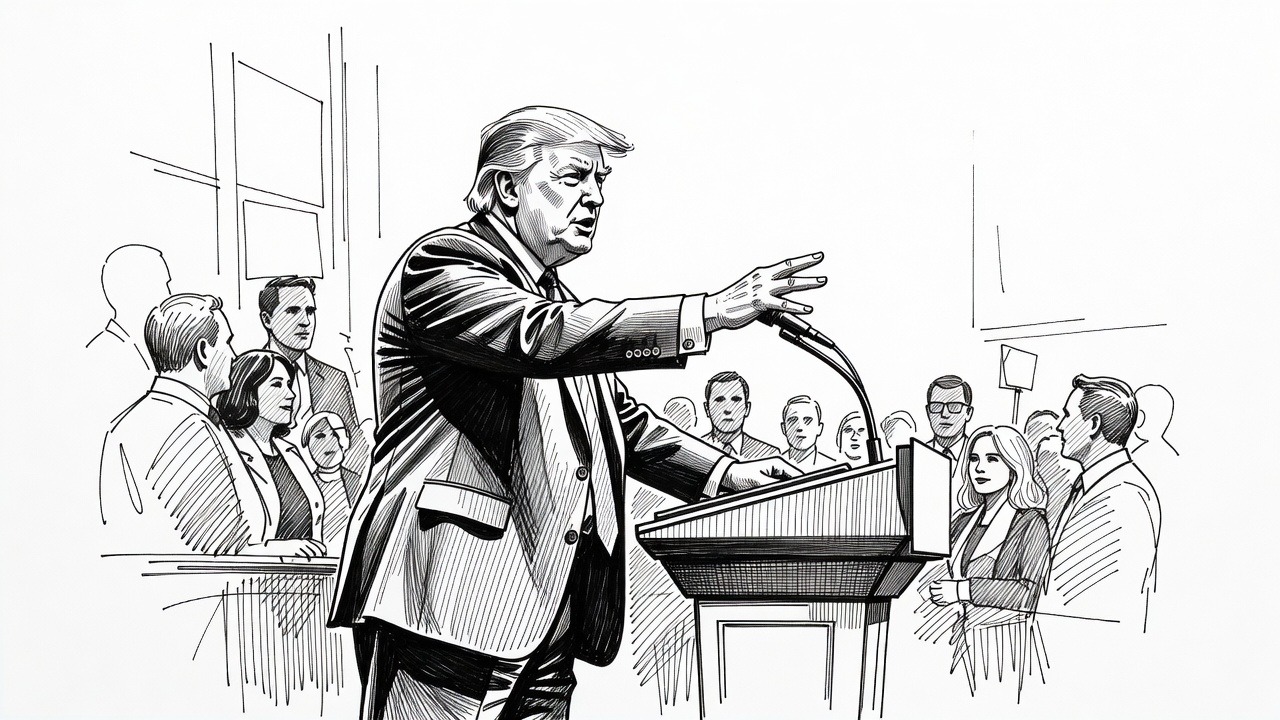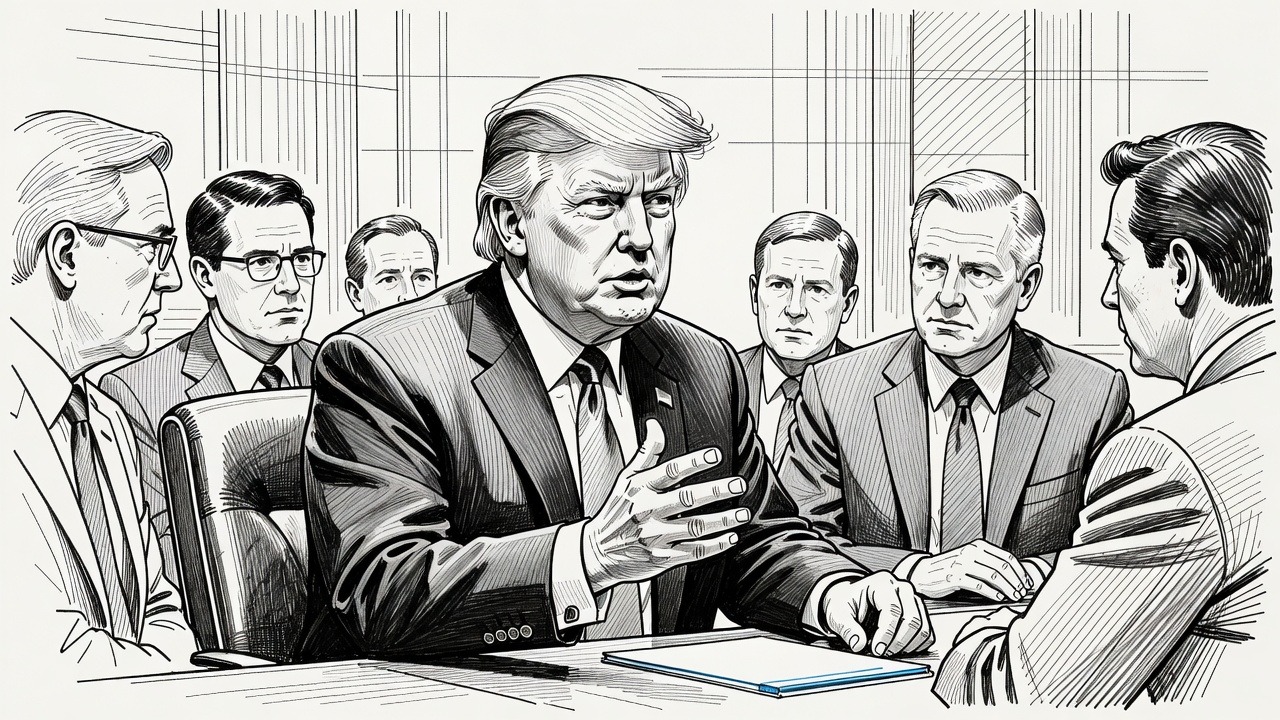
Donald Trump congratulated Democrats on winning Congress, said he looked forward to working with them, and then, in the same breath, promised to veto whatever he finds "unacceptable." He called that leverage. Another word for it is a hostage note with a smile on it.
Democrats should enjoy the night and then take the wrong lessons off the table, starting with the president's invitation to be friends.
Trump says some Democratic lawmakers have already been in touch. Maybe so. But the first test of this new majority is whether it understands the offer. "Let's make deals for the good of the country" sounds like statesmanship. In practice it asks the party voters just empowered to share ownership of an administration those voters just rebuked. Every deal that lets Trump claim bipartisan credit is a deal that blurs the lesson of Tuesday. Negotiate when the terms are good. Do not mistake access for influence.
Then there is his explanation for the loss: he wasn't on the ballot, and some Republicans failed to fire up his base. That is a remarkable thing to say about a president who has made every election a referendum on himself, who dominates his party's identity, and who has demanded loyalty tests from every candidate. He was on the ballot. He was the whole ballot. A party that fused itself to one man doesn't get to say he was absent when the bill arrives. And if his base only turns out for him personally, that is not an excuse. It is a structural weakness in a movement built around one person.
The strongest counterargument deserves a hearing. Voters are tired of gridlock, Democrats have a thin governing record on delivery, and overreach, with its impeachment theatrics and endless subpoenas, could hand Republicans a comeback, as Republicans learned painfully in 1998. That warning is fair. But it confuses oversight with spectacle. Oversight is the job. A Congress that spent years rubber-stamping spending, tariffs, and executive power grabs now has a constitutional duty to ask where the money went, who decided what, and under what authority. That is not revenge. It is the basic function that a unified Republican Congress largely abandoned.
The other half of the job is harder, and it is where Democrats usually flinch. Voters did not hand over the House and Senate to get a hearing schedule. They want to know why life costs so much, why health care is a financial hazard, and why every institution seems built to protect the powerful from consequences. A Democratic Congress cannot sign laws over a veto, so it should use the powers it does control: appropriations, confirmations, investigations, and the public stage. Pass bills that make the case, force the vetoes, and make Trump explain to voters why he is blocking lower costs, protecting corporate favorites, or shielding his own appointees from scrutiny. His veto threat is not just leverage over Democrats. It is a commitment to own every refusal.
There is also a lesson for Democrats themselves. This victory arrived against a backdrop of deep distrust of both parties. Winning because the other side was unpopular is not a mandate for the status quo. If the new majority behaves like a polite opposition waiting for 2028, it will deserve the next backlash. If it acts like a government-in-waiting, with a concrete agenda, a willingness to fight, and the nerve to refuse a false peace, it can turn one good night into a durable realignment.
Trump says he rejects the idea of a personal defeat. Fine. Let him keep the story. Democrats should keep the majority and use it.