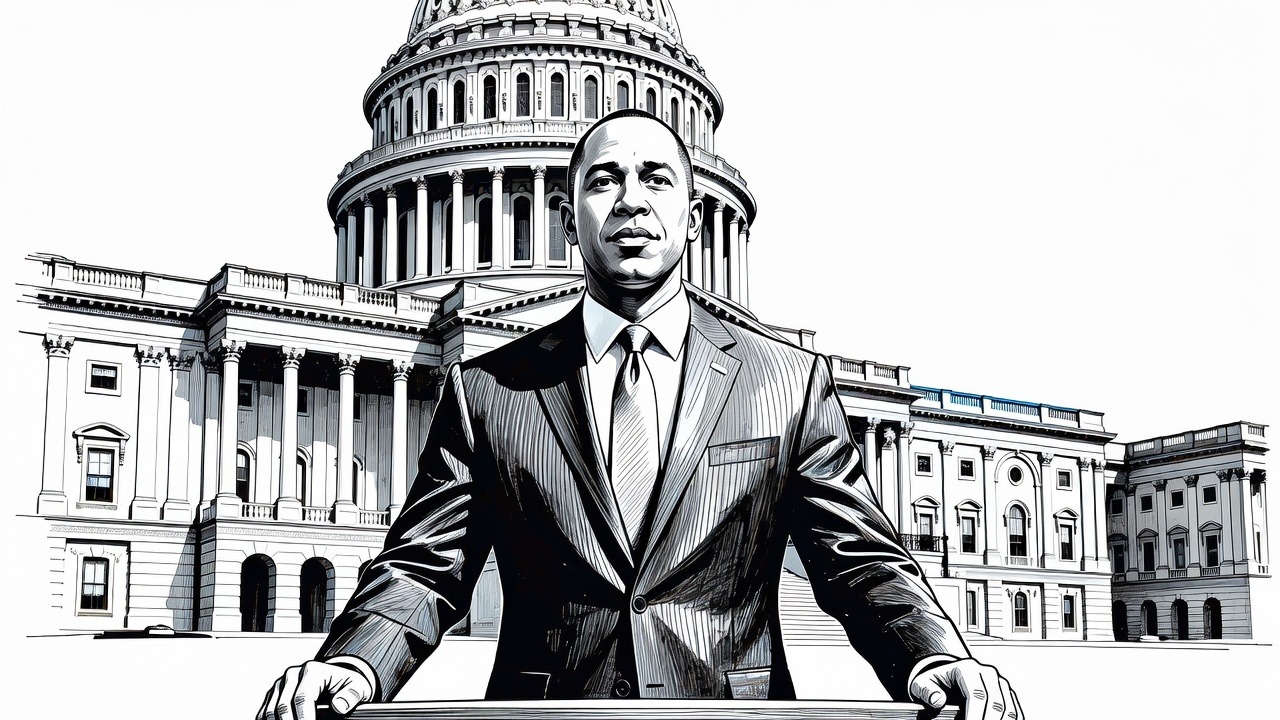
Imagine a fire department that spent decades protecting neighborhoods from arson and then, one day, began treating the residents as suspects. That is roughly what has happened to the Justice Department's Civil Rights Division. It was created to protect Americans' access to the ballot. Under this administration, it is sending a thousand people to watch them cast it.
The administration's defenders will say this is routine. Federal monitors have long shown up at elections. Harmeet Dhillon says they will only observe, won't intervene while voting is underway, and will obey state rules near polling places. Noncitizen voting is a federal crime, and no one on the Left defends it.
All true, and all beside the point. The question was never whether monitors exist. It is who sends them, where, and for what purpose. Historically, the Civil Rights Division sent observers to places where voters had reason to fear being kept from the polls. This operation covers all 50 states and is led by a Division that has been remade into an instrument of the president's long-running claim that elections are riddled with fraud. Adding Office of Personnel Management staff, whose ordinary job is federal human resources, only underlines that this is about visible federal presence rather than expertise in election administration. A voter in Los Angeles or Sacramento who sees government agents outside a polling site does not need to read a legal memo to understand the message. Some will stay home. That chilling effect is the design.
The Supreme Court's Monday decision matters here. The administration asked it to force California to segregate about 20,000 mail ballots from voters the Justice Department flagged as suspected noncitizens. The Court said no. This is not a left-wing court, and even it balked at turning a federal list into a basis for setting aside Americans' ballots. We should ask why the list deserved that much trust. Federal databases have a record of misidentifying naturalized citizens, who are the people most easily swept up by this kind of matching. Documented noncitizen voting is vanishingly rare. A tiny problem is being used to justify a very large intervention.
Bob Bonta was right to put California's own observers in the field. But notice what this arrangement means. A state has to spend its own resources to protect its own voters from its own national government. That is a tax on democracy, and it falls hardest on places with less money and less legal firepower. Wealthy states can answer federal intimidation with staff and lawyers. Poorer counties cannot.
My own side should be uncomfortable too. Democrats spent years treating election security as the Right's issue and voting rights as a speech-and-slogan issue. The result is that Republicans got to define the stakes, while the Justice Department's voting-rights capacity was hollowed out with little sustained public fury. Reports of departures from the Division should have been a five-alarm story. Observers and court victories are necessary, but they are defense. A party serious about democracy would be defending the institutions that enforce the franchise before they are turned around.
The larger danger is not what happens at the polls this week. It is the afterward. Dhillon said monitors could examine potential fraud after the election. That open-ended promise lets a president who has spent years doubting elections he lost build a paper trail for doubting the next one he loses, or for pressuring jurisdictions that voted the wrong way. Elections are legitimate not simply because votes are counted, but because both sides trust the referee. When the referee is openly working for one team, that trust does not merely erode. It gets spent.
California's observers are a sensible answer to a problem that should not exist. The Supreme Court gave a brief reprieve. Neither one replaces what we actually need: a Justice Department that treats voters as citizens to be protected, not suspects to be surveilled.
How it may affect me
If you vote in California, you have the right to vote without intimidation, and federal monitors must follow state rules about distance from polling places. If anyone questions your eligibility or you see conduct that seems threatening, report it to your county elections office or the Election Protection hotline at 866-OUR-VOTE. If your mail ballot is flagged, ask your county about the cure process.