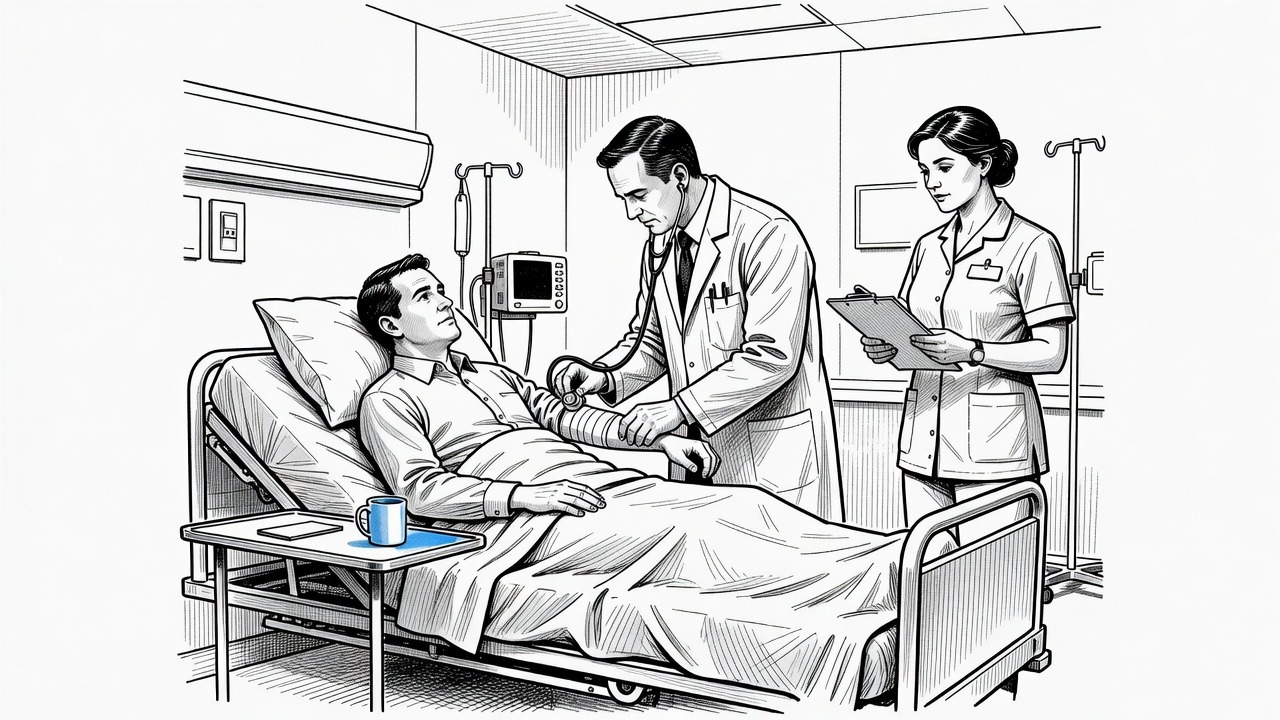
Start with the decent part. A 53-year-old father felt his arm go numb at his son's hockey game, did not shrug it off, and got to a hospital. He is awake, alert and responding to treatment. Chris Murphy's colleagues in both parties should wish him a full recovery, and most of them do.
But the story is also an accidental lesson in how American medicine works. Stroke is a race. Doctors say "time is brain" because an untreated stroke destroys neurons by the millions every minute. Clot-dissolving drugs and surgical clot removal work only inside a window. What decides who walks out of the hospital and who doesn't is often not the quality of the doctors. It is whether the patient lives near a stroke-capable hospital, can get there fast, and has insurance that makes them willing to call an ambulance without calculating the bill.
Murphy had all of it. He was in a populated corner of one of the richest states in the country, he was a few minutes from a hospital, and he was then moved to Johns Hopkins, among the best medical centers on earth. That is how the system performs when everything goes right. It should not be a perk of a Senate salary and a good zip code.
For millions of Americans, the same numb arm happens on a different map. Rural hospitals have been closing or cutting services for years, and the losses fall hardest on the care a community can least afford to lose: maternity wards, pediatric units, behavioral health, inpatient beds. Each closure or cutback pushes the nearest full-service hospital farther away, and when the clock is running, distance is the enemy. Black Americans face higher stroke risk and worse outcomes. People on Medicaid or without coverage delay care and hope the symptom passes. When the Republican Congress passed its 2025 budget law, the Congressional Budget Office projected millions more uninsured as a result. Those cuts are not an abstraction. Some of those people will be standing at a kid's ball game one Saturday, feeling their hand go dead, doing the math.
Murphy is the right man to make that point, and he has been making versions of it. He has spent his Senate career arguing that Americans are being asked to absorb preventable harms, from gun violence to medical bankruptcy, that other wealthy countries decided long ago not to tolerate. Gun deaths and hospital deserts have the same logic: a country chooses to treat them as private misfortune rather than public failure.
There is a lesson for Democrats too. The party loves to talk about health care as a values question, then loses its nerve when it must fight for the unglamorous machinery behind it: emergency rooms in small towns, Medicaid funding, subsidies that keep premiums from forcing families to drop coverage. Defending "access" in a speech is easy. Defending the specific hospital in a specific county that is about to lose its labor and delivery unit, or its last inpatient beds, takes sustained, boring, expensive political work.
The best response to Murphy's scare is not a news cycle of well-wishes. It is making sure the next person who feels that numbness gets what he got: a fast ambulance, a capable hospital, and no fear of the invoice. He is lucky. Good health care should not depend on luck.
How it may affect me
Know the stroke signs (BE-FAST): Balance loss, Eye changes, Face drooping, Arm weakness, Speech difficulty, Time. If you notice any, call 911 rather than driving yourself or waiting it out, so paramedics can alert a stroke-ready hospital. Treatment works best within hours, and a delay can mean permanent disability.