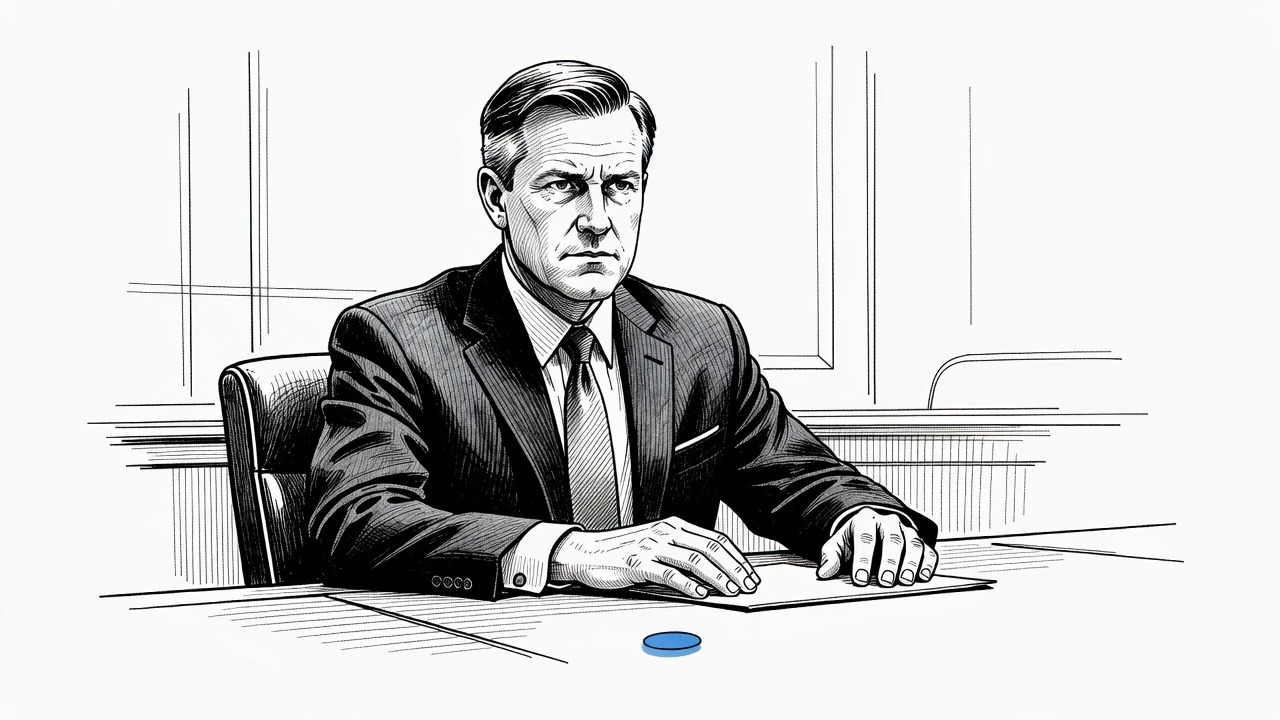
Start with what Democrats should not do, because it is the easiest thing to get wrong: nobody should celebrate Tom Kean Jr.'s depression, and nobody should treat his treatment as a character flaw. Mental illness is not a scandal. Plenty of Democrats have said so, and meant it. Anyone on the Left who sneered at him should be embarrassed.
But Kean's illness and Kean's record are different subjects, and Republicans will try to blur them. Voters in New Jersey's 7th District were allowed to judge both what happened to their representative and what he did with the job.
The job went unfilled for about four months. Kean missed 135 roll-call votes. The district's explanation came only after he returned in late June. Meanwhile his party ran the House on a margin so thin that every vote mattered, and his absence barely registered with the people who needed him there. The question for the House Republican leadership is a hard one. What does it say about a conference that counts a member's seat as a vote to be managed rather than a community to be served? Illness can happen to anyone. A party that treats its members as interchangeable votes, and tells constituents little, is making a choice.
The larger story is the brand Kean sold. He is a suburban Republican who talks like a pragmatist, a man from a political family and a district full of commuters who want lower costs, working transit, and no culture-war circus. That brand is useful to his party precisely because it launders everything behind it. Moderate in the mailer, loyal in the roll call. He sat in a majority run by Speaker Mike Johnson, in a party led by a president whose golf club sits inside the district's borders. Voters could see the whole arrangement from their own driveways.
Rebecca Bennett offered a cleaner alternative. A former Navy helicopter pilot, she brought a record of actual service, the kind of biography that is hard to caricature in a district full of people who want competence more than combat. She also out-raised an incumbent, nearly $8.2 million to nearly $5.9 million. That matters. Incumbents in competitive seats usually enjoy the donor advantage. When a challenger reverses it, donors and voters have both concluded the incumbent is beatable.
The lesson for Democrats is not that every suburb is waiting to flip, or that a flattering résumé wins by itself. Jeffries and Johnson both came to campaign here because both understood this was a referendum on who runs the House, not just on one man's attendance. Democrats won because they made the choice concrete: who shows up, who delivers, and whose side a member is really on when leadership calls the vote.
That is also the warning. Democrats who win seats like this are not owed them again. Suburban voters who just punished one party for treating representation as a formality will do the same to the next if it does. Bennett's first test will not be a speech. It will be whether her office answers phones, holds town halls, and votes for the costs, health care and security that people in these towns actually talk about.
Kean deserves recovery, and I hope he gets it. The people of the 7th District deserved a representative who was present, and a party that was honest with them about what was happening. They have now made their own decision.