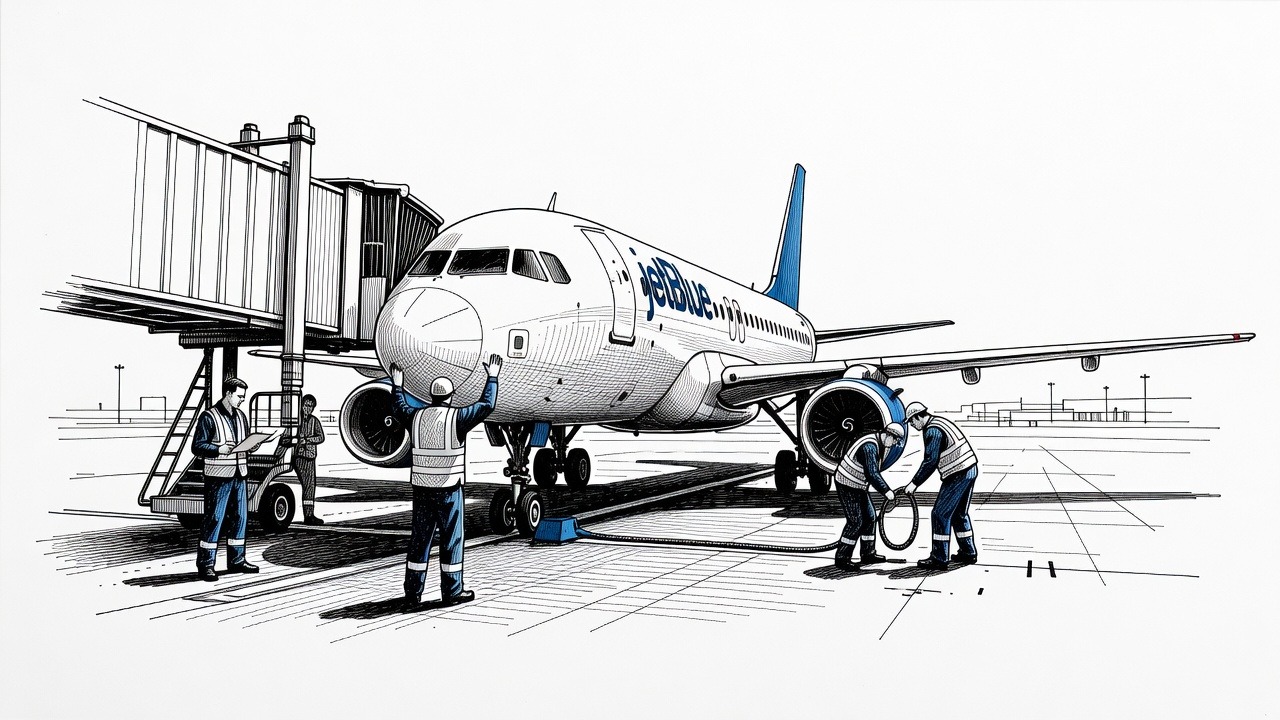
JetBlue says it is raising the price of your first checked bag to $50, or $55 in peak season, because jet fuel has climbed past $4 a gallon. Take that explanation seriously for about as long as it takes to ask a simple question: when fuel prices fall, will the fee fall too?
We know the answer. Bag fees ratchet one way. They go up when costs rise, and they stay up when costs recede, because they were never tied to costs in the first place. A bag fee is not a fuel surcharge. It is a pricing instrument, built to let an airline advertise a low fare and collect the real price later, from people who have already committed to the trip and have nowhere else to go.
That is the heart of it. JetBlue's own statement says the increase will help "keep base fares competitive." Read that as a confession. The base fare is the number you see when you compare airlines. The bag fee is the number you discover after you've chosen. Moving the cost from one column to the other doesn't lower it. It hides it, and hidden prices are how companies win comparison shopping without winning on price. Industry-wide, bag fees bring in billions of dollars a year, and as I understand it they are not subject to the federal excise tax that applies to ticket prices. Airlines have strong reasons to favor fees over fares, and none of those reasons is about fuel.
Then look at who is exempt: eligible co-branded credit cardholders and elite flyers. This is the part that should bother anyone who thinks about class. The traveler with a premium card, a good credit score and enough disposable income to chase status gets her bag free. The traveler who pays cash, flies twice a year to see family, and is hauling luggage for three kids pays $100 or more round trip, since the fee is typically charged each way. The airline has built a toll road with a bank-issued pass. The people who can least afford the toll are the ones who pay it, and the people who can afford it ride free. Airlines now earn a great deal from their card partnerships. The fee is part of the sales pitch.
The best defense is that unbundling gives travelers choice. Someone with only a backpack shouldn't subsidize someone with a steamer trunk, and JetBlue is not a charity. Airlines have been squeezed by fuel, labor and equipment costs, and JetBlue has struggled to turn a consistent profit. That's fair as far as it goes. But "pay only for what you use" would be convincing if the price of using it were visible at the moment of purchase and the fee bore some relation to the cost of handling a bag. It doesn't, and it isn't. If JetBlue's costs really have risen, it can raise fares openly and let customers judge.
The larger lesson is about competition, which the Left has been right to defend and should not romanticize. We cheered when regulators and courts blocked JetBlue's Northeast Alliance with American and its attempt to buy Spirit. Those were correct calls: consolidation raises prices. But a blocked merger does not repair a market. It leaves a weakened industry in which every carrier, large or small, looks for the same escape through fees, loyalty programs and co-branded cards. Consumers are told this is competition. It is a race to see who can obscure the price most elegantly.
The remedy is not mysterious. Require that the full price of a typical trip, bag included, appear up front. Restore and defend rules on fee disclosure, which have been tangled in court and politics. Pay attention to the credit-card bargains that turn a basic service into a perk for the already comfortable. And stop accepting "fuel costs" as an explanation for a charge that has never once fallen when fuel did.
A suitcase is not a luxury. For anyone traveling for a funeral, a move, a custody handoff or a new job, it is the trip. Charging $50 for it, and calling the price a response to fuel, is not honesty in pricing. It is a bet that you've stopped noticing.
How it may affect me
The fee applies to economy passengers on domestic, Caribbean and Latin American routes. It's cheaper to buy a first checked bag at least 24 hours ahead ($50 nonpeak, $55 peak) than later. It's typically charged each way, so a round trip can cost $100–$110. Compare the total price including bags across airlines before booking, and check whether an eligible co-branded card or status would waive the fee. A card is only worth it if you'd otherwise pay for bags often.