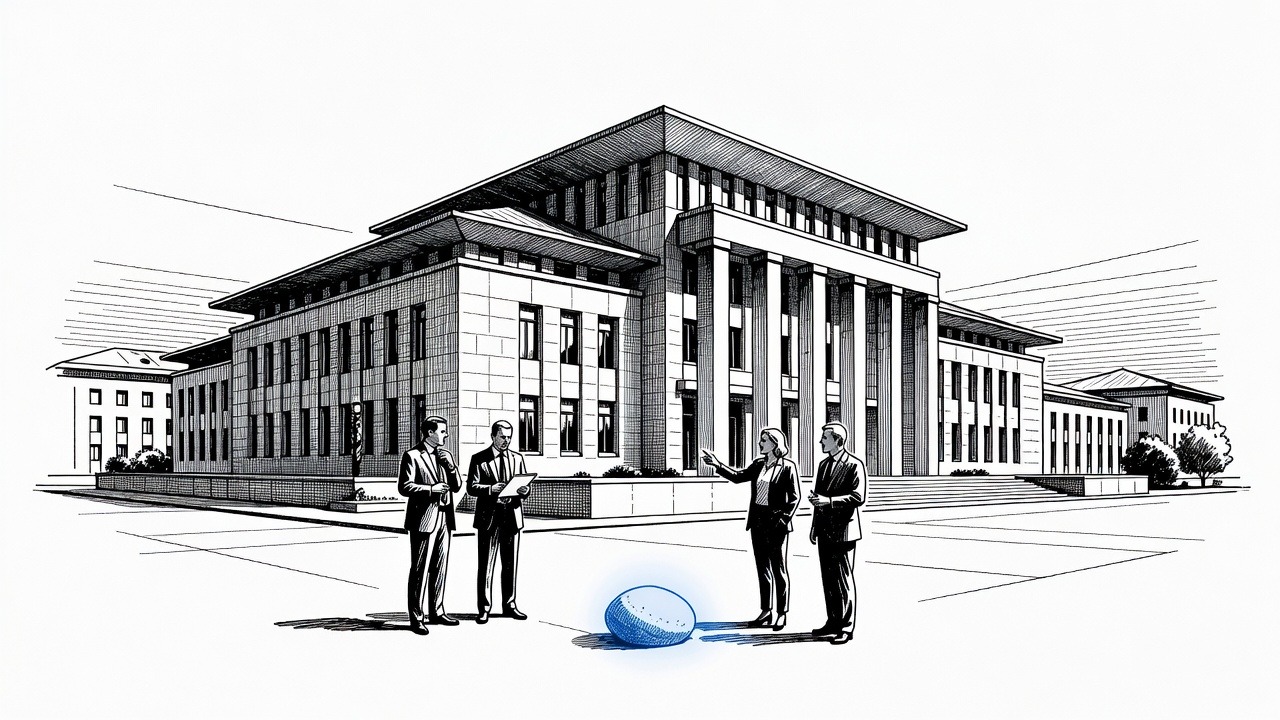
When a company says its own product may produce harms too large for any insurer to cover, believe it. Then ask who ends up holding the bill.
Anthropic's IPO filing warns that unintended behavior by AI models could create liabilities beyond available insurance limits, and that the insurance industry may lack the capacity or expertise to cover catastrophic incidents. Anthropic is not the villain for saying so. Its candor is better than the breezy denial we hear elsewhere in the industry. But a risk factor in an S-1 is a disclosure to investors, not a promise to the public. It tells shareholders not to count on a safety net. It says nothing of the people who might fall.
Insurance is the quiet regulator of modern capitalism. Insurers don't care about slogans. They price risk, and they refuse what they can't price. Factories got safer, buildings got sprinklers and cars got seat belts partly because someone with money on the line demanded it. When insurers back away, the market is saying the danger is not yet understood or contained. A responsible society would take that as a signal to slow down and set rules. The AI industry will take it as a reason to ask for a subsidy.
We have seen this before. Nuclear power was only commercially possible because Congress passed the Price-Anderson Act, which capped operators' liability and left the public to absorb the remainder of a catastrophe. Private profit, socialized tail risk. Expect a version of that here, dressed in the language of "innovation" and "competitiveness." The groundwork is already visible. Congress nearly adopted a decade-long moratorium on state AI laws before the Senate stripped it out by 99 to 1, and the White House has since kept pushing to override state rules. Washington's posture is to prevent states from regulating AI while declining to write federal rules of its own.
The industry's defenders have a real counterargument. Marsh's Jaymin Kim says AI should be treated as a technology, not a distinct peril, and that existing cyber, casualty and media policies may already respond. Insurance markets did adapt to the internet. Insurers are also tightening scrutiny of how businesses supervise AI, which could mean human-review requirements that actually protect people.
But look at what that argument concedes. Cyber policies were built around data breaches, privacy and intellectual property. Bodily injury may be excluded. Gartner's Alissa Lugo projects that AI-related fatality claims could exceed 2,000 worldwide by the end of 2026. Even if that estimate proves high, the people harmed are not abstractions on an actuarial table. They are patients, drivers and workers whose deaths may fall into a gap between exclusions. And "insurers will impose discipline" means private companies, answerable to no voter, will write the safety rules, with every incentive to protect their own balance sheets instead of the public.
The Left's answer should be simple and unapologetic. Make developers and deployers legally responsible for physical harm their systems cause. Require proof of financial responsibility before high-risk systems operate, as we do with cars, drilling and hazardous cargo. Do not hand out liability caps without hard safety obligations in return. Preserve states' power to act until Washington passes something real.
Democrats should also stop being shy about this. Too many of them court the industry's money and talk about "balance" while the sector writes its own exemptions. If the people building these systems say the downside may exceed what insurance can bear, the political class should not respond with a shrug and a ribbon-cutting. Accountability should come before scale, not after the first mass-casualty event.
The filing is a warning. The question is whether we regulate while the risk is still hypothetical, or wait until the bill arrives and send it to the public.
How it may affect me
If your employer, doctor's office or other business uses AI tools, ask whether its insurance excludes bodily injury or AI-driven errors. If you're harmed, recovery may depend on whether a policy responds. Owners of small businesses deploying AI should review their cyber and liability exclusions, since insurers are tightening supervision and human-review requirements.