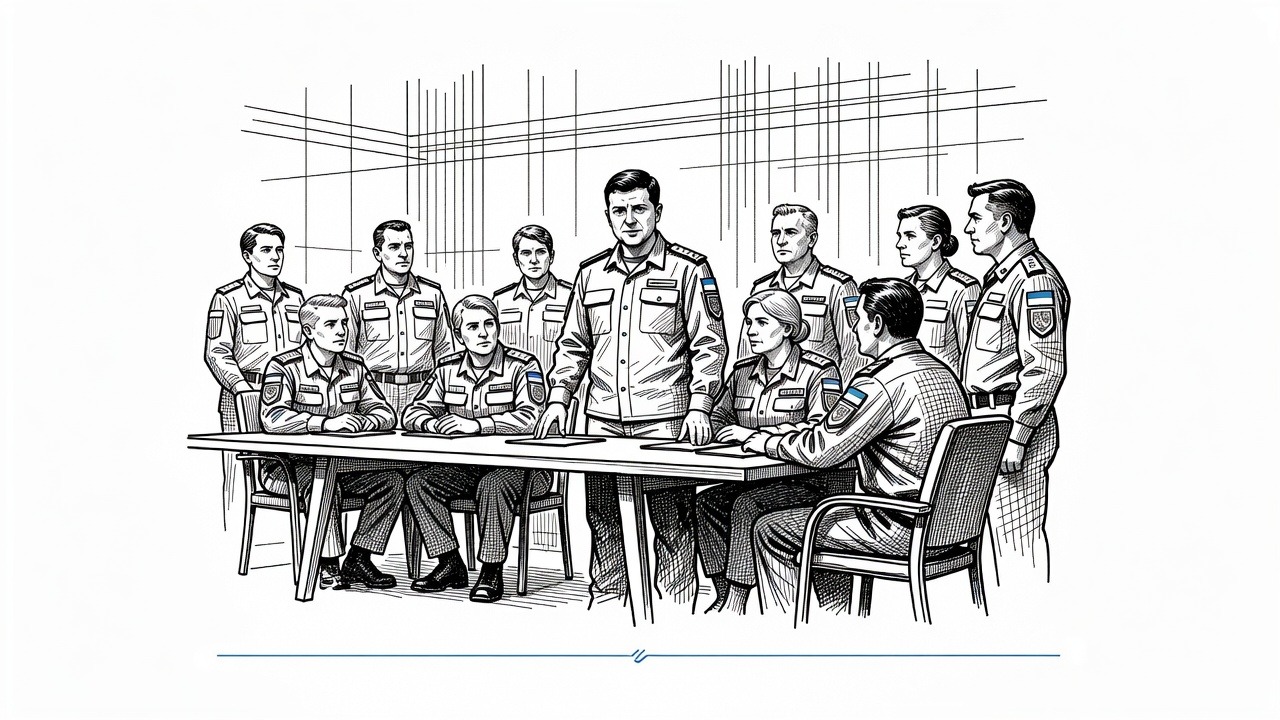
Israel's opposition has found its man to beat Benjamin Netanyahu, and he is a retired lieutenant general. That tells you something about the country, and not all of it is encouraging.
Start with what is right. Gadi Eisenkot's promise of a state commission of inquiry into October 7 is the most important sentence in this campaign. Netanyahu has spent more than two years dodging one. He is the prime minister on whose watch the worst massacre in Israel's history happened, and he is also a man on trial for corruption who has every personal incentive to keep the war going and the questions unasked. A government cannot investigate itself. Whoever wins, the demand for an independent inquiry should be the floor of Israeli democracy, not a campaign plank.
The same goes for the ultra-Orthodox draft. For years Netanyahu has bought coalition survival with exemptions, so that secular and traditional families send their children to Gaza and Lebanon while others are shielded by political deals. This is not culture-war noise. It is a question of who bears the cost of the state's choices, and the Israeli middle class has noticed. Eisenkot's pledge to keep Itamar Ben-Gvir, Bezalel Smotrich and their ilk out of government is the third item on the list. Those men are not a fringe. They sit in the cabinet, they run the police and the settlement bureaucracy, and they have made annexation and expulsion respectable topics.
So yes, remove Netanyahu. Anyone who watched this government try to gut the judiciary in 2023 knows the stakes.
But the Left should not confuse a change of leader with a change of direction. The opposition's central argument is that Netanyahu has been a poor manager of the state: weak on security, reckless on coalition partners, unequal on military service. It is a competence pitch. It says almost nothing about the thing that has defined Israeli politics for decades, which is what happens to the millions of Palestinians living under Israeli control. Eisenkot is a serious man who lost a son in Gaza and who pushed for a hostage deal when others stalled. He is also the general who, in 2008, helped articulate the Dahiya doctrine, the idea of answering attacks with disproportionate force against civilian infrastructure. Gaza looks like what that doctrine produces when it runs for two years. A candidate who won't talk about an end to the occupation is not offering one.
The arithmetic exposes another flaw. Israel's anti-Netanyahu bloc keeps treating Arab parties as untouchable, while courting anyone with an army résumé. Palestinian citizens are about a fifth of the population. A coalition that can only reach 61 by pretending they don't exist will fall short, or will be held hostage by whichever right-wing defector demands a ransom. Netanyahu knows this, which is why analysts like Dahlia Scheindlin warn that his coalition skills could keep him in office even after a poll loss. He doesn't need to win the country. He only needs the opposition to keep drawing the map the way he does.
The cruel irony is that the liberal camp's best hope depends on the voters it spent years sidelining. If Israel's democrats want to defeat a politician who governs by dividing citizens into those who count and those who don't, they cannot answer with an alliance built on the same division.
There is a real chance to end Netanyahu's era. Take it. Then demand the inquiry, the equal draft, and a political horizon for Palestinians, and don't accept a general's discipline as a substitute for a democratic vision.