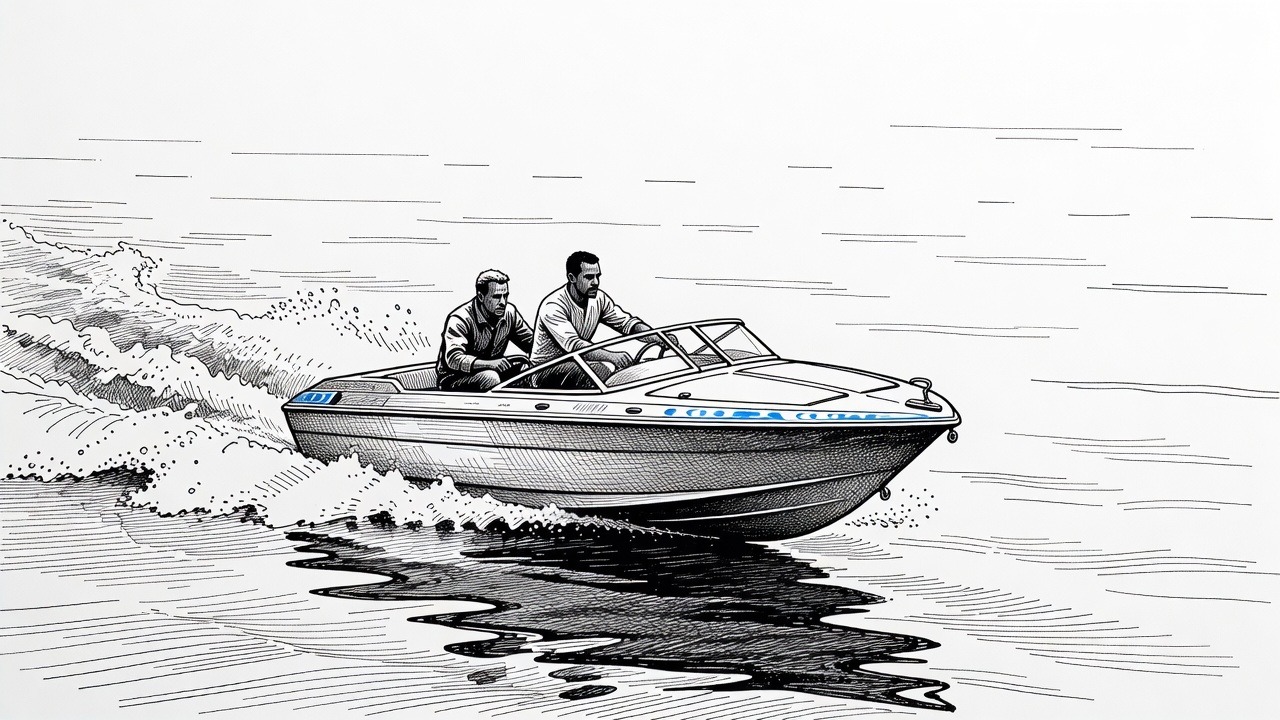
The U.S. military killed five people on a boat in the eastern Pacific, and a familiar chorus is already more upset about those deaths than about what the boat was allegedly doing. Southern Command says intelligence placed the vessel on known narcotics routes. It has not shown the public drugs on deck or names on a manifest. That gap matters. It does not turn the mission into a crime.
Start with the scale the legal seminars treat as background noise. Drug overdoses have been killing Americans on the order of a hundred thousand a year. Fentanyl does not arrive by seminar. It arrives because criminal organizations with money, logistics, and a body count that would embarrass a small army treat the eastern Pacific and the Caribbean as a delivery lane. For years the approved answer was interdiction theater: chase the boat, seize what you can, watch the market reroute, and hold a press conference. The bodies accumulated on our side of the water.
This strike, conducted by Joint Task Force Western Hemisphere and accompanied by video, is one hit in a campaign the military's own summaries put at more than seventy strikes and at least 240 dead. Critics call that a legal and humanitarian scandal. Some of the criticism is worth hearing. A republic does not get to kill people on a classified hunch and then offer trust as a substitute for law. If the intelligence standard is thin, say so and fix it. If the domestic legal theory is that the president felt like it, that is not a theory conservatives should salute just because the targets are unsympathetic. War powers are not a mood. Congress should put the authority in writing: who may be struck, on what evidence, in what waters, with what reporting. That is how you discipline force. It is not how you forbid it.
What does not deserve a hearing is the pretense that these crews are misunderstood mariners entitled to the full criminal-process fantasy of a Miami courtroom before anyone may shoot. On the military's account they were operating as part of a smuggling system that kills Americans at industrial scale. International waters are not a sanctuary because a law professor would prefer a warrant. States have always been allowed to meet armed threats to their people before the threat reaches the pier. The alternative on offer is not humane caution. It is a rules-based order that binds everyone except the people running the poison.
The effectiveness objection is the serious one, and it is usually deployed in bad faith. Five dead smugglers will not end addiction in Ohio. Demand, chemistry, and precursor chemicals are part of the picture, and anyone who says a missile replaces border control, local policing, or families is selling a fantasy. But a market that can move product with near impunity will move product. Raising the chance that a known route ends in a strike is not symbolism. It is cost. Cartels understand cost. They have never understood our lectures.
Notice where the outrage budget goes. Human rights groups and a slice of legal academia have spent this century more fluent in the rights of the people we shoot than in the obligations we owe the people those organizations kill. Lawmakers who cannot pass a coherent border or fentanyl bill discover deep constitutional feeling the moment the military acts against a smuggling boat. Process as moral superiority, American deaths as a statistic on the way to the footnote: that is not caution. It is a class reflex.
The government owes the country evidence and a statute, not an apology. If the boat was what intelligence said it was, the strike was the state doing a job it has spent decades subcontracting to press releases. If it was not, heads should roll, and the video should be the start of an accounting rather than the end of one. Those are the only two serious responses. Performing grief for a suspected trafficking crew while the overdose numbers barely move the news cycle is not seriousness. It is how a great power talks itself into losing a fight that already reached our streets.
How it may affect me
These strikes will not clear fentanyl from your county. If someone in your household uses opioids or buys pills that were not prescribed to them, assume contamination and keep naloxone where you can reach it; many pharmacies and local health departments still dispense it. A locked cabinet, a direct conversation with a teenager, and a 911 call when breathing slows will matter more this month than anything Southern Command does in the Pacific.