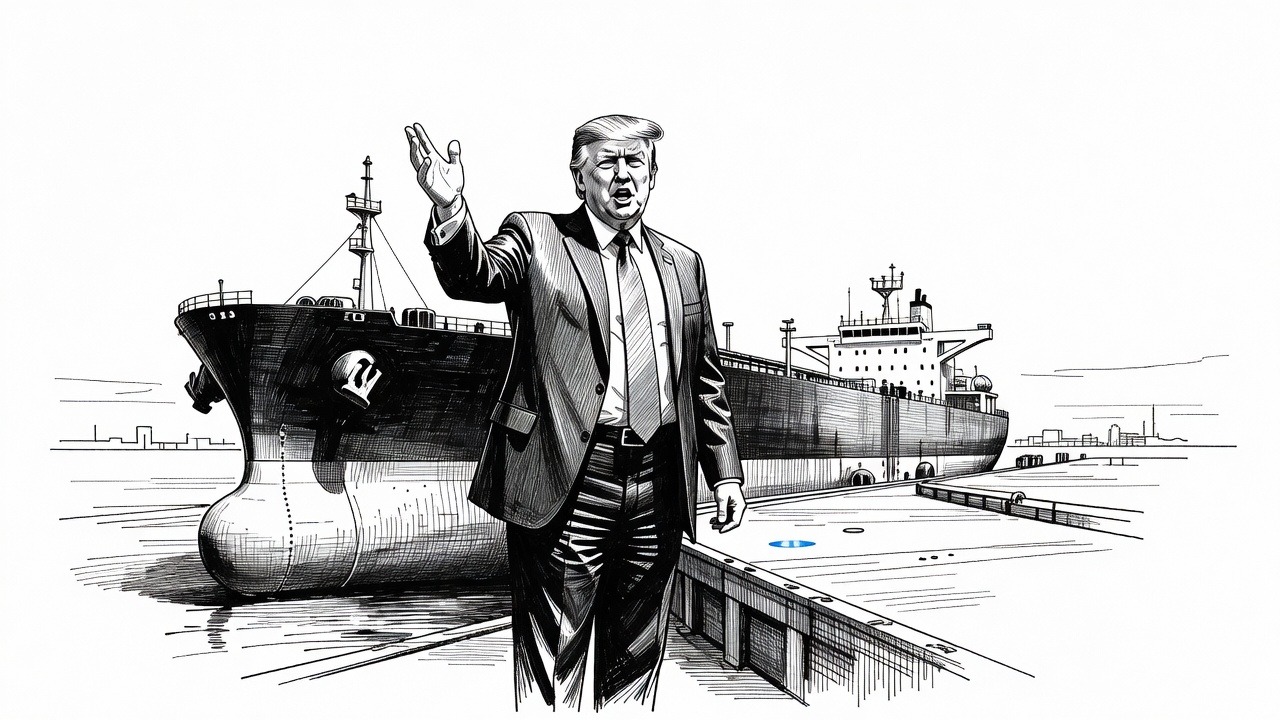
Picture the scene. The President of the United States stands at a port in South Texas, beside a tanker full of Venezuelan crude, and the Secretary of State is on the stage next to him. We are told Marco Rubio is not there as a campaign surrogate. He is there as national security adviser, to "discuss matters with the president."
That is a thin fiction, and nobody involved expects it to be believed. Nobody wheels a diplomat out to a partisan rally to confer about national security. He is there because the administration wants a picture: American power, foreign oil, and men who "negotiated" it. The distinction between governing and campaigning exists to keep taxpayer-funded travel on the right side of the rules. It deserves exactly the contempt it earns.
The prop deserves more scrutiny than the staffing. Oil from Venezuela, a country the administration has treated as a prize to be managed, is being offered to Texas voters as a trophy. Foreign policy becomes a product demo. Whatever one thinks of how Washington arrived at its current role in Caracas, a country's government is not a commodity supplier, and its crude is not a campaign accessory. Say it plainly: this is a president telling Americans that the point of a foreign intervention is the barrels.
Here is the part the cameras are built to crop out. The Democratic message in this election is affordability and ending the war in Iran, and those are one issue, not two. Wars in the energy-producing world do not stay abroad. They arrive at the pump, in the grocery bill, in the cost of moving anything anywhere. A tanker photo op is meant to say the White House has energy under control. But the administration cannot celebrate its mastery of the world's oil while it is also running a war in one of the world's most important oil regions. Either the president controls this situation or he is the reason it is volatile. He does not get to claim credit for supply and deny responsibility for risk.
Republican candidates, by the account of this very story, are campaigning on taxes and cultural issues. Think about what that concession means. With a war underway and household budgets stretched, the party in power wants to talk about almost anything else. Culture-war themes are what a party reaches for when it prefers that voters not discuss their own lives. Twenty stops in states Trump already won, and only six in battlegrounds, suggests an operation more interested in rallying its base than persuading anyone who has doubts.
Democrats have a job here, and they should not be timid about it. It is not enough to be against the war. They need to say what the war costs, who is paying, and who is posing in front of the oil. They should also resist the temptation to treat Venezuela as a purely partisan scoreboard. The Left's argument has always been that foreign policy should answer to the public, with congressional authorization, transparency about aims, and honest accounting of costs. An administration that blurs national security and campaign events is trying to make accountability harder, not easier.
Midterms are supposed to be the moment when voters get to ask what they have received for what they are being asked to absorb. On Tuesday, the White House gave its answer: a tanker, a backdrop and a secretary of state who is definitely not there for the campaign. Voters should ask for a better one.