Follow the money in this deal and it goes in a circle. Nvidia says it will invest $3 billion in Meta. Meta says it will use more Nvidia chips. Meta is also raising capital through share sales, reportedly as much as $25 billion in a secondary offering, to fund an AI buildout in which Nvidia is the dominant supplier. Nvidia's cash becomes Meta's equity, which becomes Nvidia's revenue, which justifies Nvidia's valuation, which funds the next investment.
This is not necessarily illegal, and it is not necessarily a scam. But we have seen the shape before. In the telecom boom, equipment makers financed their own customers' purchases and booked the sales as proof of unstoppable demand. Lucent and Nortel were not run by fools. They were run by people who found that a hot market lets you mistake your own money for someone else's appetite. When it turned, the damage landed on workers, shareholders and towns that had been promised a future.
The question for the Left is not whether AI is real. It is. The question is who gets to decide how much of the country's capital, electricity and land is committed to it, and who eats the loss if the bet goes bad. Right now the answer is two companies and their executives. Jensen Huang and Mark Zuckerberg are setting the terms of a multibillion-dollar infrastructure project that will reshape power grids and labor markets, and the public's role is to pay the utility bill.
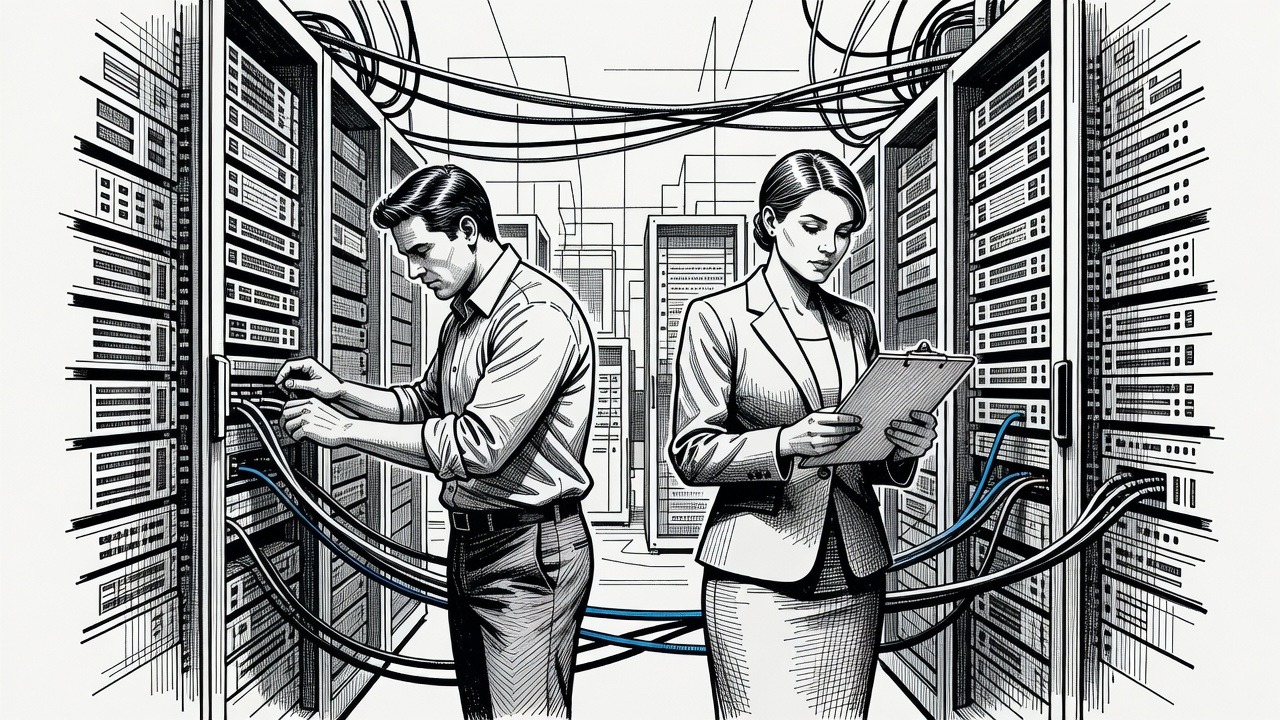
That is not rhetoric. Data center demand is already straining regional grids, and utilities are pushing for new generation and transmission, costs that regulators can spread across ordinary ratepayers. A retiree in a county where a hyperscale campus lands did not vote for it, did not negotiate for it and will not share in the stock gains. She gets the rate case.
Then there is the product being sold. Huang says AI agents can understand goals, use tools and complete tasks for users. Zuckerberg talks about personal agents. Notice how fast "complete tasks" slides into "replace the person who used to complete them." Every executive in this industry will tell you AI will free people from drudgery. Very few will commit to sharing the gains with the people whose work trained these systems or whose jobs they are priced to displace. A company that announces tens of billions in spending on agents has told you what it expects to save, and labor costs are the line item where the savings come from.
Democrats should be embarrassed by how little they have to say here. The party that once broke up Standard Oil and regulated the railroads treats the AI buildout as an economic miracle to be cheered or a culture-war sideshow about chatbot bias. Neither is serious. Regulators should be asking whether vendor-investor arrangements like this one distort competition by tying one company's growth to its supplier's balance sheet. They should require disclosure of how much AI revenue is funded by the suppliers themselves. States should make data center developers pay the full cost of the grid capacity they consume, rather than quietly socializing it. And if this much of the stock market now rests on two or three firms' mutual promises, pension funds and index investors deserve to know their exposure.
The Right will say this is capitalism working: private money, private risk, no subsidy. That argument holds only until the risk becomes systemic. If the bubble deflates, the companies will cut staff and issue statements about discipline. If it gets bad enough, they will explain that they are too important to fail.
The country should not wait for that moment to ask who is really underwriting this boom. A $3 billion check between two giants is a small number in this industry. It is a large clue about how the whole thing is built.
How it may affect me
Most workers have indirect exposure through index funds and 401(k)s, where a few AI-linked giants make up a large share of holdings. If you live near planned data centers, watch your state utility commission's rate cases, where grid costs can be passed to household bills.