Every few years France burns, and every few years someone abroad announces they know why before the fires are out. This time it is Donald Trump, who has decided that Muslim migrants are to blame and that Emmanuel Macron should close the borders. The reflex is familiar. It is also a way of not looking at the thing the protesters actually said.
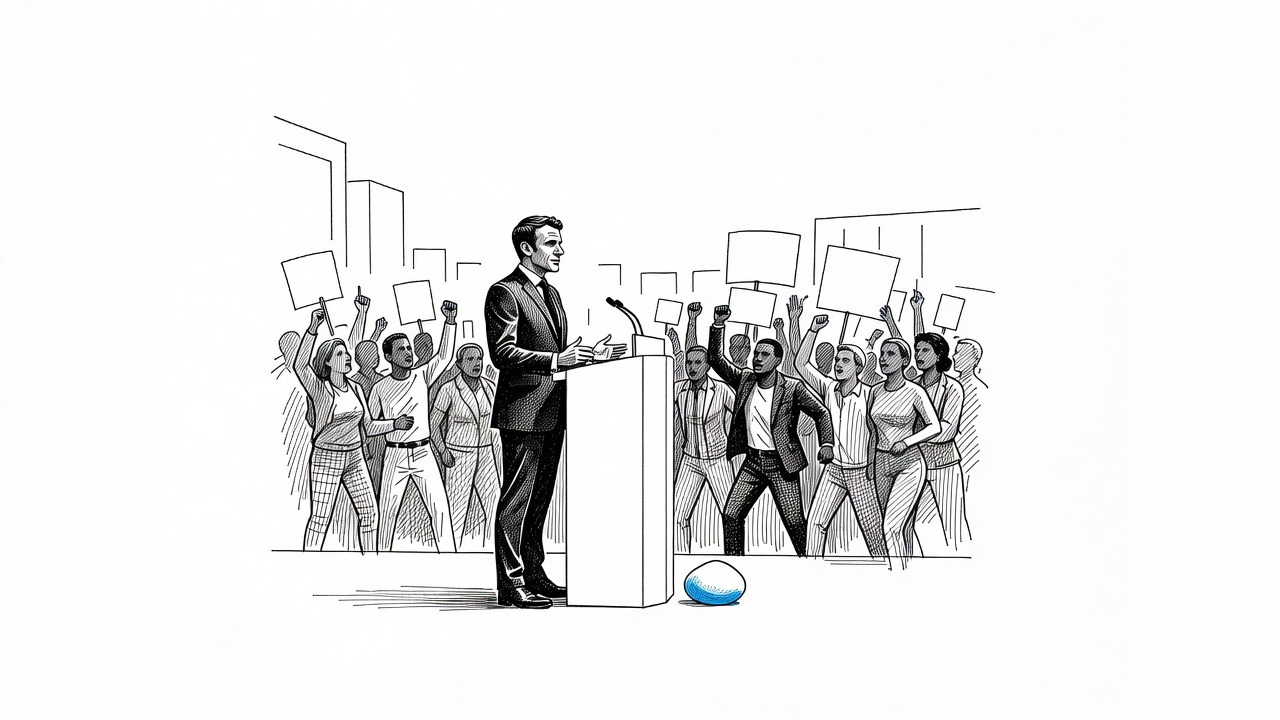
According to the reporting, this began as protest over rising living costs and escalated into rioting and looting in Paris and other cities. That is not an exotic story. It is how French politics has worked for years. The gilets jaunes of 2018 rose over fuel prices and a sense that Paris governed for the comfortable. They torched cars, smashed storefronts and defaced the Arc de Triomphe. Nobody serious explained that as a religious invasion. The 2023 riots followed the police killing of a 17-year-old, Nahel Merzouk, and they were about policing and the contempt young people in the banlieues feel from the state. Different triggers, same pattern: people who feel unheard, a government that answers late, and a night when the anger spills over.
Trump's line works because it turns an economic grievance into a civilizational one. If the problem is Muslims, no one has to ask why groceries, rent and energy bills are crushing households, or why a president with a thin mandate keeps governing around parliament. It is the oldest trick on the nationalist right: when wages stagnate, find a minority to carry the blame. The man who tells Macron to seal his borders is also the man who has made a career of promising cheap everything and delivering a tariff bill. His credibility on working-class economics is not a strong card to play.
But the Left should not let Macron off easily either. He is right to reject the 'invasion' script. He is on weaker ground when he says AI-generated images were used to depict events that never happened in France and then names none of them. That may well be true; fabricated viral content is real, and the foreign ministry's offer to share information with other governments is a reasonable step. But 'trust me, it was fake' is not evidence, and it is a poor posture for a president whose popularity has collapsed. Blaming foreign manipulators is the other convenient explanation, the one that lets a government treat unrest as an information problem rather than a verdict on its record.
There is also something close to farce in the setting. The president is rebuking Trump's anti-Muslim rhetoric while visiting Gulf energy suppliers. Energy costs are precisely what is squeezing French households. Courting petro-monarchies for supply is realpolitik, and I do not pretend any French leader could avoid it. But it should embarrass everyone who talks about France's Muslims as a threat while its economy depends on Muslim-majority states. The people being blamed are French citizens, workers and neighbors. They are not an arriving army.
Macron has also helped build this climate. His government hardened immigration policy in 2023 and spent years chasing the far right's vocabulary on security and identity. Appeasing that framing never defanged it. It legitimized it, and now Trump borrows it freely.
The Left's argument here is simple and should be made without apology. Riots are a symptom. Treat them as a religious plot and you guarantee the next one. Treat them as a flare from a society where ordinary people can no longer afford ordinary life, and you have to do something harder: lower costs, restore trust in the police, and govern with consent. Foreigners with hot takes and a president with unexplained fakes are both ways of avoiding that work.