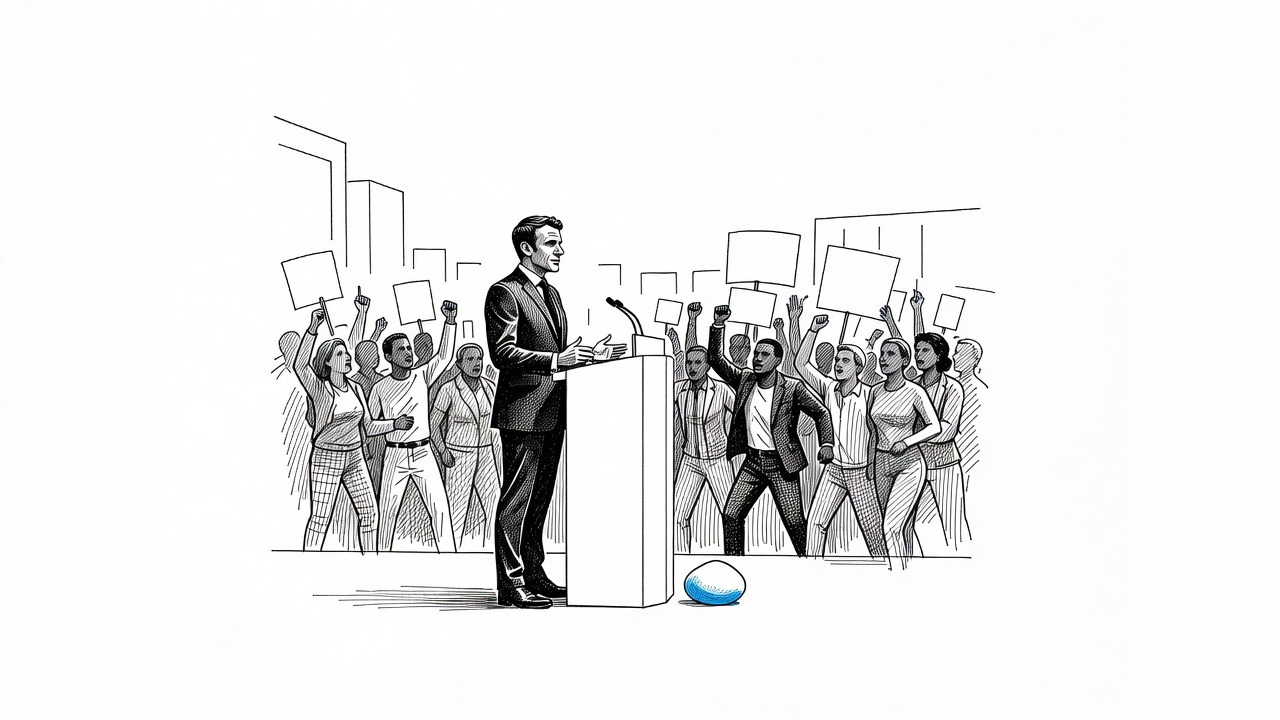
Emmanuel Macron has found the sentence he wanted. Half a million people took to the streets over rent, hospitals, schools and the price of ordinary life, and the president's response was to talk about "insurrectionist" elements from the radical far left. Looters will pay, he says. Fine. People who torch a small shop or smash a bus shelter are not doing anything for the poor, and the Left should say so without hedging. They hand the government its headline and shift attention from the 500,000 to the few hundred.
But notice what the president's framing does. Out of a movement that began with students complaining about the conditions in which they are taught, he has extracted a law-and-order story. Students did not start this because of a far-left plot. They started it because the institutions meant to educate them are visibly fraying. A president who sees only arsonists in that picture has stopped looking.
The larger story is who gets asked to pay for the budget. Lecornu leads a minority government, which exists because Macron called a snap election in 2024, saw the left-wing alliance finish first, and then declined to hand it the premiership. Since then he has run through a series of prime ministers, each tasked with squeezing a budget out of a parliament that did not vote for his agenda. Voters rejected the project, and the project carried on.
Now the bill arrives. The Banque de France says rising borrowing costs reflect political uncertainty, and that the 3% deficit target for 2029 is still achievable. Notice the word "uncertainty." Democracy, in this telling, is the risk factor. Voters disagree, parliament is divided, protesters fill the streets, and bond markets get nervous. The proposed cure is always to calm the creditors, and the creditors are always calmed with cuts to services that ordinary people use, not with higher taxes on those who have done best.
That is a choice, and it is worth saying so. The 3% figure is not a law of physics. It is a Maastricht-era benchmark that politicians treat as scripture when they want to cut and ignore when they want to spend. France got to a deficit well above it partly because Macron's own governments cut taxes on capital and business, abolished the general wealth tax in 2017, and promised that the gains would trickle down. Wages and hospital budgets did not feel it. Meanwhile proposals for a modest minimum levy on the very largest fortunes have been treated by the government as radical, while cuts to public services are described as responsible.
The Right will say that France is overspending and cannot keep borrowing, and it is true that debt costs matter. A left that pretends otherwise is not serious. But "the deficit must fall" does not answer the question of who should carry the burden. A government that wanted broad consent for belt-tightening would ask the wealthy first and the students last. This one has done the opposite and then expressed surprise at the crowds.
The Left has its own work to do. A movement this large needs more than a mood. It needs a clear program, a strategy for parliament, and the discipline to separate itself from people who burn things, because every fire is a gift to those who would rather talk about fire than about schools. Anger about prices and public services is legitimate, widely shared and politically potent. It is worth more than a night of tear gas.
Macron wants the country to look at the broken windows. The country should look instead at a president without a mandate, a budget written for the bond market, and half a million people asking why the cost of fixing France's finances always lands on them.