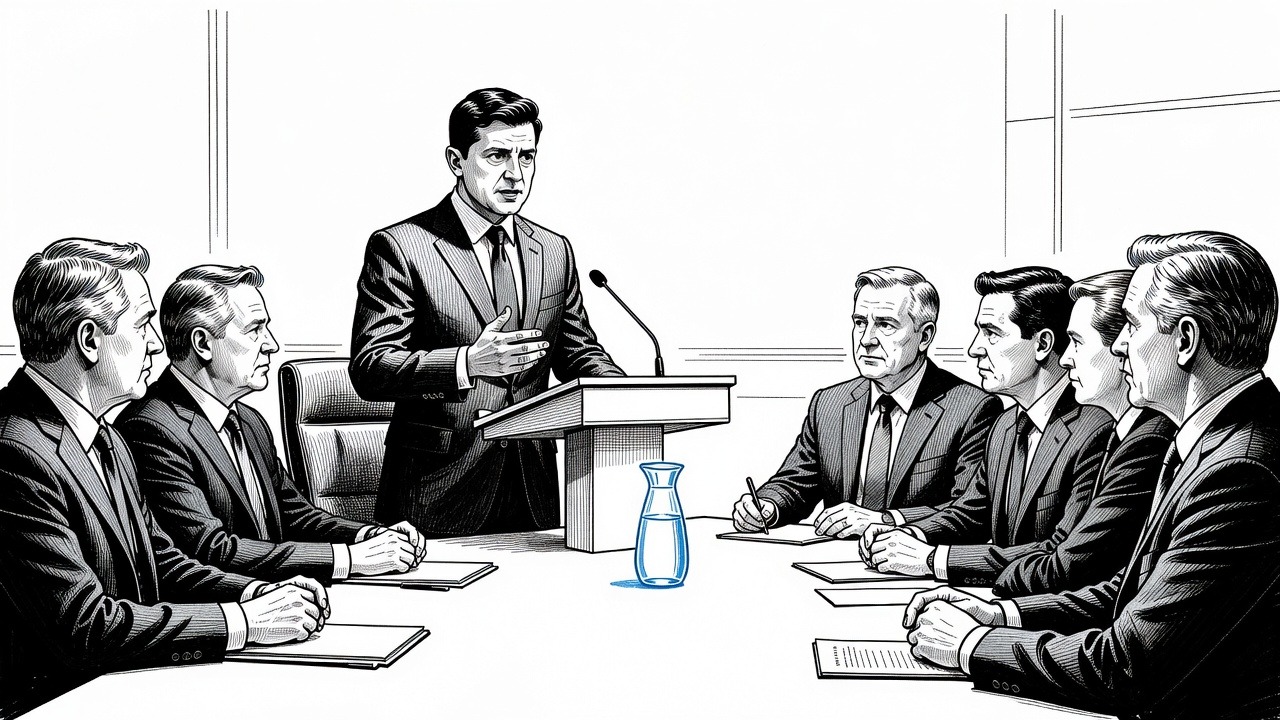
Read Donald Trump's Kansas announcement slowly, because the sequence is the scandal. Two weeks before an election, the president stands beside a vulnerable senator and announces $8 billion for farmers squeezed by diesel prices. The money's source, by the administration's own account, doesn't have enough in it. Congress would have to approve more, or funds would be pulled from other programs. The checks won't arrive until late November or December, safely after the ballots are counted. And the permanent year-round E15 policy that Midwest corn country has wanted for years? That comes only if Roger Marshall beats Adam Hamilton.
That last part deserves to be said plainly. The president is telling voters that a public policy is theirs to receive if they elect the right man. That isn't governance. It's the logic of a protection racket with a Stetson on: nice ethanol market you've got there.
If E15 is good for Kansas farmers, it's good for Kansas farmers whether or not Marshall wins. Marshall is a Republican senator serving under a Republican president, with his party controlling Congress. If he needed a campaign rally to unlock a policy he supposedly champions, then either he couldn't deliver it or the White House was holding it back until it could be monetized as a political favor. Neither is flattering. A permanent change of this kind is also a matter for legislation, not a rally-stage pledge, which makes the promise more theater than commitment.
The aid itself follows a pattern farmers know too well. This administration's trade wars helped cripple export markets and drive up costs, then handed out bailouts to soothe the people it had hurt. Bailouts aren't a farm policy. They're a dependency strategy: break the market, then present yourself as the rescuer. The farmer ends up grateful instead of secure, and gratitude is much easier to turn into votes than stability is.
And consider who actually benefits from the way these programs work. Farm payments tend to flow most generously to the largest operations, while family farms, the ones that populate every campaign speech, are left with the uncertainty. A one-off announcement with no payment formula, no confirmed funding and no date before Election Day tells you this is about the news cycle, not the balance sheet. USDA is still "reviewing data" to determine how much anyone gets. The number came before the math.
Hamilton's campaign says Trump's attacks are meant to shift attention from fuel prices, health care access and government corruption. That's the right instinct, and Democrats should press it harder. The pitch to rural Kansas shouldn't be that farmers deserve no help. It's that they deserve help that doesn't depend on whom they vote for: predictable trade policy, durable fuel rules passed into law, and rural hospitals that stay open. Democrats lose farm country when they sound like they're arguing about Washington. They can win a hearing by asking a simple question: why does your relief always arrive just after you've been told how to vote?
The Republican answer will be that farmers are hurting now and Trump is the only one doing anything. Fine. Then do it without a loyalty test attached. Pay the money, using funds Congress has actually appropriated, on a schedule farmers can plan around. Pass E15 as law. Treat rural Americans as citizens with claims on their government, not as a bloc whose relief is a reward for good behavior.
The cheapest thing in politics is a promise made on a stage. The most expensive is a democracy where public aid is a campaign prop.
How it may affect me
If you farm, don't budget around this money yet: no payment amounts are set, the funding source is short, and checks aren't expected before late November or December. If funds are shifted from other programs, taxpayers and users of those programs could bear the cost. Ethanol-related fuel rules also remain uncertain.