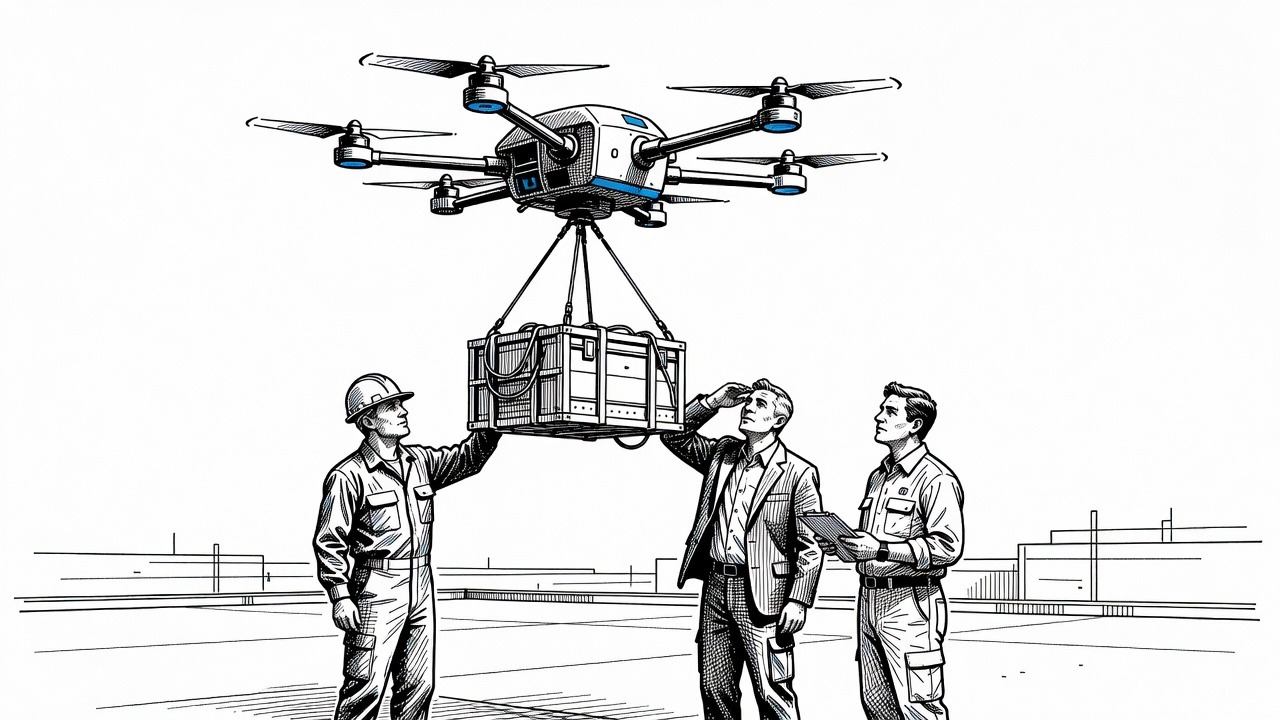
Four brigades. Seven days of planning. A hexacopter built to drop bombs, retrofitted to carry a man. Seventy-five minutes in the air over nearly 40 miles, while other units flew decoy drones to keep Russian operators looking elsewhere. That is what it took to get one wounded Ukrainian soldier off a battlefield, if Kyiv's account is accurate. Ukrainian military sources, not independent observers, are the ones telling us, and they have obvious reasons to want a heartening story.
It is a moving story. It is also an indictment.
The soldier, Konstantyn Vlasenko, was reportedly stranded for nearly 500 days. A ground robot sent for him was destroyed. Mines and Russian drones made the terrain impassable. For more than a year, one of the world's more sophisticated militaries could not reach a hurt man. Whatever the exact number turns out to be, the point stands: modern war has made rescue itself a combat operation. The old promise of the "golden hour," that you will be pulled out fast if you are hit, is gone along much of this front. Soldiers now wait days for evacuation, and sometimes far longer.
The celebration should not crowd out the question of who is carrying this. The people stuck in that kill zone are not strategists or defense contractors. They are conscripts and volunteers, many of whom have been serving for years with no fixed end to their service. Ukraine has no clear demobilization path, and the debate over discharge dates is among the most painful in the country. Call it what you like, but a person with no end date to their service and no guarantee of rescue is carrying a burden the rest of us should find intolerable.
The Gurzuf co-founder deserves credit for his candor. He said aerial evacuation should remain a last resort because of the risks to injured passengers. That is the honest engineering and medical verdict, and it exposes the real gap. Improvisation is heroic, but improvisation is what you do when systems have failed. Ukrainians are inventing battlefield medicine in real time because the war has outrun what their medics can safely do. Meanwhile, UN investigators have accused Russia of using drones to hunt civilians in the Kherson region. A war in which the sky is a weapon pointed at anyone who moves is one in which compassion has to be smuggled through.
There is a lesson here for my own side. A faction of the Left treats Ukraine as an abstraction, a proxy contest, a budget line, a reason to demand a ceasefire without asking on whose terms. The Vlasenko story drags the war back to the human scale. Every month the Ukrainian army spends doing this alone, with aid slowed by Republican brinkmanship in Congress and by European hesitation, is a month in which more soldiers are left waiting on the wrong side of a minefield. Solidarity means more than a tweet. It means air defense, drone countermeasures, medical supplies and a clear Western strategy that does not make Ukrainians ration their own survival.
I am not romantic about the arms business. Drone makers will turn this rescue into a marketing reel, and the same ingenuity that carries a wounded soldier also drops munitions. Wartime innovation is a profitable story for companies, and we should keep asking who is profiting and who is bleeding. Ukrainian workers are not a testing ground for Western defense start-ups.
But let the moment do its work. A man left for hundreds of days finally came home through the air, because other soldiers refused to leave him behind. The rest of us should be as stubborn. The test of Western support is not whether we applaud the miracle. It is whether we make the next one unnecessary.