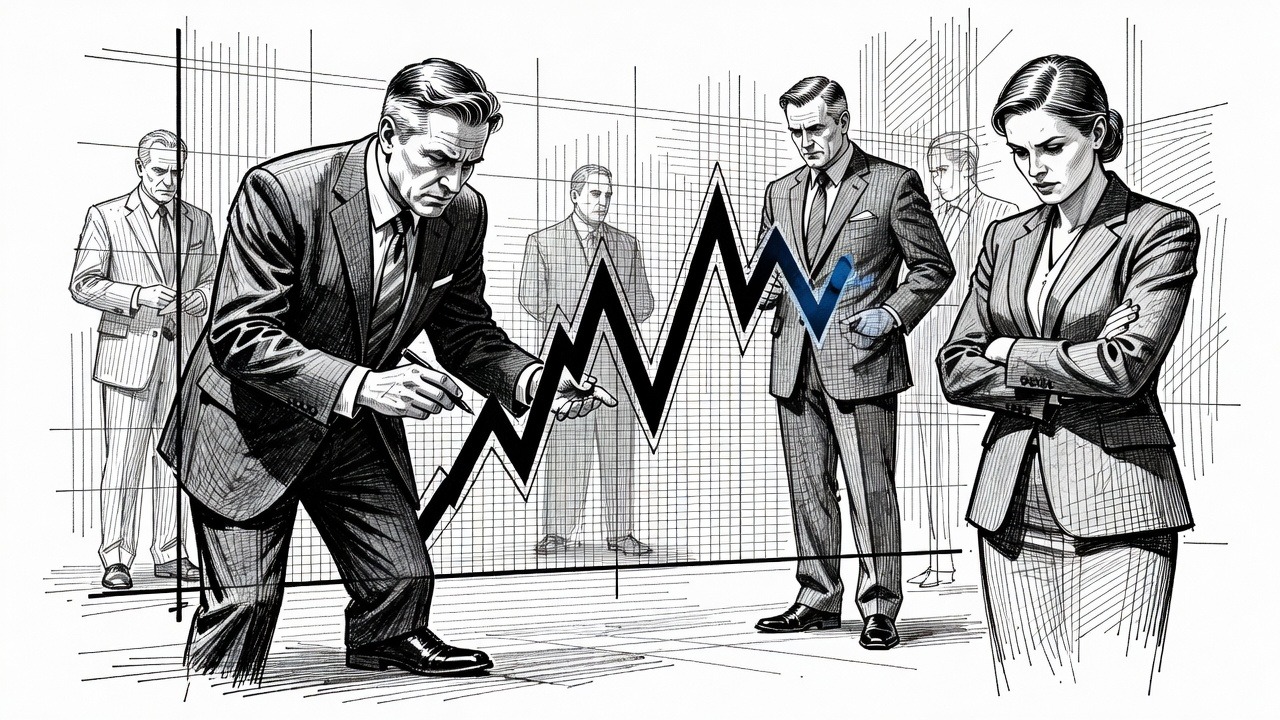
Let's keep some perspective on the carnage. The Nasdaq fell 4.5% in a week. It was the worst week since June, not the worst since 2008. Nobody is jumping out of windows. But the sell-off is worth reading closely, because it shows how much of the American economy now depends on a story told by a few companies, and who gets stuck with the bill if the story turns out to be exaggerated.
Start with what rose. While AI darlings sank, money flowed into healthcare and consumer staples, the things people buy when they are nervous. Investors, in other words, are doing what ordinary households have done for years: hunting for safety in a place where prices keep climbing. September CPI came in at 3.7%, above forecasts. Producer prices are up 6.3% from a year ago. Wall Street calls that a "rate concern." For a family, it is a grocery bill, a rent renewal and a credit card balance charging more than 20% interest.
The real scandal is the asymmetry. For two years the AI boom has been sold as the engine of national prosperity, and a remarkable share of recent growth has come from data-center construction and chip spending. Yet that prosperity has been oddly concentrated. A small group of shareholders and executives captured the gains. Meanwhile, communities near data centers are being told to accept higher power demand and strained grids, and in many places state governments are handing these companies tax breaks that no teacher, nurse or small manufacturer could ever get. Public risk, private reward: that is the business model.
Now look at CoreWeave, down 25% in a week. It is a company built on enormous borrowing against the promise of future AI demand. When inflation data pushes the Federal Reserve toward holding rates higher, that kind of leverage stops looking visionary and starts looking fragile. A bubble does not need a villain to burst. It just needs the cost of money to stop being free.
Here is where the Left should be loud. If the AI trade wobbles, the pressure on the Fed to keep rates high gets worse, and the people who pay for that are not Nasdaq traders. They are first-time buyers locked out of mortgages, small businesses that can't refinance, and workers whose employers decide that a cooling economy is a fine moment for layoffs. When markets sneeze, the standard response is to protect asset prices. When wages stall, the standard response is patience. We should notice that double standard every time.
Democrats deserve their share of blame. Too many of our governors and mayors have competed to host the next data-center campus without asking what the public gets back: ratepayer protections, real job guarantees, clean-energy requirements, tax contributions. We have been so eager to look pro-innovation that we have negotiated like supplicants. A party that claims to stand against concentrated corporate power cannot treat the biggest concentration of corporate power in a generation as an economic development program.
The retirement angle matters too. Millions of Americans hold these stocks through 401(k)s and index funds, often without knowing how top-heavy those funds have become. They were told diversification protects them. But when a handful of companies dominate the index, a bet on "the market" is a bet on AI. Their retirement security has been quietly tied to a speculative story they never voted on.
None of this means AI is fake, or that one bad week proves a crash. It means we should stop pretending that Wall Street's mood is the economy's health. Tesla, SpaceX and Meta report next week, and the commentary will be about guidance and multiples. The better questions are plainer. Who is carrying the risk? Who is being asked to wait for the benefits? And why does every boom feel like a gift to the few, and every correction like a bill sent to everyone else?
How it may affect me
If you hold a 401(k) or index fund, check how much is concentrated in a few large tech and chip stocks; your "diversified" portfolio may be less diversified than you think. Persistent inflation also raises the odds that the Fed keeps rates high, which means borrowing costs for mortgages, auto loans and credit cards may stay elevated longer.