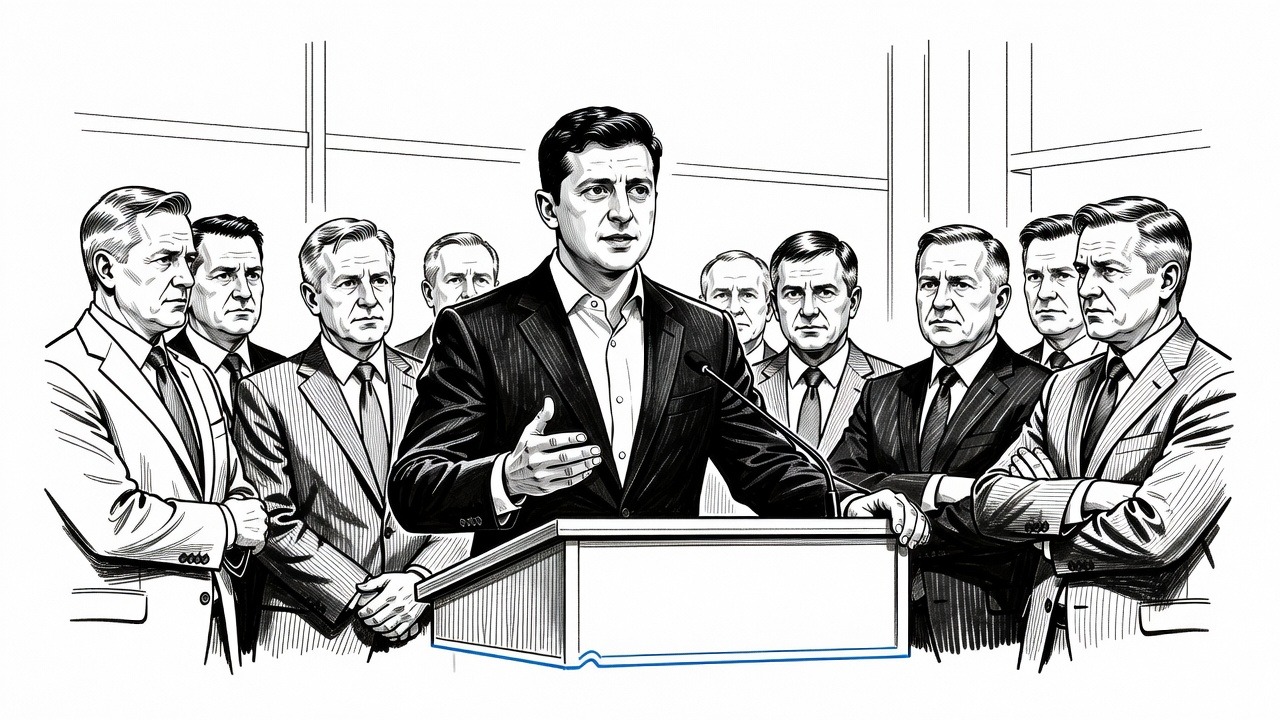
A Homeland Security secretary went public to tell us the case against a sitting congresswoman is "strong," that a grand jury will see the evidence, and that none of this is political. When the government has to insist that loudly, the rest of us are entitled to look at the facts.
Start with what the case is. Federal agents searched Ilhan Omar's Washington home and took her personal phone. Relatives have been subpoenaed. The alleged crime concerns immigration paperwork filled out decades ago by her late father. He cannot testify, cannot explain, and cannot be punished. Most federal crimes carry a five-year statute of limitations, so a prosecution built on documents that old is not an ordinary prosecution. The obvious worry, and the one Omar is voicing, is that the real target is not a dead man's forms but his daughter's citizenship and her seat. That worry is not paranoid. Donald Trump has spent years saying Omar should be sent back to a country she left as a child refugee, and he has made her a standing villain at rallies and on social media. An investigation that happens to be aimed at the same woman, and that rests on her immigration history, deserves to be read against that record.
Then there is the pattern. This Justice Department has already tried to prosecute people the president publicly despises, and some of those cases collapsed under their own sloppiness. Prosecutors are supposed to follow evidence to a person. Here, the person was named years ago from a podium, and the search for a crime seems to have followed.
The obvious rebuttal is that a judge signed these warrants. True, and it matters. No member of Congress is above the law, and the Left should never claim that being unpopular with Donald Trump amounts to immunity. But warrants are requested by one side, in secret, with no one arguing the other. A judge's signature establishes probable cause. It does not establish good faith, and it says nothing about why this case, why now, and why with this much public narration from a cabinet secretary.
The seizure of a sitting lawmaker's phone also raises a question that should alarm members of both parties. That device holds constituent contacts, legislative strategy and private communications with colleagues. The Constitution's Speech or Debate Clause exists to keep the executive branch from rummaging through exactly that. Courts will have to decide how it applies. Republicans who spent years warning about federal overreach should want those protections enforced now, because the next target may not be someone they dislike.
The human side is easy to skip past. Her sister had a book event at the University of Minnesota Rochester and canceled it. The bookstore cited a family emergency, and we should not claim more than that. But picture the position: relatives of a politician, many of them private citizens, being pulled into a grand jury process over paperwork from another era. That is how this kind of pressure works. The indictment is not the point. The ordeal is.
This is also a test for Democrats. Omar is not a comfortable ally for many in her party. Plenty of them would privately prefer to say "let the process play out" and move on. That is the wrong reflex. A principle that applies only to the politicians you like is not a principle. If the government can use decades-old family records, a compliant grand jury and a press conference to hunt an elected critic, it can do the same to anyone's sister, anyone's father and anyone's citizenship.
If the evidence is as strong as Mullin says, there is an easy way to show it: bring a case, in open court, on its merits, before a jury. Until then, a naturalized Black Muslim congresswoman is being investigated by an administration that has long said it wants her gone. Skepticism is the minimum a democracy owes her.