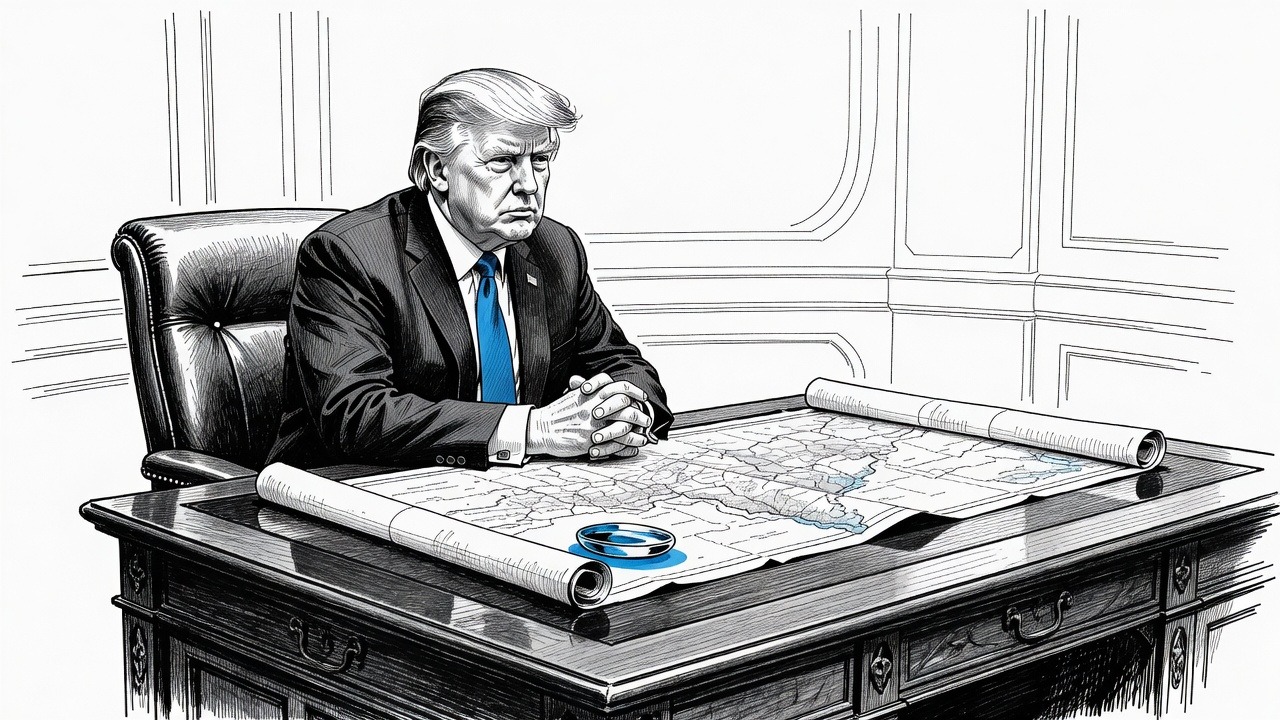
Let's start by giving the other side its best point. Failing the bar exam is not a moral failing, and it has nothing to do with whether someone can stand at a podium and relay what a president wants said. Plenty of competent communicators never became lawyers. If Katie Zacharia was hounded out of a job for that alone, it would be a cheap story.
But that isn't the story, and the White House's own account shows why.
The president says he spoke with her and advised her to reconsider whether she wanted the job. He insists he didn't fire her. Nobody has ever been 'advised to reconsider' by a boss who wanted them to stay. This is a firing in the passive voice, delivered with a pledge of sympathy and a swipe at the press. The line that she was 'treated harshly by the media' is the oldest move in the book: the institution that failed to vet its own hire becomes the victim, and reporters become the villain.
Consider what actually happened. A person was put in front of the country as the voice of the executive branch. Within days, her professional background drew scrutiny. She had to acknowledge that she graduated from law school, did not pass the California bar, and holds no law license. She held one briefing, took questions from three reporters, and was gone. That is not a hostile press corps ending a career. That is a White House that handed someone the most exposed communications job in American government without apparently asking the questions any local newspaper would ask in a day.
Who pays for that? Zacharia does, first. Whatever the details, she was pushed into a spotlight by people who should have known what scrutiny would find, then left to absorb the blame. Loyalty in this White House flows in one direction.
The public pays too. The briefing room is not a stage built for the president's convenience. It is one of the few places where someone with power has to answer, on the record, to people asking on behalf of everyone else. When the job turns over in days, nobody builds the relationships, the institutional memory or the basic credibility that make a podium worth listening to. A press secretary whose standing can evaporate over a weekend cannot speak with authority on anything. Everything she says is provisional, because everyone knows who really decides.
That is the point the 'media bullying' framing hides. The president wants a press operation that is an extension of his will and his moods, and he treats the people in it as disposable. Competence, vetting, and a stable channel of information to the public all rank below the performance of personal loyalty. Liberals are sometimes accused of overreading chaos in this White House. Here there is little to overread. Days into the job, the spokesperson is out, no successor is named, and the explanation is that reporters were mean.
If the president is serious that she was treated unfairly, he can prove it. He can name the questions that were out of bounds. He can explain who vetted her and what they missed. He can commit to regular briefings with a permanent spokesperson who is allowed to say 'I don't know, I'll find out.' He won't, because accountability is the thing this arrangement is built to avoid.
The lesson is not that Zacharia failed a test. It's that the people who hired her did.