The most honest sentence in the artificial-intelligence boom this week was not in a founder memo. It was in the credit market.
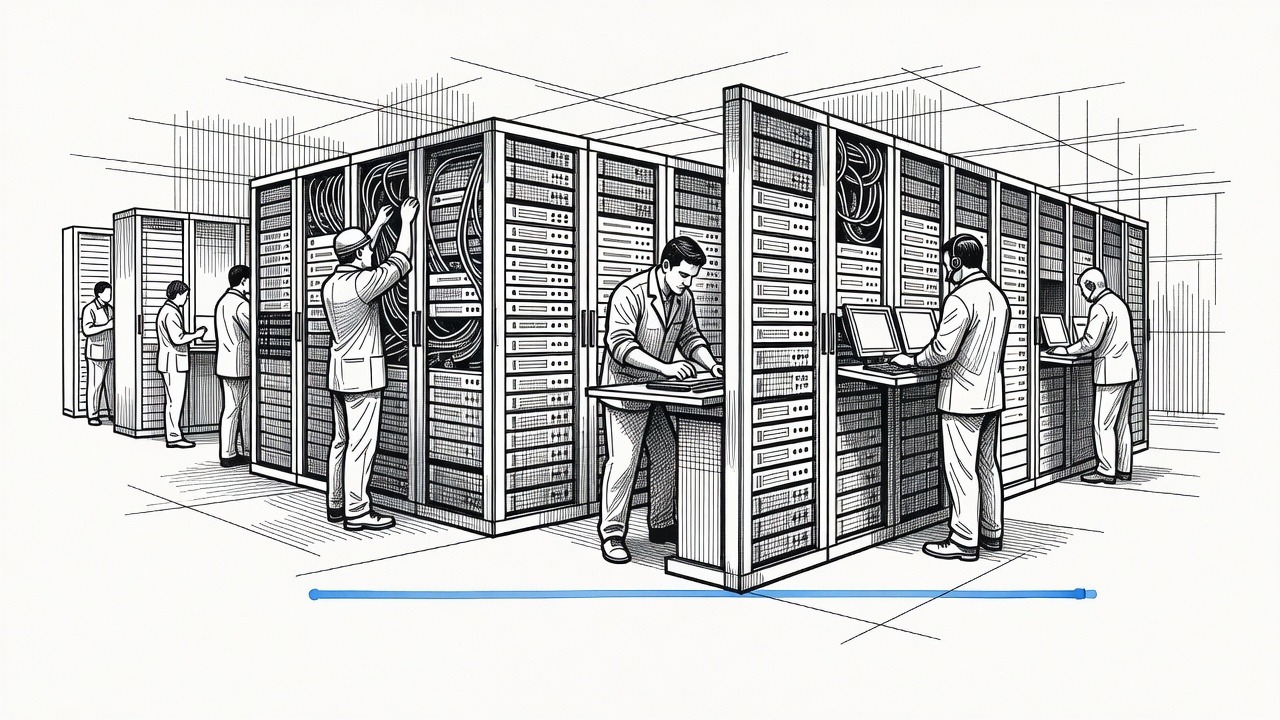
CoreWeave, which rents out the scarce machines behind the models we are told will reorder the economy, touched a one-year low and has fallen 54 percent over the past year. An S&P Global Market Intelligence analyst reminded anyone still listening that credit-default-swap spreads above 1,000 basis points generally mean distress — and that CoreWeave's free cash flow is heavily negative. Chief Executive Mike Intrator responded in a memo with the oldest line in finance: the market is acting irrationally, and the backlog will support the debt.
That is not analysis. It is a request that you trust his confidence over the price of his own risk.
Deutsche Bank offered the polished version. The backlog exceeds $100 billion, it said, and about two-thirds involves investment-grade partners. A backlog is not cash. It is a pile of promises about capacity that still has to be built, powered, delivered, and collected. Investment-grade customers do not turn negative free cash flow into a sound credit. They tell you who is standing on the other side if the build slips. Railroads, telecom, the SPAC years: the technology can be real and the capital structure can still burn the people who financed the victory lap. Holding both ideas at once used to be called judgment. In this trade it is treated as a lack of faith.
Then consider where OpenAI and Anthropic were actually repriced. Not on an exchange with a prospectus and audited numbers. On Hyperliquid, in perpetual futures. OpenAI's implied valuation fell more than 4 percent in a day and briefly dropped below $1.5 trillion, the sharper move following concerns about its tie to CoreWeave — a partnership valued at at least $22 billion as of September 2025, including a five-year agreement for data centers and technology. Anthropic-linked contracts rose 2.4 percent, implying a valuation just above $2 trillion. CoreWeave has also agreed to power Anthropic's Claude products, value undisclosed. Both names remain about 15 percent below peaks reached last month.
Sit with that. The laboratories at the center of America's supposed technological future are being marked, in public, by crypto derivatives, because their owners have preferred private capital's velvet rope to the rude questions of a listing. Call the prints thin and noisy if you like. They did not invent a 54 percent stock decline or a credit discussion framed in the language of distress. They only made obvious a dependence the venture markup had airbrushed: in the market's eyes, one flagship lab is levered to a supplier that cannot fund itself from operations.
A country can want American leadership in AI — I do — and still refuse to treat that interest as a duty to believe the promoters. Leadership is not a $2 trillion figure floating on a perpetuals exchange. It is power that arrives, machines that run, contracts that become cash, and owners willing to hear a market say no. Strategic competition with China is real. It is not a hall pass for leveraged storytelling, and it is not an excuse for Republicans who hear "American AI" and reach for the flag before the cash-flow statement.
Anthropic firming while OpenAI sagged is the system doing something useful: discriminating. The insult is the demand that noticing the strain is irrational. When management tells you the tape is crazy and the backlog is gospel, read the cash flow. Then read the spread.
How it may affect me
Index-fund savers are already in this trade through Nvidia, Microsoft, Amazon, and the debt funds bankrolling data centers, even if they have never heard of CoreWeave. One supplier's distress is not a reason to dump the market. It is a reason to ignore anyone selling AI infrastructure as riskless. If a pitch leads with backlog and a CEO memo and never mentions free cash flow or credit spreads, you are being sold a story. Crypto perpetuals on private companies are speculation, not a number you can plan around.