Nidal Hasan is not a sympathetic figure, and nobody on the Left needs to pretend otherwise. He murdered 13 people at Fort Hood in 2009, many of them soldiers preparing to deploy, and he showed no remorse. His victims and their families deserve our full moral seriousness. That is exactly why this episode is so ugly.
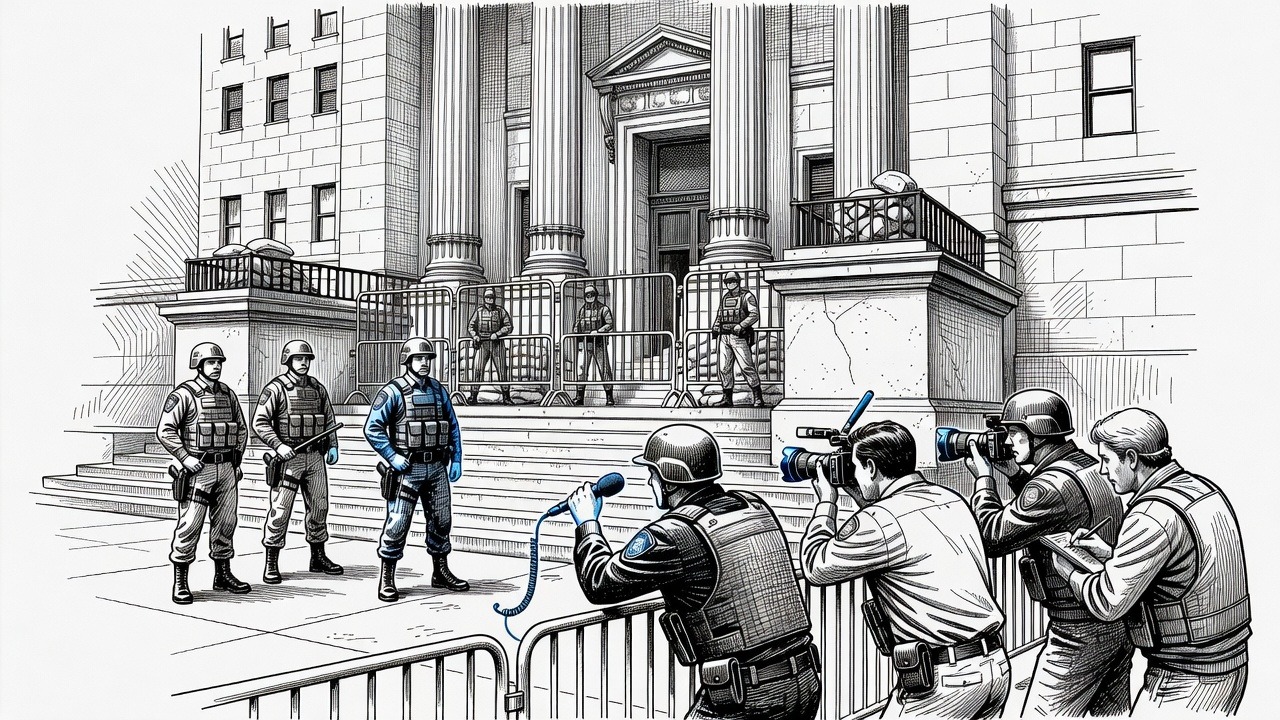
The Defense Secretary announced that the United States military would broadcast a man's killing online. Not as a documented legal proceeding, not with witnesses, but as a stream, a piece of content, with the clicks and shares that implies. The military hasn't carried out an execution since 1961. When it finally prepares to resume, the first impulse in Hegseth's Pentagon was to ask how it would play.
That tells you what this administration believes the death penalty is for. Defenders say capital punishment is solemn justice, a grave act the state performs reluctantly on behalf of the public. Nobody who believes that thinks the grave act needs a broadcast. A livestream is for vengeance as spectacle: the state doesn't just kill but invites you to watch it be strong. It belongs to the same politics that turns deportations into promotional videos and cabinet meetings into loyalty pageants.
Notice, too, why the plan was dropped. Trump didn't say it was undignified or that it cheapened the victims' memory. He said the public didn't want to watch. The objection he recognized was to the audience, not the act. He heard elected officials and Catholic leaders object, and he adjusted the marketing. A government that cancels a spectacle because of bad reviews has not discovered restraint. It has discovered focus groups.
Credit is due to the Catholic bishops, who were more consistent here than most of the political class. The Church's position is that the state has other means to protect society and that taking human life when it isn't necessary offends human dignity. Democrats should be able to say the same without flinching. Too many of them go quiet whenever the condemned is someone like Hasan, as if principle only applies to people who are easy to defend. The easy cases are not where principle lives. If the state's power to kill is acceptable only against villains, then it is acceptable against whoever the government decides is a villain, and this administration has shown an expansive appetite for that word.
There is also a practical case the Right should grapple with. The Army spent years on Hasan's prosecution, and the military's death penalty system produced a 2013 sentence that has taken more than a decade to reach this point. Supporters call that proof the system is careful. Critics call it proof the machinery of death is slow, expensive, and prone to being used for political theater when it finally moves. Either way, an execution should be the end of a process that is as sober and accountable as possible. It should not be a media event timed to a news cycle.
The families of Hasan's victims will be allowed to attend, which is as it should be. They are the ones with a real claim to witness what is done in their name. The rest of us are owed something different: a government that treats the power to end a life as a burden rather than a brand. Today we got a reversal on the broadcast, not a change of heart. The people who thought a firing squad needed a camera crew still run the Pentagon, and the question of what else they think is worth streaming has not gone away.