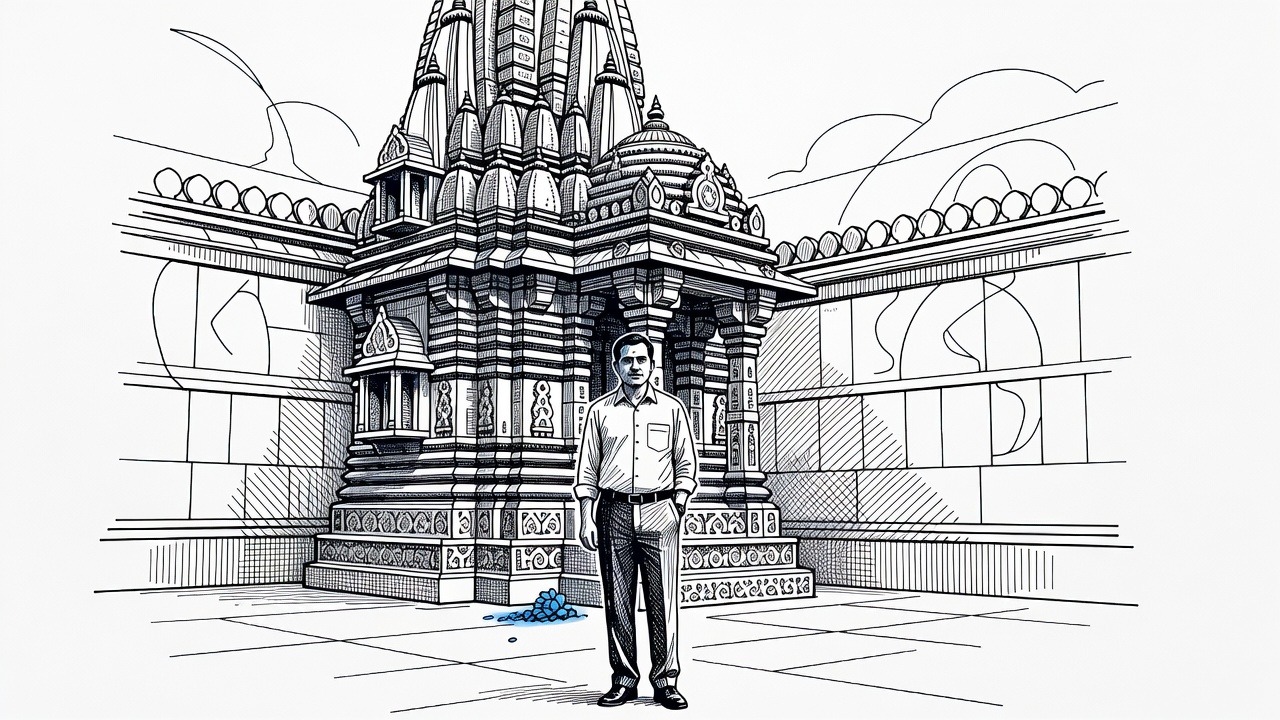
A 19-year-old allegedly drove into a Hindu temple's parking lot, looked it over, and left. Police say that when they searched his home they found a rifle, hundreds of rounds, body armor, and a manifesto full of white supremacist hatred for South Asian and Indian people. He is charged, not convicted, and he is entitled to a trial. But the outline of what police describe is not murky. It is what an attack looks like in the weeks before it happens.
The first thing to say is that a tip worked. Someone saw alarming communications and told police, and officers acted before anyone was killed. That is what prevention looks like. It is also luck, and we should not build a public safety strategy on luck.
The second thing is to call it what it is. If a young man with a manifesto against some other group had scouted a house of worship with body armor at home, nobody would debate the word. This is domestic terrorism, driven by the same ideology that produced the Oak Creek Sikh temple massacre in 2012, the Pittsburgh synagogue in 2018, and the Buffalo supermarket in 2022. The ideology is old. Only the targets rotate. Sikhs get shot because killers can't tell them from Muslims, and Hindus get targeted because killers have decided "Indian" means "invader."
That last part should make people in public life uncomfortable, because the air has been thick with it. Over the past year, the H-1B debate online curdled into open contempt for Indians, with racist memes and "go back" language flooding social media. Some of it was cheered along by people with large platforms and no shame. Policy criticism of a visa program is legitimate. Teaching a generation of angry young men to see Indian Americans, as a people, as a threat is something else. Nobody should claim a direct line from a post to this arrest, and I don't. But radicalization is an ecosystem, and every politician or influencer who winks at "replacement" talk for engagement is feeding it. They should be asked about it plainly.
Then there's what Washington has been doing about the underlying threat. The federal government spent two decades building, imperfectly, the capacity to spot and interrupt violence before it happens. Under this administration, reporting has shown prevention programs at the Department of Homeland Security gutted and attention shifted away from domestic extremism. The people who make this argument usually mean to look tough. A nation serious about security does not shrink the part of its apparatus that catches a teenager with body armor and a manifesto before he reaches the door.
The gun question deserves discipline. Police say they are still investigating how he got the weapon and ammunition. Illinois has a licensing regime, and a 19-year-old cannot simply walk into the process alone. If he got around it through a relative, a straw purchase, or a private sale, that is exactly the gap that matters, and we should demand an answer instead of letting the story fade once the arraignment ends. Prosecutors should say publicly how an apparently radicalized teenager became so heavily armed.
The Left also has work to do. Anti-Indian hatred rarely gets the sustained attention we give other bigotry, partly because stereotypes of a "model minority" make it hard to believe this community is a target. A temple in Aurora does not need our sympathy after the fact. It needs the same seriousness and the same security funding as any other congregation, and its members need to hear public leaders say, without hedging, that they belong here.
The worshippers in that temple will never know how close it was. The rest of us do. Treat it as the warning it is.
How it may affect me
If you see threats of violence online, report them to local police or the FBI at tips.fbi.gov. Houses of worship, including temples, can apply for federal Nonprofit Security Grant funding for cameras, lighting, and training through their state's emergency management agency.