Nidal Hasan is not a sympathetic figure, and nobody on the Left needs to pretend otherwise. He murdered 13 people at Fort Hood, wounded more than 30, and has never shown the slightest remorse. The case against livestreaming his execution has nothing to do with him. It's about us, and what we become when the state's most solemn act is put up for viewing.
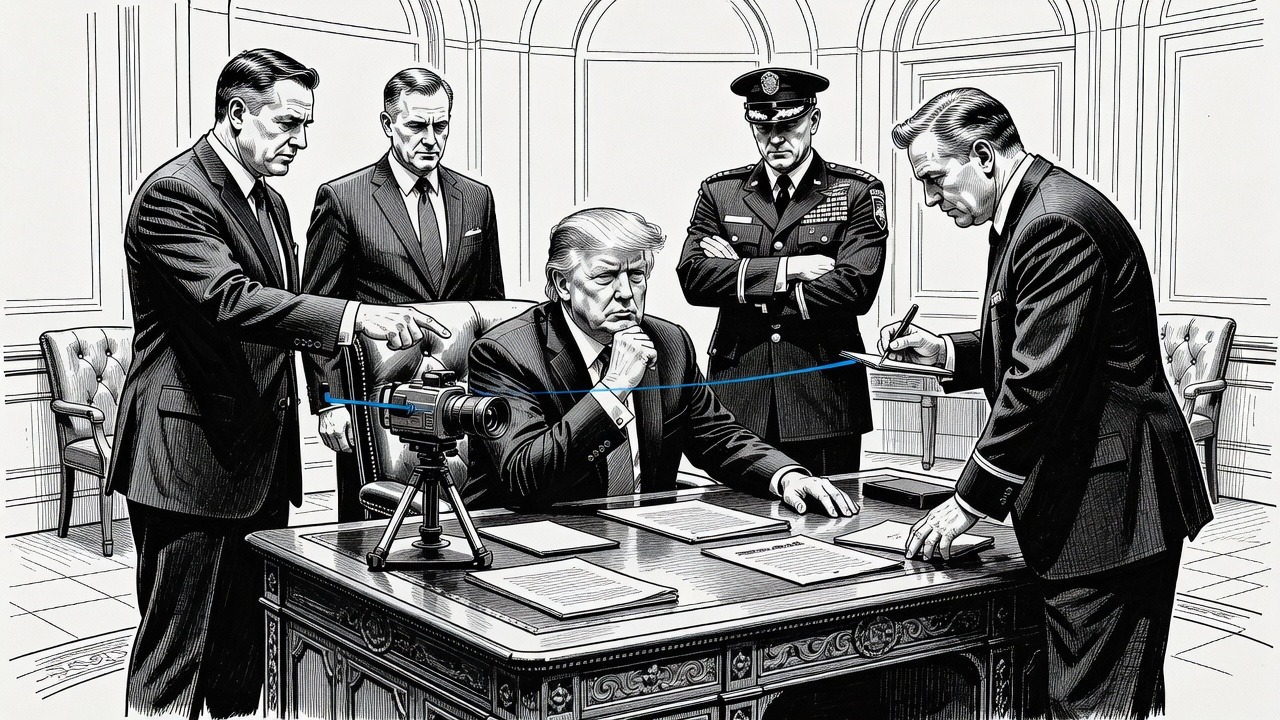
Start with the process. The Pentagon proposed a broadcast. The Vice President says he doesn't know whether it will happen and wouldn't watch. The Homeland Security Secretary says there's no security risk and that nobody is forced to tune in. The President says he'll decide, because there are "differing views." That is the language of a programming meeting. A government that takes a life in the name of 330 million people ought to be able to say why, in principle, the public should or shouldn't watch. Instead we get a shrug about risk assessments and an opt-out button. "Nobody has to watch" is the defense of every cruelty that has ever sold well.
The best argument against the broadcast comes from a Republican. Lisa Murkowski is right that executions shouldn't be televised, and the Left should say so plainly rather than enjoy the intra-GOP squabble. Capital punishment's defenders have always claimed it is a grave, reluctant act of justice, carried out in a room with witnesses, not entertainment. Once you stream it, that claim collapses. You have conceded that the point is the spectacle: the satisfaction, the clicks, the clip passed around by people who will never think about the 13 names again.
Then there's the problem that should trouble even the most committed hawk. Hasan has cast himself as a soldier in a holy war and invited the martyr's ending. Handing him a global audience gives every recruiter, troll and aspiring killer a ready-made video. Mullin says he sees no elevated national-security risk. He is the man who runs the department paid to see exactly that kind of risk, and "I don't see it" is not an analysis.
The families deserve more consideration than they're getting in this conversation. Some may want to watch, and the law can accommodate them by allowing witnesses, as it does in every other execution. Others will have to hear about the footage in a news alert or see it in a social feed, again, 16 years on. Closure through the livestream is a slogan, and the people who invoke it don't have to live with the video.
The Left's own argument about the death penalty has always been that the state's power to kill is the power most in need of restraint, secrecy's opposite and spectacle's opposite alike: sober, accountable, limited. A president who regards that power as something to be staged, and who reserves the decision for himself, is moving the other way. This is an administration that treats nearly every institution as a stage set for its own narrative. It would be foolish to be surprised that it has found a use for a firing squad.
If the government is going to carry out the first military execution in more than six decades, it should do so with the gravity the act demands: witnesses, a record, the law's formality, and no cameras for the public. Anything else says the quiet part out loud, that for some of the people running this country, a man's death is just another piece of content. Decent people, whatever they think of Nidal Hasan, shouldn't want any part of that.