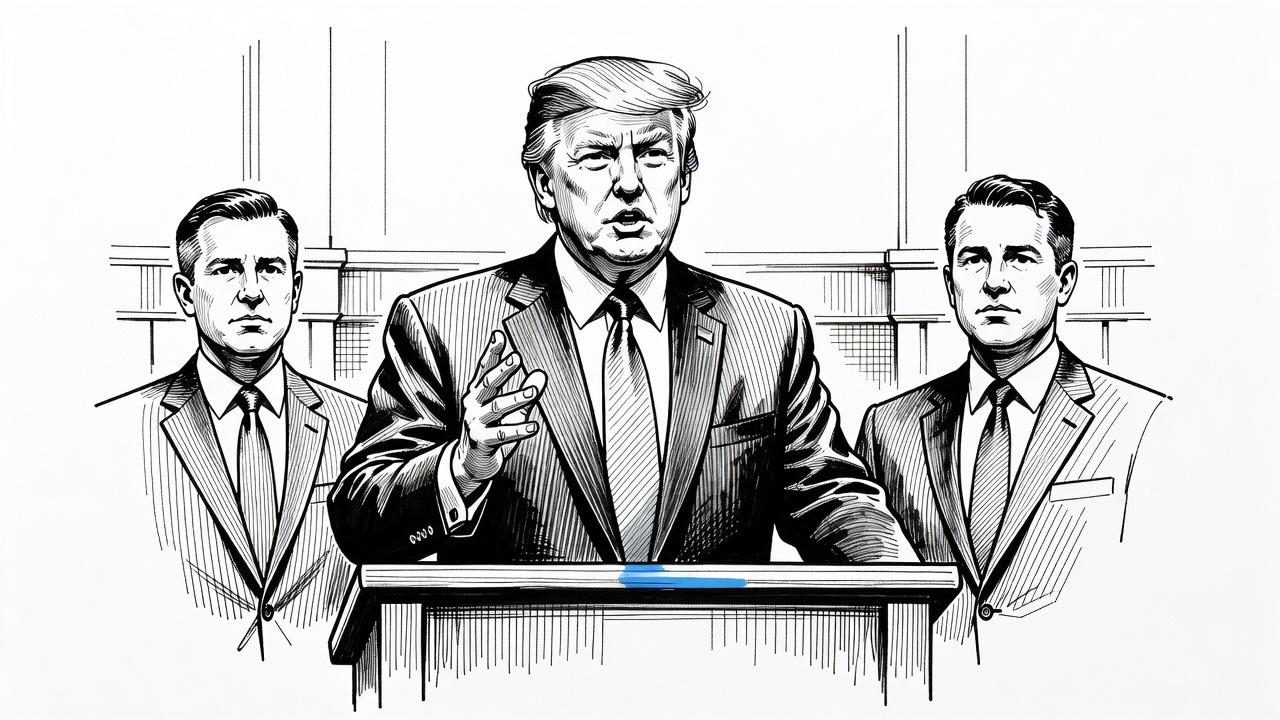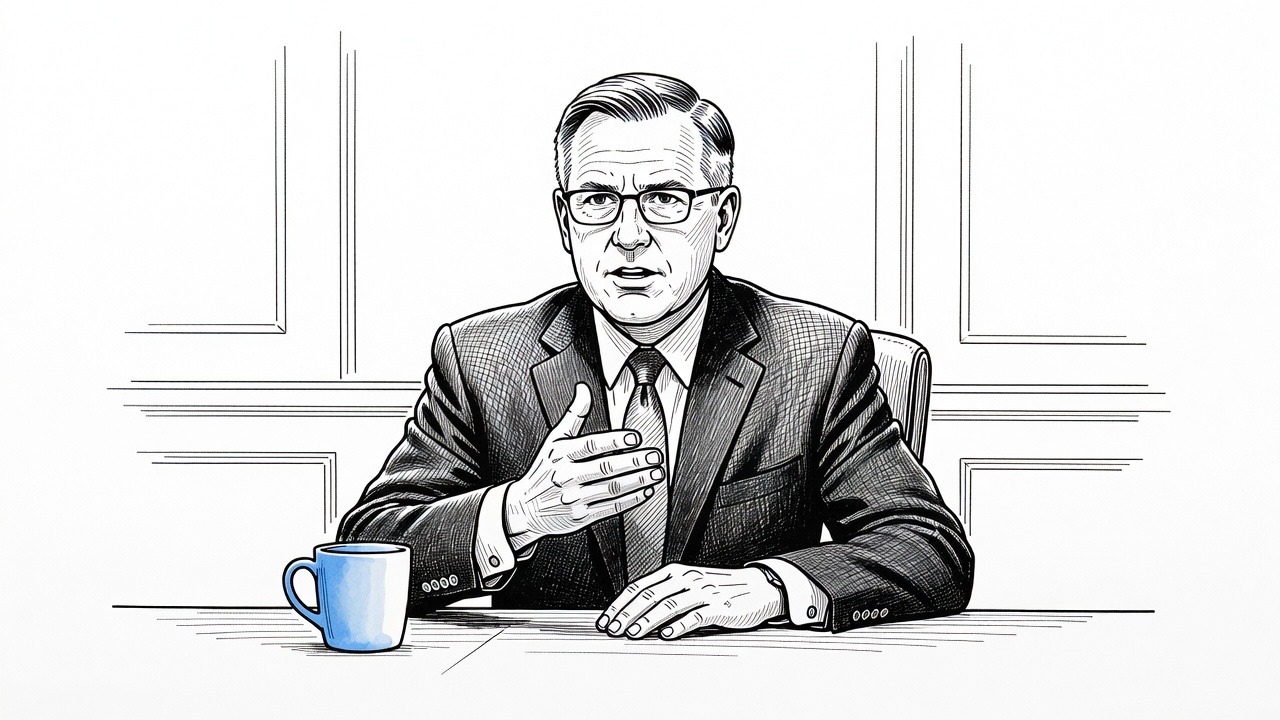
The headline says yields fell. They fell four basis points, to 5.237% on the 10-year. That is the kind of move that makes a bond desk shrug and tells the rest of us almost nothing. The number that matters is the one the Treasury locked in the same day: $22 billion of 30-year debt sold at 5.618%. That is a promise to pay a bit over 5.6 cents on every dollar, every year, until the early 2050s. It was made with the full faith and credit of a public that was not asked about it.
The auction itself went fine. Indirect bidders, the foreign central banks and big funds, took 72.3% of the offering, well above the recent average. So this is not a buyers' strike or a market panic. It is something more ordinary and more durable: investors with plenty of money have decided that lending to the government for 30 years is worth about 5.6%, and the government has agreed. The question for a left-of-center reader is who set that price, and who pays it.
The three explanations on offer in this story are a Fed governor's hawkishness, a war-related energy shock, and a corporate borrowing spree for artificial intelligence. Notice what they have in common. None was chosen by the people who will live with the result.
Start with the Fed. Christopher Waller's case deserves a fair hearing. Inflation has been above target for roughly five and a half years, and the people it hurts most are those with no assets to reprice and no bargaining power to catch up. A left that shrugs at inflation is not serious about wages. But Waller is describing a remedy for the inflation he has, and his own colleagues' framework once drew a distinction he now seems to blur. The administration's own adviser calls the current energy spike "temporary" and tied to the conflict with Iran. A rate increase does nothing to reopen a shipping lane or add a barrel of oil. It works by making credit expensive enough that people stop buying houses, small firms stop hiring, and workers lose the leverage a tight labor market gave them. It fights an oil shock by taxing the borrowers who had nothing to do with it. Oil producers and bondholders, meanwhile, collect.
That is the point the yield-watching coverage tends to miss: a high interest rate is also an income stream. Roughly speaking, the money the Treasury pays out in interest flows to those who hold the most Treasuries, which means the wealthy, institutions and foreign governments. Every point added to the government's borrowing cost is a point that cannot go to child care, transit, or the grid. We were told for years that rates would stay low and that debt was therefore cheap. Those who said so were wrong. But the right's answer, that the cure is cutting social programs, ignores where the deficit came from. Recent tax cuts and a war nobody budgeted for made the borrowing. It is odd to hear the burden of interest invoked as an argument against school lunches and not against the tax cuts that created it.
Then there is Zervos's other explanation, which is the most revealing: corporate borrowing for AI infrastructure. In effect, a handful of the largest companies in the world are bidding for capital against the public, and the public is losing the auction. This is worth saying plainly. If data-center debt is bidding up the price of money for everyone, then mortgage borrowers, municipal projects and the Treasury are subsidizing a private bet through higher costs. The firms may be right about the technology. Even so, a society can fairly ask why the risk and the cost of capital are socialized while the gains stay private. Nobody in power seems to be asking it. Communities near these projects are already being asked to absorb electricity and water demand. They will now also pay through the interest rate.
The administration's reassurance is that rates will ease once the energy shock passes. Maybe. But that is a forecast, and a convenient one for officials who are also lobbying the Fed for lower rates. If the shock proves less temporary, or if the AI borrowing persists, the 5.6% the Treasury just locked in will not look like a spike. It will look like the new price.
What would a serious response look like? It would use fiscal tools aimed at the energy shock, such as targeted relief for households and a windfall levy on those profiting from it, so the central bank is not left to do the whole job on the backs of workers. It would stop treating tax cuts as costless. And it would ask whether the biggest borrowers in the economy should get a free pass on the costs they impose on everyone else's borrowing. Four basis points on a Thursday is noise. The structure behind it is the story.
How it may affect me
Mortgage rates tend to move with the 10-year Treasury yield, so a 10-year above 5% generally keeps home-loan rates high and keeps buying power down for first-time buyers. Credit cards, auto loans and any variable-rate debt get more expensive if the Fed does raise rates, as Waller suggests. On the other side, savers can benefit: Treasury bills, CDs and high-yield savings accounts pay more when rates are elevated. If you plan to borrow for a large purchase in the coming months, it is worth locking in rates when you can and not assuming yields will drop, since the 'temporary' forecast is an expectation, not a certainty.