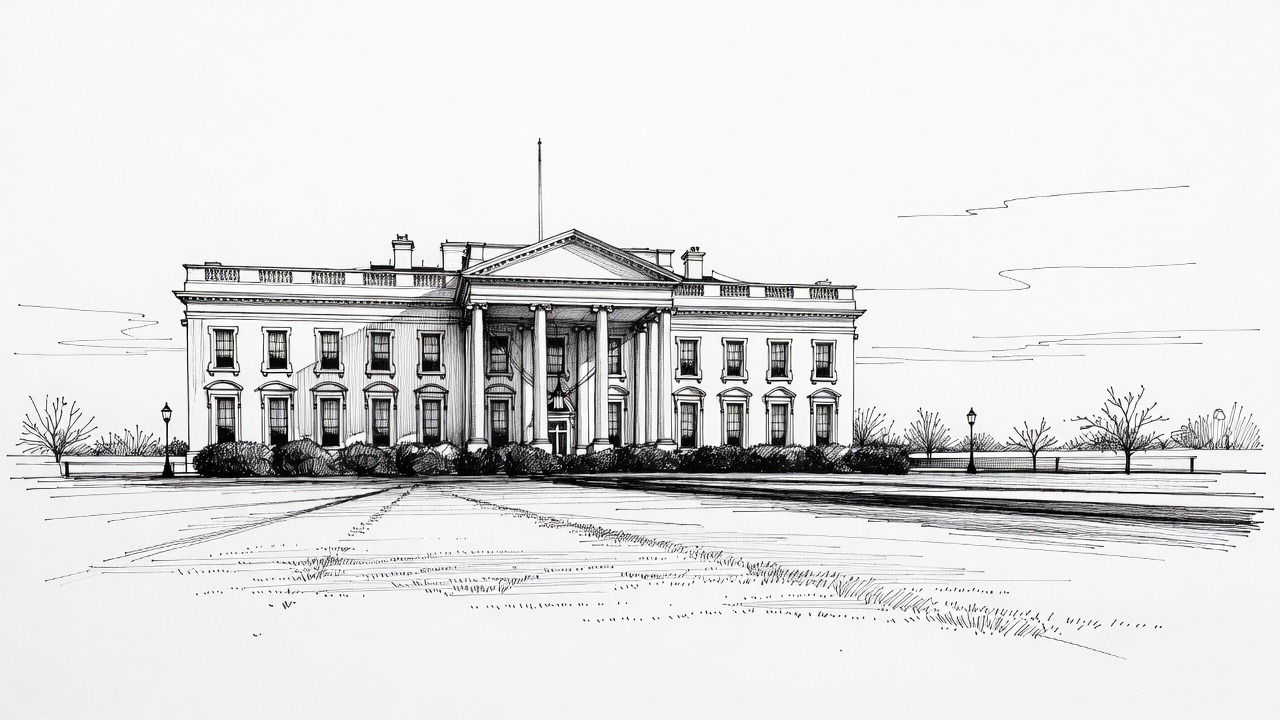
The detail worth lingering on is where Sergey Brin's company came from. Before Google was a verb, it was a Stanford research project, and the work was supported in part by federal grants, including from the National Science Foundation. Brin himself held an NSF graduate fellowship. A public investment in curious graduate students, with no guarantee of payoff, produced one of the most valuable companies in history. On Thursday, Brin receives the National Medal of Science at a White House summit titled "Science: A New Golden Age."
The obvious objection to the ceremony is that Elon Musk, Michael Dell and company are rich and don't need medals. That is the weakest version of the criticism, and I don't think it holds up. Lisa Su holds a doctorate in electrical engineering from MIT and rebuilt AMD through hard technical choices. Jensen Huang's bet on general-purpose GPU computing made modern machine learning possible. Honoring people who build things is not scandalous. Reagan gave Steve Jobs and Steve Wozniak the technology medal, and Bush gave one to Bill Gates. A country can recognize its great engineers without insulting its researchers.
The real problem is the pairing of this ceremony with this administration's record. The same government now celebrating a golden age has proposed cutting the NSF's budget by more than half, according to its own budget request. Congress has resisted much of that, but the intent is on the record. It has terminated thousands of research grants, frozen or clawed back funding from major universities, and driven out scientists and staff. Elon Musk, honored this week as a scientist, spent four months running a DOGE operation whose most visible achievements were dismantling USAID and cancelling research awards, often by keyword search and with little scientific review. The medal comes after a feud and a reconciliation, which is how political favor works, not how peer recognition works.
The pipeline is where the harm lands. Private companies rarely fund the kind of research that produced PageRank, the foundations of the internet, or the mRNA work behind the vaccines. That research is slow, uncertain and has no quarterly return. It is what a public purse is for, and the executives being honored are its beneficiaries. They can afford to hire the best researchers, and they will. What gets lost is the next generation of Brins, graduate students in labs at state universities who need a three-year grant and a stipend. If those labs close, the loss is quiet. Nobody holds a summit for a discovery that never happened.
The list also shows who this administration thinks "science" is. It means corporate leaders whose products and fortunes are tied to the state: SpaceX lives on federal launch and defense contracts. Nvidia and AMD depend on export-control decisions made in this White House, and Nvidia's chips-to-China arrangement, in which the government takes a cut of sales, shows how transactional that relationship has become. Google and Microsoft were among the corporate donors to the president's White House ballroom project. These are people the administration needs, and who need the administration. Honoring them as the face of American science recasts science as an arm of industrial favor, where a researcher's standing depends on proximity to power instead of the quality of the work.
The Left should be careful here not to romanticize the pre-Trump arrangement. Universities have their own bloat, their own hierarchy, and a long record of letting private interests commercialize publicly funded discoveries with little return to taxpayers. A serious left agenda would ask for more than defending the grant system as it stands. It would ask what the public gets when its research becomes a trillion-dollar company, through equity stakes, licensing terms, open access, or simply a tax system that collects something from the winners. The Brin story cuts both ways. The public took the early risk, and private owners took the reward.
That is the question the ceremony avoids. If these executives are the heirs of American science, they could say so by publicly backing the funding that made their own careers possible. If the administration believes a golden age is coming, it could fund the labs where it would start. A medal costs a few dollars to cast. A research system, once dismantled, takes decades to rebuild, and the country should be wary of a government that celebrates the harvest while cutting back the planting.