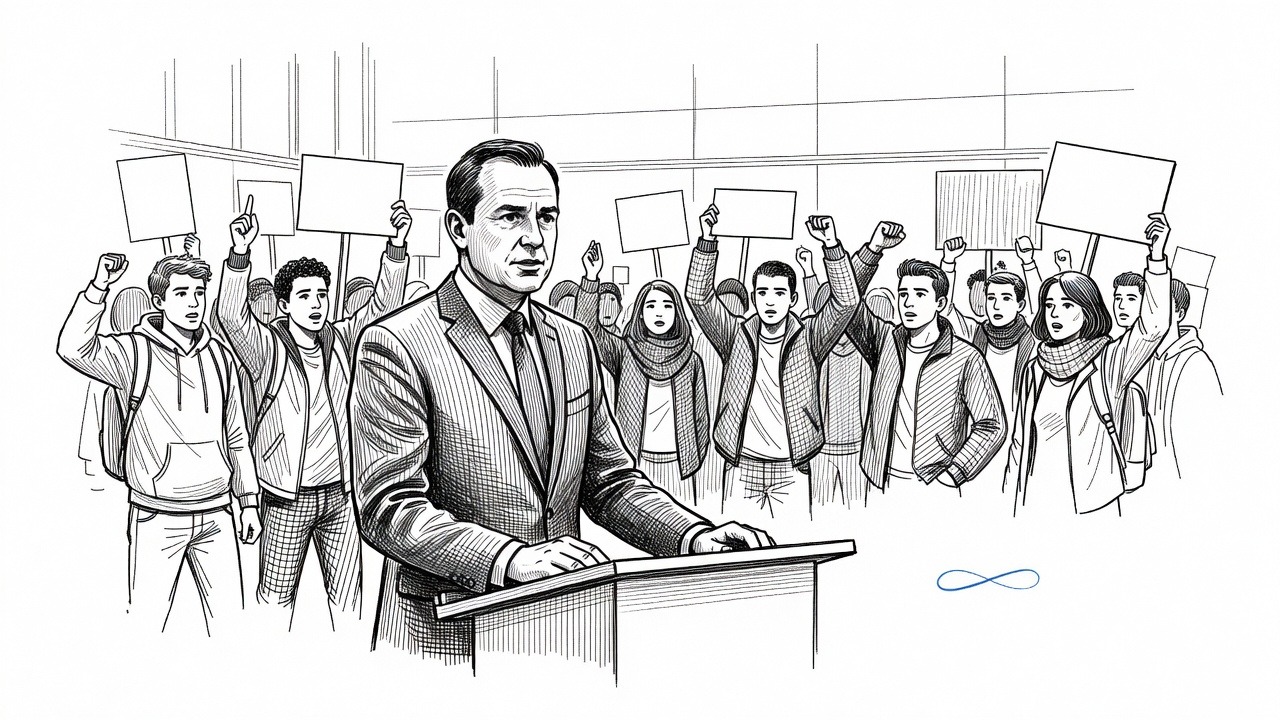
When a government answers a complaint about neglected schools with grenades, mass arrests and a repair bill, it has told us how it ranks the problems. Teacher vacancies and crumbling classrooms are treated as background. Teenagers who object to them are treated as the emergency.
The numbers in this story describe a public-order operation. More than 5,000 people have been arrested since late September, and most of them are minors. The Education Ministry counts 190 injured students. One 15-year-old in Lens lost a hand. Authorities say a police grenade exploded in it, and a police union source describes a sting-ball grenade fired by riot police. The exact circumstances should be investigated, and I am wary of anyone who claims to know everything already. But the basic fact is hard to dodge. A child has been permanently maimed in a dispute over whether his school has enough teachers.
The best case for the government is not frivolous. Blockades do disrupt other students' education, and hundreds of high schools being partly or fully closed is a real cost. The costs fall hardest on kids with the least access to tutoring or quiet homes. Property damage is real, and officers face real chaos. A state that tolerated everything would be abdicating too.
But that argument proves less than it seems. It justifies proportionate policing. It does not explain why a movement about under-resourced schools has produced an arrest count usually associated with a riot. Nor does it explain why the central policy response is to make damage costly for families rather than to make the underlying neglect costly for the state. Prime Minister Lecornu's call for local authorities to fill vacant posts and renovate buildings reads like a plea. Local authorities do not usually control national teacher recruitment, pay scales or the fiscal space that decides whether a school roof gets fixed. Telling them to solve it is a way of moving the blame down the ladder.
The repair-cost idea shows the logic most clearly. Make people who damage public property pay for it and you have a principle that sounds like common sense. But who is the likely defendant? Mostly teenagers, which means their parents. A union leader warned that this could hit vulnerable families, and that warning should be taken seriously. A household with money absorbs a bill. A household without it takes on debt or a crisis. The protest is about public goods being allowed to decay, and the answer is to privatize the cost of damage to those goods onto the people with the least ability to pay. No equivalent invoice goes to the institution that let the buildings deteriorate or left posts empty for months.
There is a deeper point about civic education. France prides itself on teaching young people to be citizens, and these teenagers did something citizens are supposed to do: they noticed a public service failing and organized. We can argue about tactics, since blockades are blunt and sometimes destructive. But a state that meets first-time political action with detention and injury teaches a lesson far more durable than anything in the civics curriculum. The lesson is that complaints are tolerated only until they become inconvenient.
The progressive instinct to defend student protest should not become romance, and it should not excuse vandalism. The test is simple. Does the response match the offense, and does it address the cause? On the facts here, it does neither. A functioning public school system treats vacant teaching posts as an urgent failure, not a budget footnote. If officials took the empty classrooms as seriously as the blocked gates, there might be fewer blocked gates.
How it may affect me
For students and families, the immediate risk is physical and legal. Minors face arrest records, injury and possible financial liability, and poorer households are least equipped to absorb a repair bill or a legal fight. Closed or partly closed schools also mean lost learning time, which tends to hurt students with the fewest private resources most.
Over the longer term, passing responsibility to local authorities without matching money and national recruitment power could leave poorer areas with the worst shortages and buildings. If protest is met mainly with force and penalties, trust in schools and police among young people may erode. The practical test will be whether teaching posts are actually filled and buildings repaired, or whether the main outcome is a tougher regime for those who object.