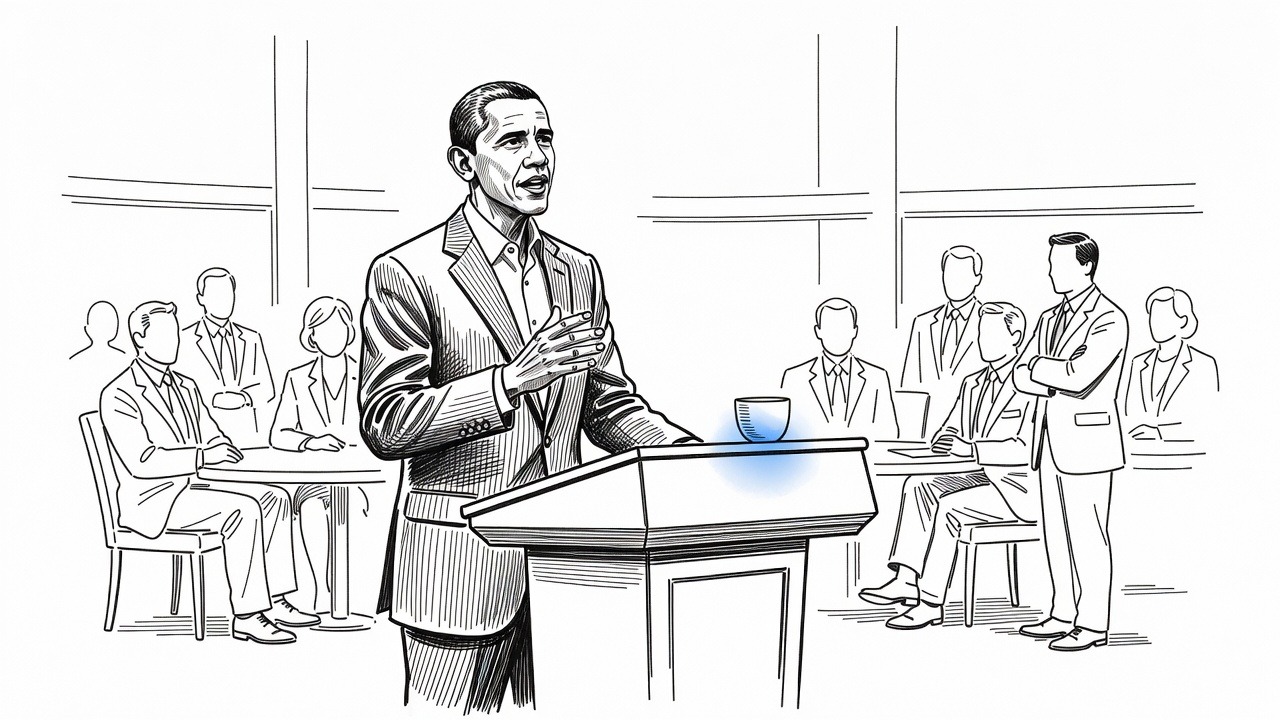
The easy reading of this story is a pep rally: a beloved former president, a vice chair with a microphone, and leaders on both sides promising victory. The better reading is in the last paragraph, where nearly half a billion dollars in political cash is running into a wall made of airtime.
Republican officials say late ad buys by some GOP-aligned groups are costing more because available inventory is shrinking. Few sentences describe American democracy as well. Each side is piling up hundreds of millions of dollars, Democratic groups holding at least about $579 million and MAGA Inc. nearly $416 million by the end of August, and the supply of places to put those dollars before voters is finite. The last dollars are worth less than the first. The people who gain from that are not voters. They are local broadcasters, ad buyers, and consultants who collect a toll on an election that happens every two years whether we like it or not.
That is why Obama's role is worth thinking about. He is good at this. He draws donors, he can still make Democrats feel like a movement rather than a committee, and he is headed to Michigan to campaign for Abdul El-Sayed, who leads narrowly in a seat both parties want. A progressive should not sneer at that. Unilateral disarmament under existing campaign finance rules would be foolish, and a Senate majority matters far more than purity about how it is financed. Republicans are not waiting around to be shamed into restraint.
But necessity is not the same as virtue, and a party can mistake the first for the second. A fundraiser built around a star is the old model: raise as much as possible from people who can afford a ticket, convert it into thirty-second spots, and hope the final weeks of saturation tip a narrow race. The diminishing returns in this story suggest that model is hitting its limits. When airtime is scarce and pricey, a dollar spent on persuasion in October is a poor use compared with a dollar spent in March on organizers, voter registration, and year-round presence in places where the party only shows up when it needs something. Television buys the attention of a voter once. Organizing can build a relationship that outlasts the cycle.
The Michigan race sharpens the point. El-Sayed, the nominee to replace the retiring Gary Peters, comes from the party's insurgent, economically populist wing, and he is being embraced by its most establishment-friendly icon. That is healthy. It is also a test. Voters angry at the economy and at Washington will not be moved by a campaign whose main message is that the other party is worse, which, by Schumer's account, is largely the case: Democrats are leaning on dissatisfaction with Trump and a Republican Senate. Thune, for his part, points to a legislative record. Both are talking about the other side's failures or their own accomplishments, not about what a new majority would do for a worker with a stagnant paycheck or a family with a rising rent. A Senate bought with record spending and no mandate is a Senate that will govern timidly.
There is a deeper structural problem. Every dollar chased in this system creates a debt, not in the accounting sense but in access and attention. The candidates who must spend hours each week asking for money are being trained, month after month, to think of the donor class as their constituency. That is true of both parties, whatever the small-dollar share of their receipts. Pretending otherwise is the kind of comfortable story progressives tell about themselves.
So here is the case. Democrats should take the money and win, but they should read the ad-price squeeze as a warning rather than a nuisance. A politics dependent on ever-larger sums chasing a fixed amount of airtime is a politics that pays rent to intermediaries and gives voters noise in exchange. If the party wins the Senate, the first test is not who gets confirmed. It is whether it is willing to change the rules that made this spending arms race necessary, even though those rules helped it win.
How it may affect me
For ordinary voters, the immediate effect is saturation: in competitive states like Michigan, Texas, and Ohio, the final weeks will be crowded with ads, and rising prices for late airtime may push some groups toward fewer, blunter messages rather than more substantive ones. The money is unlikely to inform voters better; it mostly competes for their attention.
The longer-term effect is on who the winners answer to. Senators and candidates who spend large amounts of time raising money are more likely to be responsive to donors than to workers, renters, or others with little to give. If a Democratic majority emerges, whether it delivers on affordability, labor protections, or campaign finance reform will depend on whether leaders treat this fundraising model as a necessary evil to be reformed or as a permanent feature to be perfected. If a Republican majority holds, the same pressures will apply there. The cost of the current system falls on voters who are asked to choose between two heavily funded messages and given little structural reason to expect their own interests to come first.