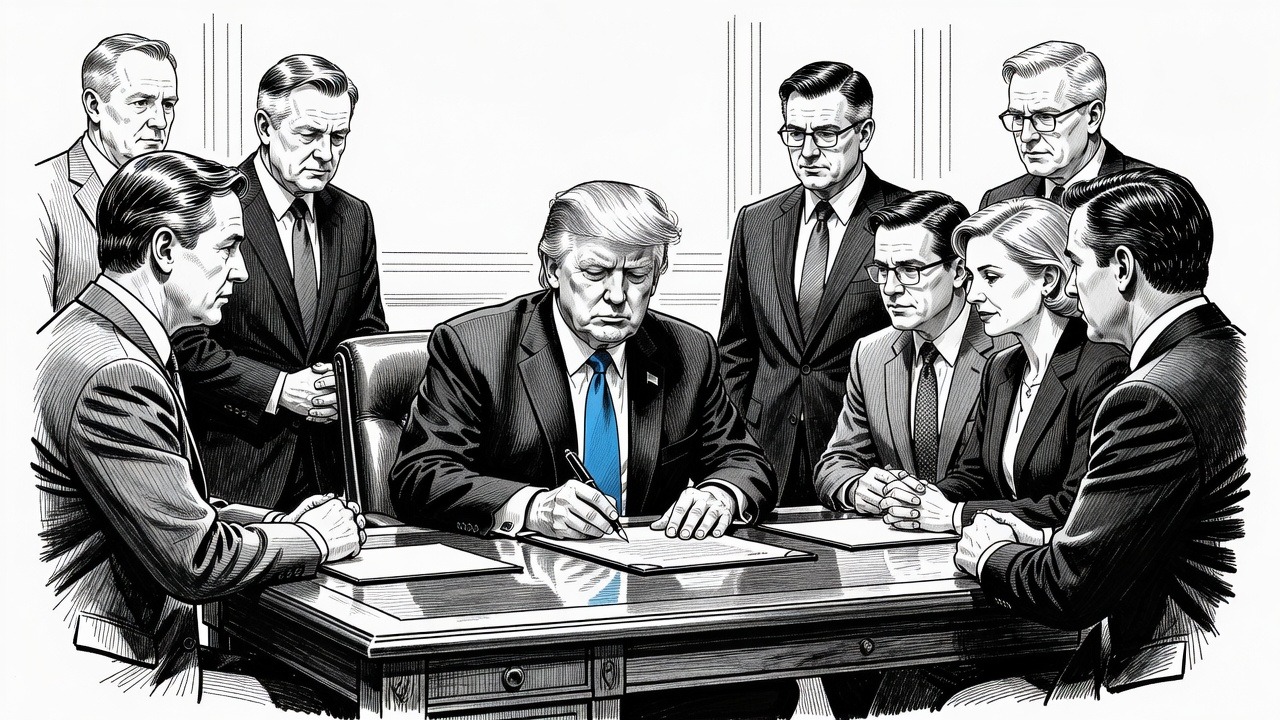
There is a cheap way to read this order: Trump cut a gas tax, or a diesel tax, because prices hurt and elections loom. Fine. But look at what the order chose to do, and what it chose not to.
It did something small, and it did it to the wrong thing. The federal highway diesel tax is 24.4 cents a gallon. With diesel at a national average of $6.30 in September, that is under 4 percent of the pump price. A trucker who is bleeding does not get saved by a 4 percent discount. The deferral does, however, hollow out a dedicated user fee that pays for the roads trucks pound. Heavy trucks do far more pavement damage than cars, and the diesel tax is one of the few mechanisms that makes them pay for it. The Highway Trust Fund has needed general-fund rescues for years because Congress will not raise these taxes. Now the administration wants Treasury to study making the cut permanent. Notice the sequence: a temporary emergency relief, then a study of how to make it forever. That is how a fiscal hole gets dug.
Here is the progressive complication I won't dodge. Truckers are not villains. Many owner-operators are small businesses with almost no bargaining power. They sit between giant shippers who set rates and fuel markets they cannot influence, and when diesel spikes they often eat it. Real relief for them would be defensible. But a tax deferral is a blunt instrument. It goes to every gallon, whether burned by a one-truck operator or a national carrier with a logistics department and pricing leverage. Whether the savings reach drivers, or get absorbed in rates and margins, depends on who holds power in each contract. Nothing in the order addresses that. When you give relief to a market without touching bargaining power, you should expect it to flow toward whoever already has the most.
Now the second story, the one that nearly slipped past. Trump considered banning diesel exports, which would have been a much more aggressive way of using public power to put domestic supply ahead of global profit. He did not do it, and the most prominent argument against it came from the CEO of Chevron, who said it would pull supply from world markets, worsen shortages, and rattle allies about American reliability. Some of that is probably right. Export bans are clumsy, can backfire, and a rich country hoarding fuel during a global shortage is not a flattering sight. I am not arguing for a ban. The point is the pattern. The one lever that might have pressed on refiners and exporters, whose product is selling at elevated prices, was set down after industry objections. The lever that was pulled drains a public fund that the rest of us rely on for roads and bridges. Relief was socialized, and the windfall was left alone.
That asymmetry is the real story. When fuel prices spike, someone is earning the difference. A serious response would ask who, and whether a temporary squeeze on consumers is also a temporary bonanza for producers and refiners. It would consider targeted aid for small operators, scrutiny of fuel surcharge practices, or a windfall mechanism. Instead the answer to a supply shock was to ask the public purse to absorb it.
There is also a plain governance problem. Red dye exists because it makes tax evasion visible. Authorizing highway use of dyed fuel, even temporarily, blurs a line that enforcement depends on, and unwinding that later may be messier than the order's tidy end-of-year date suggests. A government that cannot raise the money to repair its own roads should be wary of teaching everyone that road-use taxes are negotiable in a crisis.
The lesson is not that truckers should suffer. It is that when prices jump, the question to ask first is who captured the money, not which public revenue stream can be quietly sacrificed.
How it may affect me
In the short run, truckers could see a modest saving of up to 24.4 cents a gallon, which matters most to small owner-operators running thin margins. Whether they actually keep it depends on their contracts with shippers and brokers. Larger carriers with stronger pricing power are better placed to capture the benefit, and consumers should not expect a visible drop in the cost of goods from a change this small.
The longer-term risk falls on the public. The diesel tax helps pay for highways and bridges, and the Highway Trust Fund already relies on general-fund transfers. If a temporary deferral becomes permanent elimination, as Treasury has been told to study, the gap would have to be covered by other taxpayers, by deferred maintenance, or by more borrowing. Drivers of ordinary cars could end up subsidizing the wear caused by heavy freight.
There are enforcement risks too. Loosening the rules around dyed fuel could make tax evasion harder to police and complicate the return to normal rules at year's end. Meanwhile, the decision not to ban exports avoids potential supply disruptions and diplomatic costs, but it also means refiners and exporters face no new pressure while prices stay elevated.