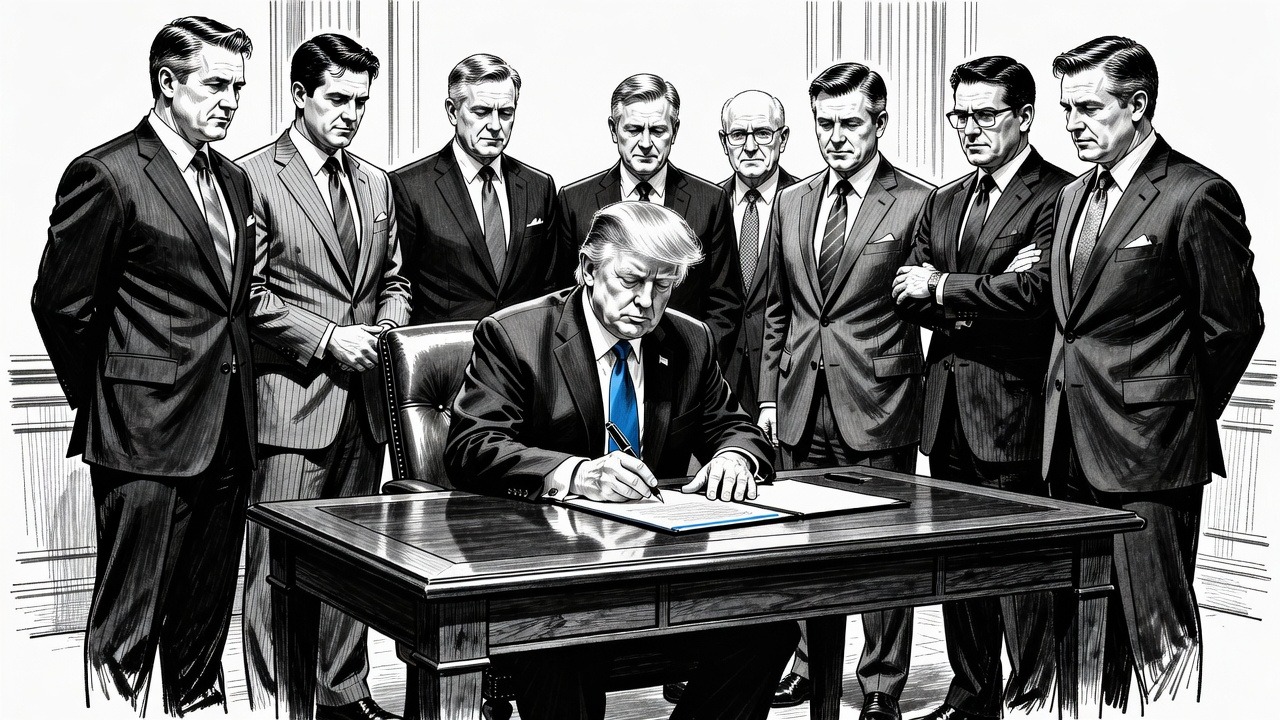
There is a populist case for what President Trump did on Monday, and it deserves a fair hearing. Diesel at $6.31 a gallon is a body blow to anyone who hauls freight for a living, and a driver who is bleeding cash doesn't care about tax theory. Letting trucks burn red-dyed fuel on public roads, with the federal excise tax deferred until year's end, is at least relief that someone can see.
But look at what the relief actually is. The federal diesel tax is 24.4 cents a gallon. Against a $6.31 price, even erasing it entirely is a cut of under 4 percent. The White House says drivers will save more than $100 per refill. At that tax rate, a driver would have to pump over 400 gallons to save that much, which is more than a typical big-rig tank holds. Maybe the estimate counts something the order doesn't cover. Even so, a policy sold as a lifeline looks more like a rounding error with a press release attached.
Then there is the price of the gesture. That 24.4 cents isn't a corporate indulgence. It is the user fee that pays for the roads, and heavy trucks do far more damage to pavement than any commuter's car. The Highway Trust Fund has needed repeated general-fund rescues for years. Deferring the tax, and directing Treasury to study permanently waiving it, turns a sagging fund into a likelier bailout later, financed by everyone, including people who never sit in a cab. A public good gets quietly defunded to produce a headline about gas-pump pain.
Who captures the benefit? A tax cut on fuel pays out per gallon. The big fleets that burn the most diesel get the largest checks and have the accountants to navigate the paperwork. The owner-operator, who is the sympathetic figure in every speech about this, faces the hardest part. The industry itself says carriers need clarity on eligibility and reporting, that tax collection is uncertain, and that state restrictions on dyed diesel could blunt the order for anyone crossing state lines. Red dye is the enforcement mechanism of the fuel-tax system: it tells an inspector at a roadside that the fuel was never taxed. Now the government is telling drivers to use the evidence of evasion legally, in some places, for some purposes, under rules not yet written, in states that may still fine them. The risk of a mistake lands on the person with the least legal staff and the thinnest margin.
The deeper problem is what the order leaves untouched. The trucking groups say it does nothing about supply shortages, and that is the whole ballgame. Diesel is the price of moving food, lumber and everything on a store shelf. When it spikes, the pain shows up at the pump and then in the grocery aisle. A serious response would ask who holds the market power in the fuel supply chain, whether inventory and refining capacity are adequate, and why drivers are such price-takers that they absorb every shock. That means looking at the fuel surcharges brokers and shippers pass along (or don't), and at whether the people hauling the goods have any bargaining leverage at all. Cutting a tax is what you do when you want to look responsive without confronting anyone who has power.
This isn't an argument that progressives should defend every fuel tax as sacred. If drivers need help, give them help openly: a targeted, capped rebate for owner-operators and small carriers, funded from the general treasury so the road fund isn't raided, and passed by Congress, which holds the taxing power. That would be transparent, enforceable and aimed at the people actually in trouble. What we got instead is an administrative improvisation that muddles tax enforcement, puts compliance risk on drivers, gives the biggest breaks to the biggest buyers, and teaches the public that infrastructure is something to be paid for by whoever is not in the room.
How it may affect me
For truck drivers, the practical effect is likely small and uncertain. Savings of roughly 24 cents a gallon at most won't offset $6-plus diesel, and without clear rules on eligibility, reporting and state enforcement, an owner-operator crossing state lines could face fines or paperwork trouble that wipes out the gain. Large fleets with compliance departments are better placed to benefit. For everyone else, high diesel costs will keep filtering into the price of groceries and goods because supply problems remain unaddressed. Over the longer term, if the deferral becomes a permanent waiver, the Highway Trust Fund would lose revenue and taxpayers could be asked to cover road repair through other channels. Roads, bridges and safety upkeep are the quiet losers when a user fee is traded for a short-term political win.