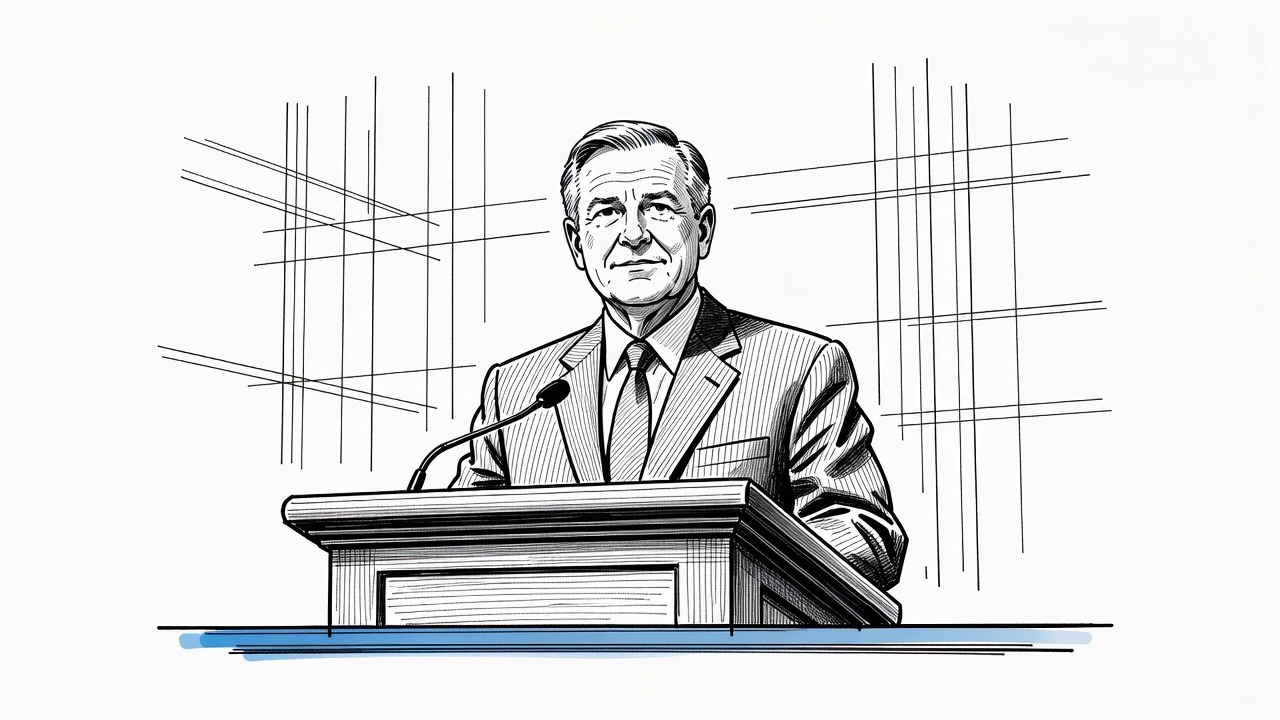
The obituaries will say Dennis Hastert was the longest-serving Republican Speaker in House history, and then they will pivot, with a lowered voice, to the scandal. The pivot misses the story. The most revealing fact about Hastert is how the law finally got him.
He was never convicted of abusing anyone. The statute of limitations had expired. Prosecutors said he paid out cash to conceal the abuse of teenage boys he coached, and what he pleaded guilty to was breaking banking rules by structuring withdrawals to dodge reporting requirements. In the end the child victims got no criminal verdict. The only thing that caught up with a powerful man was a bank's paper trail. Accountability arrived by accident, through the dull machinery of financial surveillance, and not because any institution was built to hear what those boys had to say.
That should bother us more than it does. The wholesome résumé, small-town teacher and wrestling coach turned fixture of national power, was more than a biography. It was a form of protection. A man with authority over teenagers, and later authority over a branch of government, could count on the deference that authority buys. Silence could be purchased, and the clock would do the rest. Victims often need decades to speak, while the law's deadlines tend to favor those with the means to wait. Hastert's case shows how that asymmetry works. The perpetrator's money and standing let him outlast the system. The victims' trauma ran on a timeline the law refused to recognize.
There is a tidy objection: separate the man from the legislator, and judge the record on its merits. I'll accept the invitation, because the record doesn't flatter him either. Hastert ran the House during the tax cuts that skewed toward the top, and during the 2003 Medicare prescription drug expansion. That law helped millions of seniors afford medicine, and it also barred Medicare from negotiating drug prices. It was a gift to pharmaceutical companies written into statute, and taxpayers have been paying for it ever since. Hastert's House ran on the same principle as his personal conduct: the well-connected get protected, and the bill goes to someone with less leverage. After leaving Congress he cashed in as a lobbyist, which completes the pattern.
The lesson is not that one man was uniquely rotten. It is that systems built around deference to the powerful fail when someone powerful is also dangerous. His party, his community, and the institutions around his coaching career had no reliable way to hear the boys over the man. Anyone tempted to treat this as one private tragedy should notice how many people had to look away, or never be asked to look, for it to stay buried for decades.
He has died, and the dead deserve no further punishment. But the dead also don't get to keep the myth. The right way to mark his passing is to ask why the first law to touch him was a banking regulation, and whether we will fix the gap.
How it may affect me
For survivors of childhood sexual abuse, the practical issue is time. Many cannot name what happened to them until middle age, yet criminal and civil filing deadlines often expire first. States that have lengthened or eliminated those deadlines give victims a chance to be heard. States that haven't leave the work of justice to whatever financial or procedural tripwire happens to catch an abuser.
For ordinary families, the case is a warning about trust in institutions run on reputation. Schools, youth sports programs, and community groups need independent reporting channels, outside oversight, and protection for those who speak up, so that an abuser's standing in the community doesn't decide who gets believed.
It also bears on how we weigh financial surveillance rules. They are routinely attacked as bureaucratic overreach, yet here they exposed a concealment scheme that nothing else reached. Weakening them may protect privacy, but it also protects the people with the most to hide and the most money to hide it with.
Finally, there are the policy costs of his tenure. Because Medicare is barred from negotiating drug prices, seniors and taxpayers face higher bills than a more bargaining-friendly design might have produced. Those costs are quiet and ongoing, and they affect far more people than the scandal ever did.