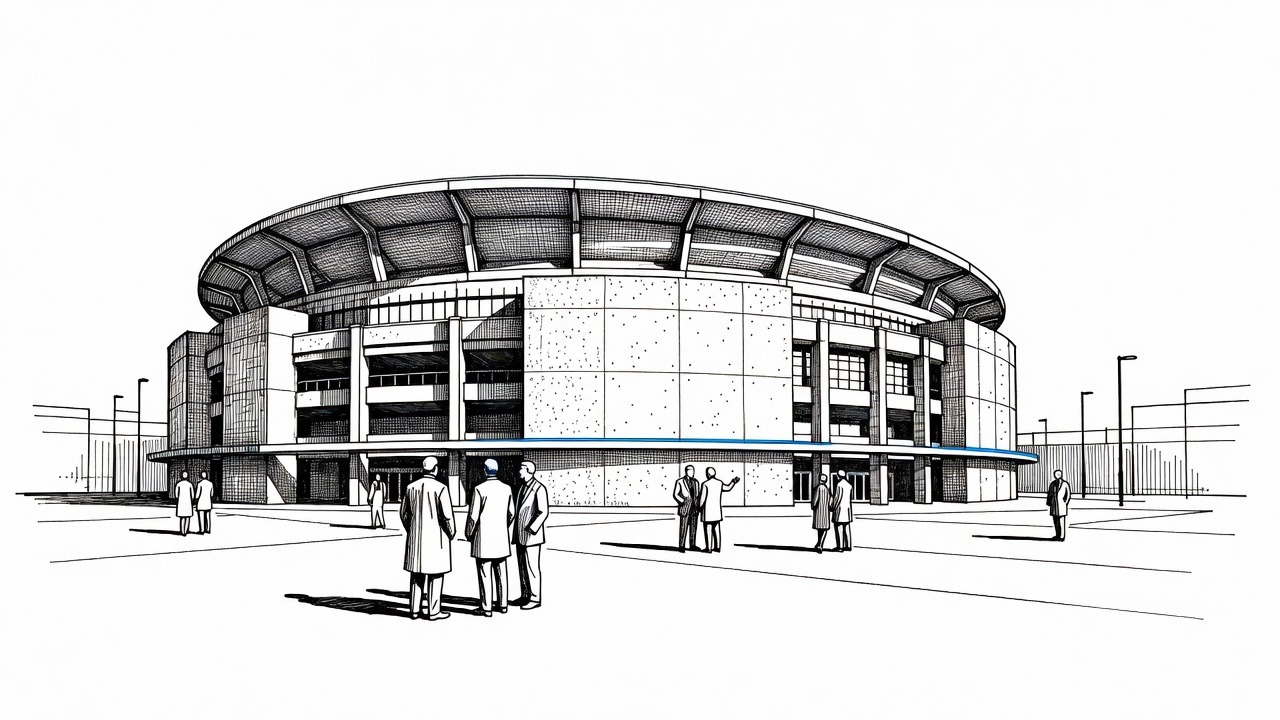
The Kennedy Center Honors should go on, and moving them is the adult decision. A lifetime recognition of American performing arts is about the work, not the marble. Holding the Dec. 7 ceremony at Capital One Arena is an unglamorous fix that keeps the tradition intact when the building that usually hosts it cannot.
What deserves scrutiny is why the workaround was required. Leadership says main corridors remain restricted while roof soffits and emergency evacuation conditions are assessed — a review of one to two weeks that is explicitly not a reopening date. Safety is a core duty. A national cultural landmark that cannot clear its own evacuation conditions is not a minor scheduling snag.
The legal tangle makes it worse. The closure sits inside disputes over proposed renovations. A federal judge has asked for a status update. The Justice Department is seeking to lift an earlier order that blocked a planned two-year shutdown for renovation work. Read that plainly: the path to repairing the building is tied up in court, while the building is restricted enough that its signature night has to leave the premises.
Courts exist to stop unlawful action, and an order blocking a two-year closure may have had reasons the public still deserves to hear. A judicial hold is not a maintenance plan. Roof soffits do not become safer because a docket is active. If renovation is what the building needs, prolonged blockage leaves the public with the worst of both worlds — a venue neither fully open nor clearly on a path to being made sound.
There is no need to romanticize every cultural palace in Washington, and no need to invent a plot behind every closure. The standard is competence. An institution charged with a living piece of American culture has one job before programming and prestige: keep the building usable, lawful, and safe. When it cannot, the honors migrate to an arena that can actually host a crowd. That contrast is the story. Capital One Arena did not need a federal judge’s update to open its doors on Dec. 7. The Kennedy Center did.
How it may affect me
If your plans run through the Kennedy Center, adjust them. The 2026 Honors are at Capital One Arena on Dec. 7, not in the Center’s halls. The main building remains temporarily closed, with main corridors restricted during the roof and evacuation assessment. That review is expected to take one to two weeks, and leadership has already said the window is not a reopening date — so tickets, rehearsals, tours, or other plans tied to the building should be treated as uncertain past that estimate.
For most people the immediate change is logistical: a different venue, a different arrival, and a ceremony that will feel more like an arena night than a night inside the Kennedy Center. It can still be a good evening. It will not be the same evening.
Further out, the court fight may matter more than the one-night move. A judge has asked for an update, and the Justice Department is seeking to lift an order that blocked a planned two-year renovation closure. If that standoff drags on, Washington could face a longer stretch in which a flagship arts venue is restricted, litigated, or both. That could mean more relocated events, thinner on-site programming, and a slower return to normal for audiences, staff, and anyone whose plans depend on the building being open. None of that is certain. It is the risk that follows when safety work and renovation authority sit in court instead of in the building.