Tennessee Halts Executions After Failed Attempt on Christa Pike

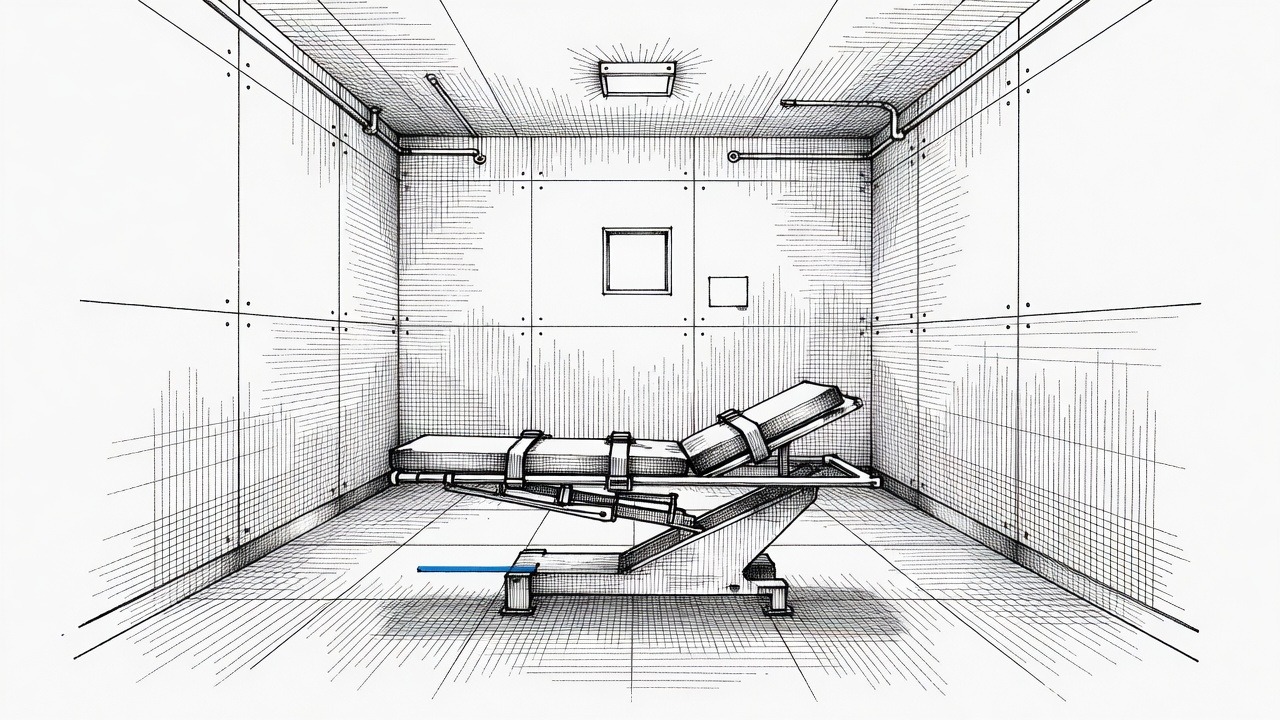
Illustration for: Tennessee Halts Executions After Failed Attempt on Christa Pike
AI-generated illustration. Visual interpretation does not represent real individuals or scenes.

THE BARE STORY

Tennessee Governor Bill Lee halted the execution of death row inmate Christa Pike and canceled the state’s remaining executions scheduled for the year after an attempted lethal injection, according to Pike’s attorneys. Lee also ordered an independent review of the incident.

Pike, 50, was sentenced to death for the 1995 killing of Colleen Slemmer at a Knoxville Job Corps Center. Her execution had been allowed to proceed after a U.S. Supreme Court ruling earlier that day.

Her attorneys, Randy Spivey and Steve Ferrell, said the execution team spent about an hour trying to establish intravenous access, using at least seven needles. They said they had previously warned state officials that Pike’s medical condition could make vein access difficult.

The attorneys said Pike was in critical condition and receiving lifesaving medical care the following afternoon. They called on Lee to commute her sentence, while noting that the state could seek another execution date or pursue execution by electric chair.

Same Facts. Different Perspectives.

Three AI models. Three viewpoints. One factual foundation.

Strip away the moral argument over capital punishment for a moment, because this story isn't really about that. It's about competence. Tennessee's execution team was handed a narrow, specific, high-stakes task — establish intravenous access and carry out a court-sanctioned sentence — and it failed at the mechanical level, reportedly spending about an hour and at least seven needles trying to do it. That's not an ideological failure. That's an operational one, and it happened after Pike's attorneys had specifically flagged her medical condition as a vein-access risk in advance.

That warning matters more than almost anything else in this account. When an institution is about to take the one action from which there is no walkback, and it has been told in advance that a specific technical complication is likely, proceeding anyway and then running into exactly that complication isn't an unlucky surprise — it's a predictable failure that someone chose not to plan around. Whatever one believes about the death penalty itself, a state carrying out an irreversible act owes the basic diligence of addressing known risk factors before, not after, needles start going in.

Governor Lee's response, to his credit, is the correct institutional move. Halting the remaining scheduled executions and ordering an independent review is what competent crisis management looks like: stop, investigate, don't repeat the same error on the next date before you understand what went wrong. That's not softness on crime or a backdoor abolition move — it's risk containment. An administration that pushed forward with more executions this year using the same unreviewed protocol would be gambling with the same failure mode, and courts would have every reason to treat that as reckless.

The procedural layering here is also worth noting. The U.S. Supreme Court cleared the legal path for this execution the same day it was attempted. Legal clearance and operational readiness are not the same thing, and this case shows the gap between them can be severe. A court can certify that a sentence may proceed; it cannot certify that the people carrying it out are capable of doing so without a documented medical history becoming a crisis.

The options now on the table — another execution date, or a shift to the electric chair — both carry real practical weight, not just symbolic ones. Rescheduling without addressing the underlying medical access problem simply reproduces the same risk. Switching methods raises its own legal exposure, given how execution-method litigation typically unfolds. Commutation, which Pike's attorneys are requesting, sidesteps the technical problem entirely but is a political decision, not an engineering fix, and shouldn't be mistaken for one.

The pragmatic bottom line: this is an institutional-competence failure first, a legal controversy second, and an ideological flashpoint a distant third. States that retain capital punishment take on an obligation to execute it — literally — without descending into prolonged, documented physical suffering, especially when warned in advance. When that obligation isn't met, pausing and reviewing isn't an overreaction. It's the minimum.

How it may affect me

For Tennessee residents, the immediate effect is a freeze on the state's remaining scheduled executions for the year while the independent review proceeds — meaning other death row cases are now in limbo pending its outcome, with no fixed timeline given here. For Pike specifically, her fate now depends on decisions still to be made: a new execution date, a switch to electric chair, or commutation, each carrying different legal and ethical weight that will likely play out in further litigation rather than being resolved quickly. More broadly, the review's findings could reshape Tennessee's execution protocols going forward, which may also draw attention from other states using similar lethal injection methods, since the core failure here — inadequate response to a known medical risk factor — isn't unique to Tennessee's procedures alone. For the public generally, this is likely to feed into the ongoing national debate over execution methods and oversight, and may increase scrutiny of how states vet medical risk factors before scheduling executions, though any such changes would take time to materialize and are not guaranteed by this incident alone.

Read the story at

Note: All TheBareNews content is AI-generated. For additional context, reporting, and updates, you are invited to explore the news outlets linked above.

Stories You May Have Missed