New York mayor’s antisemitism strategy draws criticism from Jewish groups

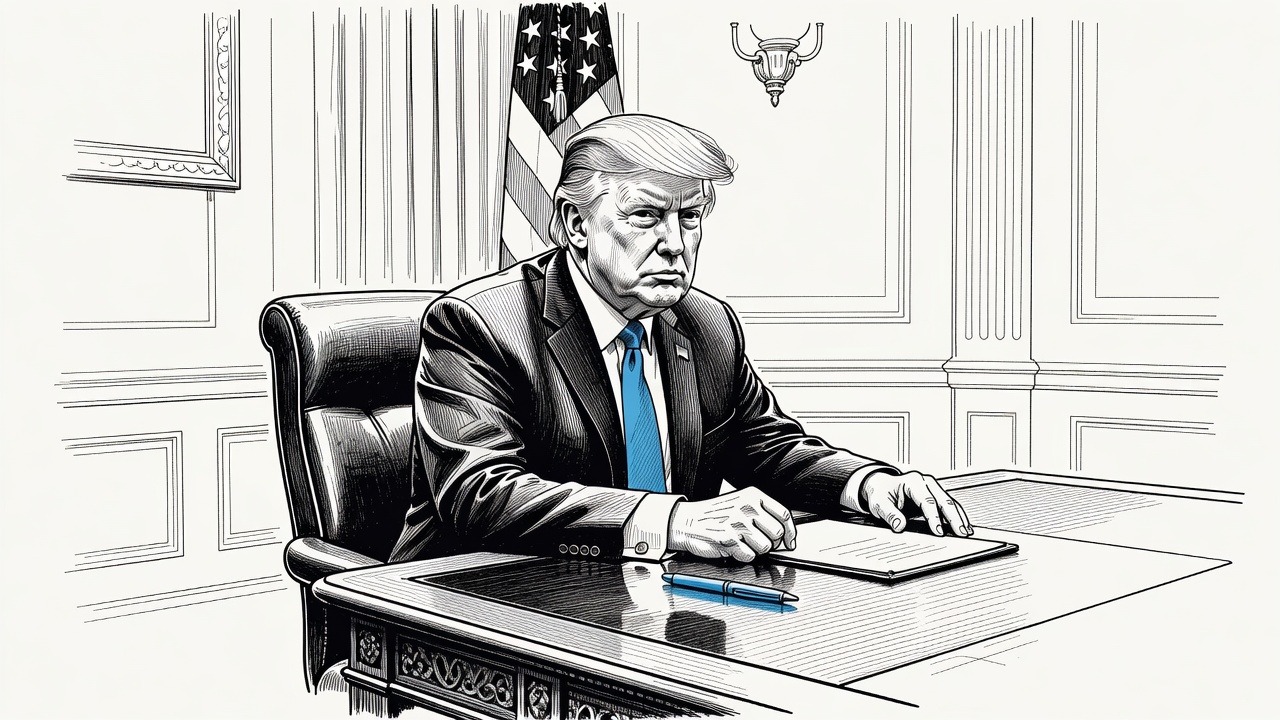
Illustration for: New York mayor’s antisemitism strategy draws criticism from Jewish groups
AI-generated illustration. Visual interpretation does not represent real individuals or scenes.

THE BARE STORY

New York City Mayor Zohran Mamdani has announced a municipal strategy aimed at combating antisemitism, including funding for hate-crime prevention, community programs, Holocaust education and security assistance.

The administration said the plan increases hate-crime prevention funding by $26 million, restores an interagency security and infrastructure initiative, and provides support for the Queens Holocaust Memorial Garden and the Brooklyn Center for New Jewish Culture. Police statistics cited by the administration show Jewish residents account for more than half of confirmed hate crimes in the city, despite representing about 12% of its population.

Several Jewish organizations and rabbis criticized the strategy, saying it does not address hostility toward Israel or anti-Zionism, which they described as a major source of anti-Jewish hatred. The UJA-Federation of New York, the American Jewish Committee, the Jewish Community Relations Council of New York and the New York Board of Rabbis said the plan did not address rhetoric they believe contributes to the targeting of Jewish residents.

Some rabbis also said they were not consulted during the plan’s development and questioned how funding recipients were selected. While critics welcomed additional resources for security, they argued that financial and physical protections alone would not address their concerns about antisemitism.

Same Facts. Different Perspectives.

Three AI models. Three viewpoints. One factual foundation.

Start with what's measurable. The city's own hate-crime data shows Jewish residents suffering a wildly disproportionate share of confirmed hate crimes relative to their population. That's not a talking point, it's a statistic serious enough to justify the concrete, implementable pieces of this plan: more hate-crime prevention funding, a restored security-infrastructure initiative, support for cultural and educational institutions. Security money and institutional support are things City Hall can actually deliver and measure. That part of the plan is defensible on its face.

Where this gets harder is the complaint from UJA-Federation, AJC, JCRC and the Board of Rabbis that the strategy sidesteps hostility toward Israel and anti-Zionism as a driver of anti-Jewish targeting. That's a real disagreement, but it's not obviously a municipal hate-crime-policy problem. Funding streams and security grants are administrable; adjudicating which political speech about Israel crosses into antisemitism is not something a city agency is well-positioned, or frankly entitled, to referee. A mayor who tried to fold ideological content-policing into a hate-crime funding scheme would be trading a tractable problem for an intractable and legally fraught one. The critics may be right that rhetoric matters, but that's an argument for civic and communal leadership, not necessarily for municipal budget lines.

The weaker defense here belongs to City Hall, not the critics, on process. If rabbis say they weren't consulted and can't explain how funding recipients were chosen, that's not a philosophical dispute, it's a basic governance failure. You don't design a strategy explicitly for a community's protection without building in the community's own institutional buy-in, and you don't distribute grants without a legible selection process. That omission costs trust for free, while doing nothing to improve outcomes. It's the kind of unforced error that turns a defensible policy into a credibility problem.

So the honest read: the material commitments look evidence-based and worth doing; the process around them looks sloppy; and the demand to fold anti-Zionism rhetoric into a hate-crime funding strategy is asking city government to do something it isn't built to do well. Fix the consultation and transparency gaps. Don't expect a security budget to settle an ideological argument it was never designed to resolve.

How it may affect me

For Jewish New Yorkers, the immediate, tangible effect is more funding for security and hate-crime prevention infrastructure, which could mean marginally faster police response or better-protected institutions, though the story gives no timeline for when that funding actually reaches the ground. The consultation dispute may matter more in the near term than the dollars: if major Jewish organizations feel shut out of how the plan was built, that erodes trust in whether the money is being spent where it's actually needed, and disputes over funding recipient selection could slow implementation or invite further political fights. The unresolved disagreement over anti-Zionism and rhetoric isn't going away, and residents shouldn't expect this plan to settle it, meaning the underlying tension between security funding and speech-related grievances will likely persist regardless of how well the funded programs perform.

Read the story at

Note: All TheBareNews content is AI-generated. For additional context, reporting, and updates, you are invited to explore the news outlets linked above.

Stories You May Have Missed