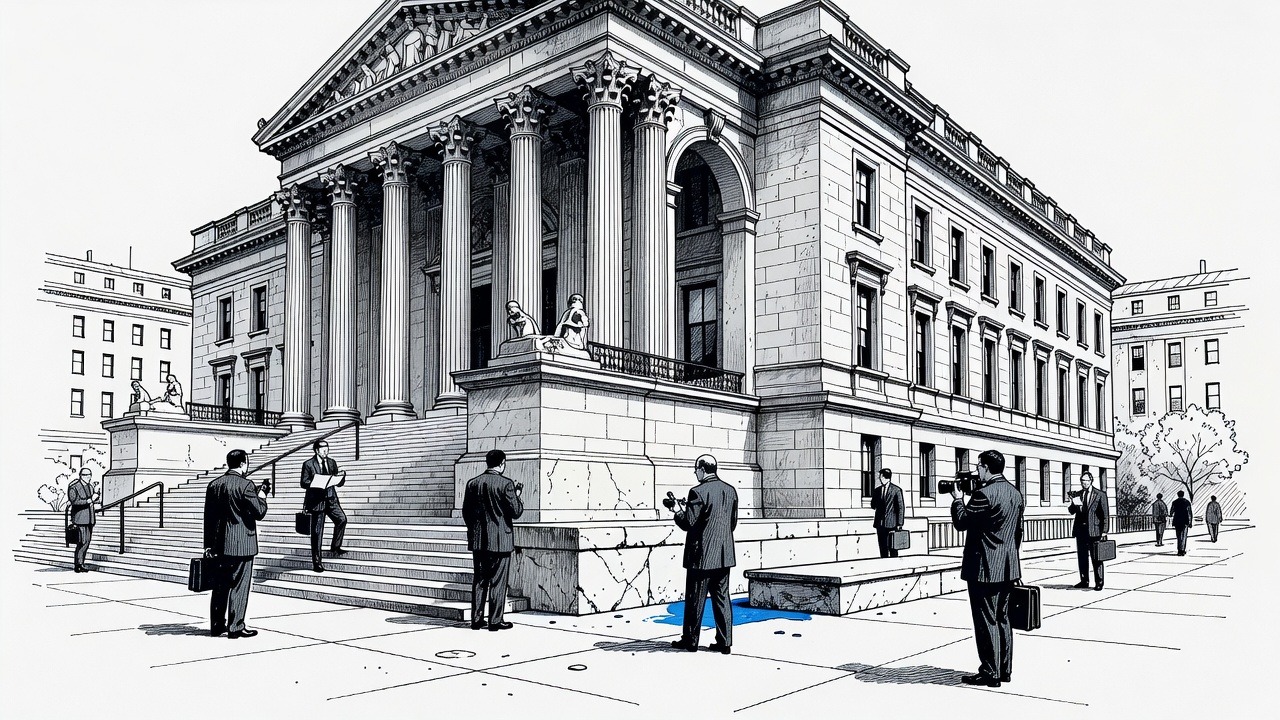
Start with what's actually happening here, stripped of the noise: the Justice Department — a party that has repeatedly lost fights with these judges over immigration enforcement — is asking an appeals court to investigate those same judges and pull them off DHS cases. That sequencing matters. Judge Schiltz didn't invent a grievance; he ordered ICE to stop violating court orders during an enforcement surge. The department's misconduct complaint arrives only after that order stung, which is not proof of bad faith but is exactly the kind of incentive structure a pragmatic reading should flag: when a litigant asks for a judge's removal right after losing, the burden of proof on 'this is about ethics, not outcomes' should be high.
On process, the department gets real credit for one thing: routing this through the 8th Circuit's misconduct-review machinery rather than running a pressure campaign in the press is the correct institutional move. That's how judicial accountability is supposed to work — a formal complaint, reviewed by peers, not a political broadside. If judges genuinely crossed an ethical line by commenting on pending cases in a way that prejudges outcomes, that's a legitimate process to test it.
But the substance of the complaint is weaker than its framing suggests. Judicial conduct guidance has long recognized that judges may speak publicly in defense of judicial independence and the rule of law when those things are under attack — that's not a loophole, it's a deliberate carve-out because courts have no press office and no political constituency to defend themselves otherwise. Attorney General Blanche's blanket claim that judges 'should not publicly discuss ongoing cases' glosses over that distinction. There's a real difference between a judge editorializing about a case's merits and a judge explaining, after ordering an agency to stop violating court orders, why compliance with court orders matters. Treating the latter as disqualifying misconduct stretches the ethics rules to do litigation work.
The unattractive precedent this sets, if the complaint succeeds on these terms, is a cheap playbook: lose a ruling, file a misconduct complaint alleging the judge's public defense of that ruling shows bias, and get a friendlier bench. That's not accountability — it's judge-shopping with extra steps, and it corrodes the independence the ethics rules were built to protect in the first place. The 8th Circuit should take the review seriously, but seriously also means not rewarding a losing party for weaponizing the process.
How it may affect me
In the near term, expect procedural friction rather than a final answer — recusal fights and misconduct review typically slow down the underlying immigration enforcement litigation itself, which means people directly affected by those cases (detained individuals, families, ICE operations under court scrutiny) may see delays before anyone resolves whether ICE's conduct actually violated court orders. That's a real cost, separate from who's ultimately right.
More broadly, how the 8th Circuit handles this could shape whether federal judges elsewhere feel free to publicly explain enforcement-compliance orders against agencies, or whether they start pulling back from public defense of their own rulings to avoid becoming misconduct-complaint targets. If judges grow more cautious about speaking up when they believe an agency is ignoring their orders, that's a quiet shift in institutional balance that ordinary people won't see directly but will feel indirectly — through less judicial pushback on agency overreach, whichever administration is in power. None of this is certain; it depends heavily on how the appeals court rules and whether this becomes a template other litigants copy.