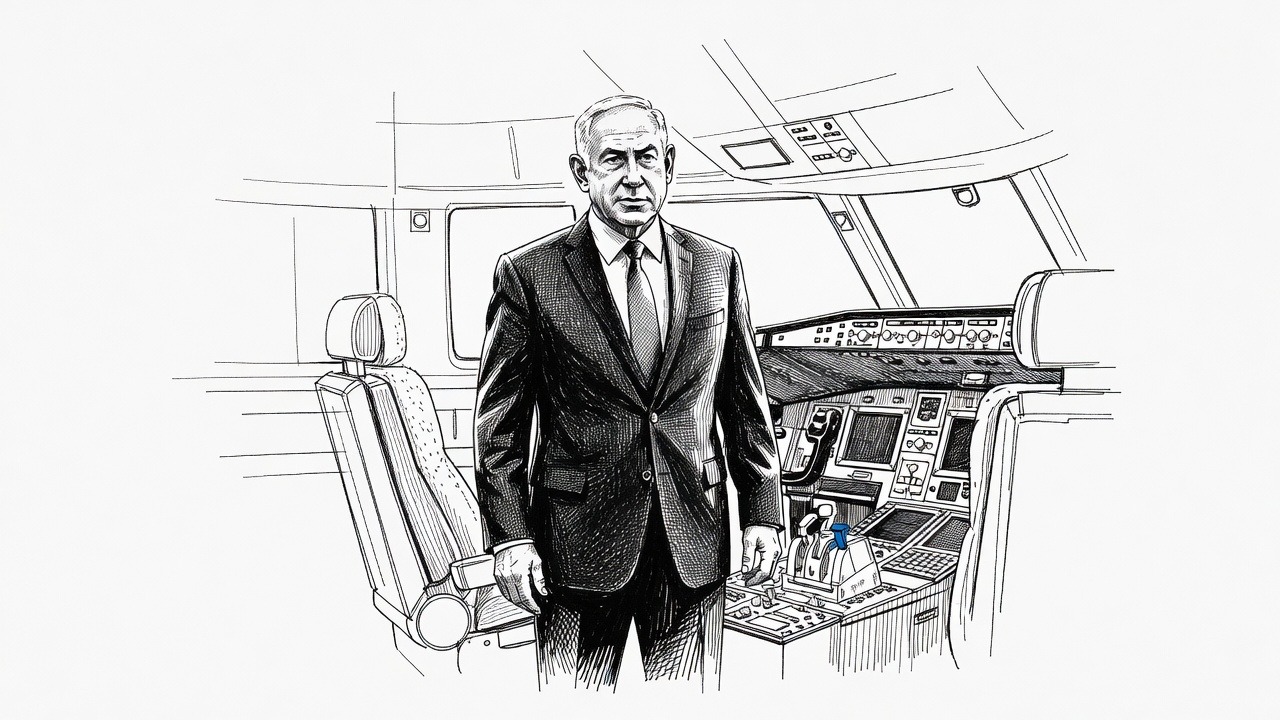
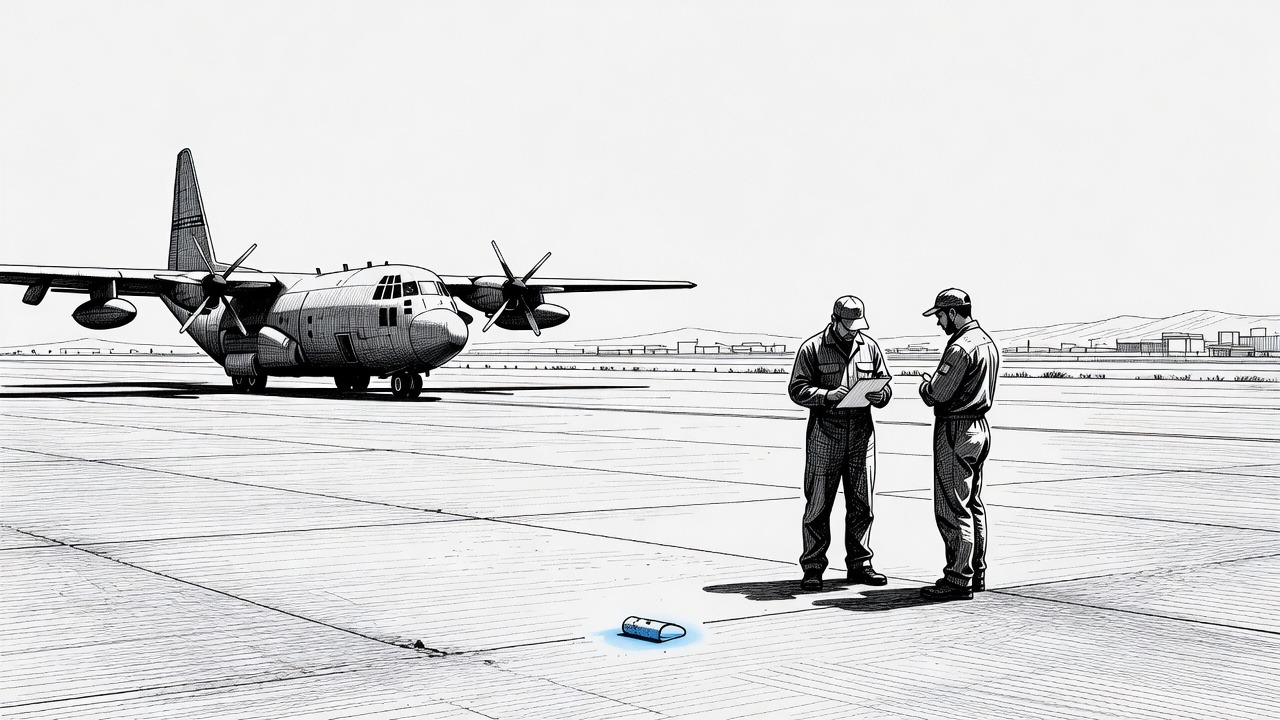
A pilot allegedly stabbing his colleague and trying to interfere with the systems of a civilian jet on approach to Israel is not an aviation curiosity. It is a test of whether governments still treat an attack on an airliner as an attack on the people aboard it.
Prime Minister Netanyahu’s account is plain. Flydubai 1073, Dubai to Tel Aviv, made an emergency landing in Tabuk after one pilot stabbed another and attempted to interfere with the Boeing 737 Max 8’s systems as the aircraft approached Israel. A passenger and a crew member entered the cockpit and subdued him. Another aircrew member stabilized the plane. Passengers described severe movements; one put the disruption at roughly ten to twenty minutes, beginning about two hours after departure. Another said passengers and a doctor assisted the injured pilot and that no other passengers were hurt. Those are the facts as officials and people on the aircraft have stated them. They are already enough to justify a security investigation, not a softer label.
Defense Minister Israel Katz has characterized the incident as an attempted terrorist attack. An Israeli security official says authorities are still examining whether the pilot acted alone. Those statements belong together. Asking whether there were accomplices is what a serious state does. It is not a reason to treat the cockpit assault itself as an open question of tone. Someone entrusted with the airplane allegedly used violence against the other pilot and tried to interfere with the systems on approach to Israel. That is an insider threat — harder than the old problem of a passenger rushing a locked door — and it calls for vetting, supervision, and consequences.
Netanyahu said Saudi authorities detained the pilot for questioning. That cooperation matters. Public order across borders depends on states that still hold suspects and ask hard questions. Israel’s interest is concrete: a civilian flight was allegedly placed in jeopardy and was stopped because people on board acted. The proper use of state power here is narrow and old-fashioned — a full accounting of intent, access, and whether anyone else was involved, then whatever charge the evidence supports. Rule of law is not leniency toward the person who allegedly put every soul on that aircraft at risk. It is the disciplined use of authority for the purpose that actually justifies it: protecting the innocent.
The passenger and crew who entered that cockpit did what free people are sometimes forced to do when the last procedural barrier fails. That courage deserves recognition. It is not a substitute for policy. Airlines and governments cannot outsource the next case to luck and a doctor in the cabin. If Katz is right that this was an attempted terrorist attack, the response should be deterrence and exposure aimed at cockpit trust and crew vetting — not security theater inflicted on ordinary passengers, and not a bureaucratic pause while officials wait to see which description is safest.
How it may affect me
If you fly, the immediate lesson is uncomfortable. On this aircraft the danger allegedly came from the flight deck, not from a stranger rushing the cabin. Passengers endured severe movements for an estimated ten to twenty minutes, the jet diverted to Tabuk before later reaching Tel Aviv, one pilot was injured, and — by one passenger’s account — no other passengers were. The people who stopped it were a passenger, a crew member, and another aircrew member who stabilized the plane.
What follows is not yet established. Israeli officials are treating this as a possible terrorist attack and examining whether the pilot acted alone, and Saudi authorities have detained him for questioning. Travelers, especially on routes involving Israel, may face tighter crew screening, more questions, or added delay if governments decide an insider threat requires a visible response. Schedules could shift if carriers reassess the risk. None of that is certain, and a response that harasses ordinary passengers while ignoring who sits at the controls would be security theater, not protection.
What is already clear is who bears the risk when someone with legitimate access to the controls turns violent: the people in the seats. Personal responsibility is not a slogan in that moment. It is the difference between an emergency landing and something worse.