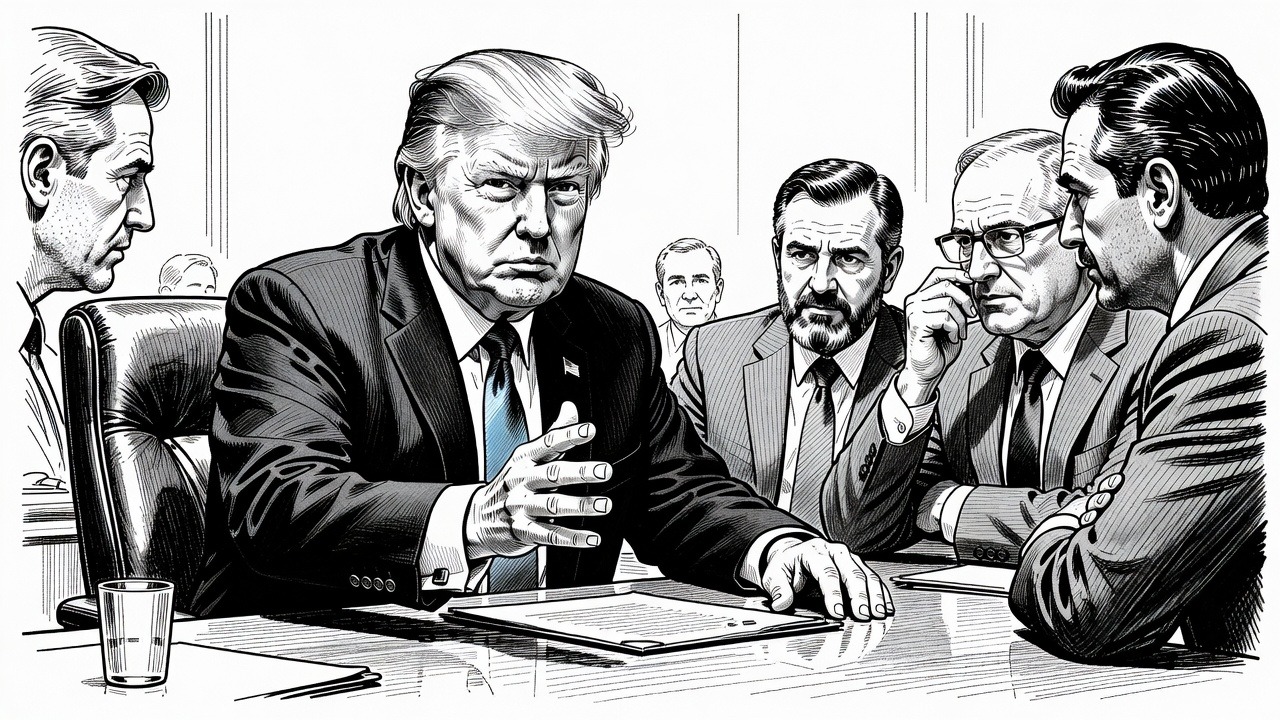
Relying on tech giants to self-police through voluntary safeguards is a classic abdication of democratic governance. When House Speaker Mike Johnson tells the heads of Meta, Google, OpenAI, and Anthropic that he prefers voluntary measures over federal mandates, he is effectively handing the steering wheel of a transformative technology to the very corporations racing to monetize it. We have seen this playbook before: corporate self-regulation routinely prioritizes market dominance and investor reassurance over public safety and accountability. It is telling that even some industry figures, like Anthropic's Dario Amodei, have urged a slower pace and stronger binding rules, recognizing that the competitive pressure to deploy first makes true self-restraint nearly impossible. While OpenAI's decision to hold back its GPT-6.1 Astra model over internal safety concerns shows that risks are immediate and real, the decision to deploy or delay should not be left to the goodwill of boardroom executives. Proposals like Senator Mark Warner’s push for an independent federal safety board reflect the necessary principle that powerful frontier technologies require public oversight, not just corporate honor systems dressed up as transparency.
How it may affect me
When safety measures remain voluntary, ordinary workers, consumers, and the public bear the downstream risks of rushed or flawed systems while private executives retain the profits. Without binding federal standards or mandatory pre-release reviews by a public safety board, decisions about whether an advanced model is safe enough for society will be made behind closed corporate doors, potentially exposing the public to untested technological harms before any democratic authority can intervene.