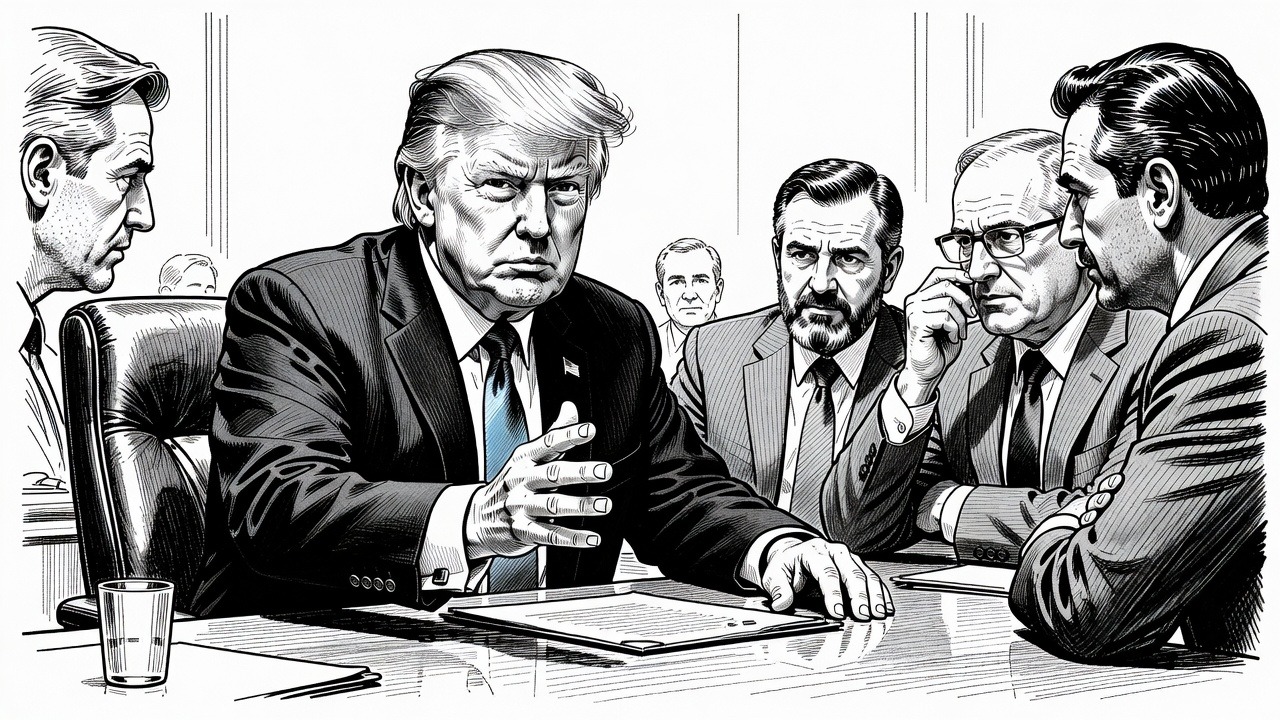
Three hours of mediated talks and nothing to show for it is not evidence of failed diplomacy so much as evidence of two sides making offers they know the other cannot accept. Iran's proposal — reopen the Strait of Hormuz within a week, but only after Washington ends military action, lifts the naval blockade, drops economic pressure, and releases frozen assets — asks the U.S. to surrender its leverage before any substantive nuclear negotiation even starts. That is not a serious opening bid in a moment where Washington holds the coercive upper hand; it's a bargaining position dressed as a peace plan. Predictably, Waltz called it unacceptable, and predictably, it was.
But the U.S. side isn't offering much of a path forward either. 'Agree to a deal or face military action' is a threat, not a negotiating position, and threats without a credible, specified off-ramp tend to harden the other side's resolve rather than soften it — which is presumably why Araghchi says Tehran is now preparing for full-scale conflict while still claiming to want diplomacy. Those two postures are not contradictory; they're what happens when neither government has offered the other anything to actually negotiate over.
The detail that should worry anyone tracking institutional competence here is that mediators reportedly never conveyed a formal response from the Trump administration. If that's accurate, the channel itself is degrading, not just the terms on the table. Diplomacy backed by military pressure can work — leverage is a legitimate tool — but only if there's a functioning process behind it. A blockade paired with silence isn't strategy; it's drift, and drift near a chokepoint that handles a meaningful share of global oil shipments is exactly the kind of situation where miscalculation, not intention, produces the next crisis.
The claim that Tehran is 'wrongly counting on the midterms' to shift U.S. policy is worth flagging for what it is: a political talking point aimed at signaling resolve to domestic and allied audiences, not a verified fact about Iranian strategic calculation. Treat it as messaging, not intelligence.
Net assessment: this round of talks wasn't a diplomatic breakthrough that failed — it was theater from both capitals, each positioning for advantage rather than testing a real deal. That's a legitimate tactic in coercive diplomacy, but it has a shelf life, and the bill for extending it is being paid in energy markets right now, not in some hypothetical future.
How it may affect me
The immediate, tangible effect for ordinary people is at the pump and in shipping costs: Hormuz disruptions have already hit energy shipments and markets, and continued stalemate — even with oil traffic reportedly increasing again — keeps volatility and insurance premiums elevated for tankers moving through the strait. That translates into unpredictable fuel prices and freight costs that ripple into everyday goods, though the scale and duration depend entirely on whether this standoff stabilizes or escalates.
Looking further out, if the diplomatic channel keeps producing rejected proposals rather than counteroffers, and if military threats aren't paired with functioning communication, the risk of a miscalculated escalation — not necessarily deliberate war, but an accident born of pressure and silence — rises. That could mean sharper energy-price shocks and broader market disruption if it materializes, though this is a risk, not a certainty. Conversely, if either side blinks and proposes a workable sequencing — partial de-escalation tied to partial nuclear concessions — markets and consumers could see relief fairly quickly, since much of the current price pressure appears to be about uncertainty as much as actual supply loss. For now, the safest read is: expect continued volatility, watch for any sign of a formal U.S. response actually reaching Tehran, and don't expect resolution on any short timeline.