Start with the numbers, because they tell you something important before you even get to the politics: one estimate puts the affected trade at $967 million, another puts it near $19.9 billion. That is not a rounding error, that is a twenty-fold spread, and it should make everyone treating this dispute as a clean, quantifiable policy move a little more humble. When two credible sources can't agree on the basic scale of an economic action, the debate about whether it's 'working' is premature. You cannot evaluate the cost-benefit of a policy you cannot accurately size.
The substance of the list itself is also worth noticing. Beer, whiskey, whey products, motorcycles specifically above 800cc, molasses — this is not a broad economic remedy aimed at correcting some systemic trade imbalance. It reads like a curated retaliation list, chosen for political salience and pressure points rather than for any coherent economic theory about what's actually wrong with U.S.-Canada trade. That's not unusual in tariff fights — both governments do this — but it's worth being honest that 'restrictions' framed as principled trade policy are often just leverage dressed up in tariff schedules.
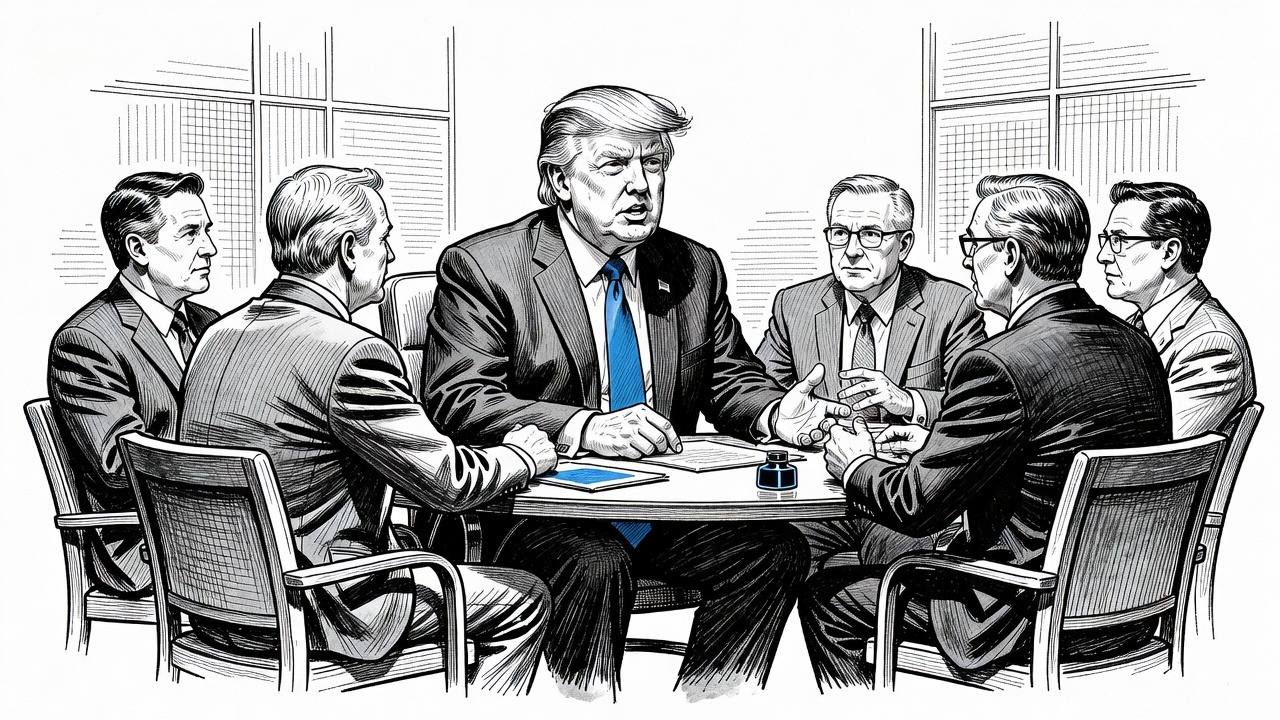
Trump's prediction of a deal 'within weeks' should be read as a political statement, not a forecast. Trade negotiations under pressure rarely resolve on the optimistic timeline announced publicly, and LeBlanc's response — that Canada won't accept a deal contrary to its interests — is the standard, expected posture of a government that doesn't want to look like it folded first. Neither statement tells you much about the actual likelihood or terms of resolution. What it does tell you is that both sides are negotiating through public statements as much as through actual diplomatic channels, which is a less stable way to manage a trading relationship between two economies this integrated.
The deeper institutional question is why this is happening outside the negotiated framework that's supposed to govern exactly this kind of dispute. Tit-for-tat tariff and counter-tariff actions between close trading partners tend to produce more uncertainty than resolution, and uncertainty is its own tax — on investment decisions, supply chain planning, and business confidence — regardless of who eventually 'wins.' If the endgame really is a negotiated settlement in weeks, the disruption may be a bargaining tactic with a short shelf life. If it drags on, it becomes a structural cost that outlasts whatever political win either side was chasing.
How it may affect me
In the near term, expect the effects to show up quietly rather than dramatically: higher prices or reduced availability for specific Canadian beer, cider, wine, whiskey, and vodka brands, along with whey-based dairy ingredients used in manufactured foods, and a narrower band of imported motorcycles and mopeds. Canadian producers and exporters in these categories bear the most direct cost, facing lost U.S. sales or the need to find alternative markets on short notice. U.S. importers, distributors, and businesses that rely on these specific goods face their own disruption and possible cost pass-through to consumers.
Whether this becomes a lasting change to household costs or a brief bump depends entirely on how quickly, if at all, the promised negotiation actually produces an agreement — something the Bare Story does not guarantee despite the optimistic timeline floated publicly. If talks stall, businesses on both sides may need to plan around continued uncertainty rather than a quick fix, which could mean higher costs or supply adjustments persisting longer than either government is currently suggesting. If a deal does materialize in weeks as predicted, most of this disruption could prove temporary — but that outcome is a political prediction, not yet a demonstrated fact.