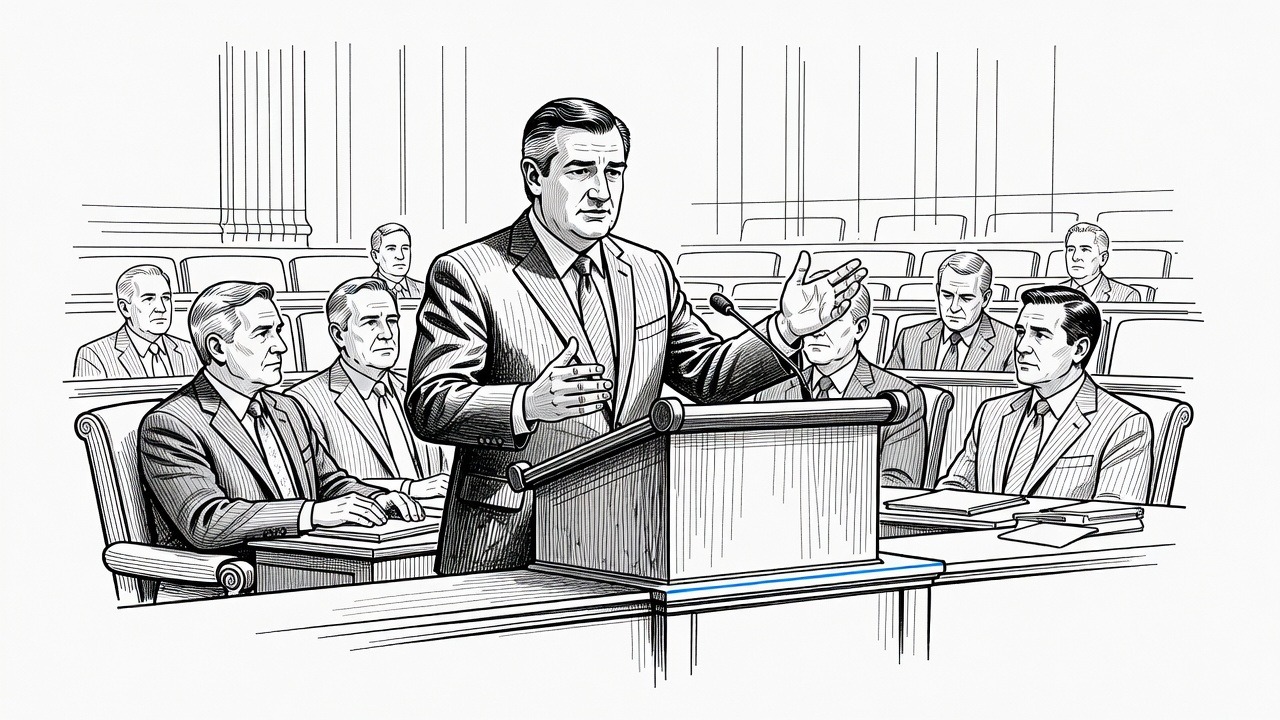
The Senate's 77-22 vote for the Protect College Sports Act is what a messy interstate market looks like once it grows large enough that Congress reaches for a national rulebook. Ted Cruz and Maria Cantwell, with the NCAA, the major conferences, and President Trump behind them, are selling stability. On the diagnosis, Cruz has the better point. Compensation, name-image-and-likeness agreements, transfers, eligibility, and recruiting are now split among differing state laws, litigation, and court rulings, while schools compete for athletes under rules that will not sit still. A national recruiting market cannot run forever on contradictory codes. Uniform rules are not, by themselves, a betrayal of limited government. They are a plausible answer when the alternative is a patchwork plus a courtroom filling in policy for everyone else.
Where a liberty-minded reading should refuse the sales pitch is the privilege folded into the framework. Limited antitrust protections for the NCAA are not housekeeping. They are a request that Washington make it harder to challenge the association's rules — the very concern raised by Senators Cory Booker and Chris Murphy, labor groups, and athlete organizations, who said the bill could weaken athletes' bargaining power and limit those challenges. Their preferred path, more collective leverage and more lawsuits, is not a conservative one. It would push college sports toward a permanent labor fight instead of a knowable set of contract rules. That does not make the mechanism they describe imaginary. Antitrust shelter is how a private incumbent asks the state to dull competition and litigation it has not been able to shut down on its own. Free-market conservatism is not the same thing as carrying the NCAA's water, even when a Republican senator and a Republican president are carrying it too.
If NIL agreements mean anything, they mean athletes have a property interest in their own name, image, and likeness. Restrictions on transfers and a five-year eligibility standard can be defended only as rules of a fair competition, not as a way to put the talent market back under the conferences that endorsed the bill. Cantwell's claim that the measure would establish revenue-sharing rights, together with the health and safety provisions actually in the legislation, is the part that treats athletes as parties to a contract rather than as roster entries. Clear compensation rules are compatible with property and personal responsibility. They do not require a unionized campus sports system, and they do not require Congress to make the NCAA harder to sue.
The Congressional Black Caucus opposed the bill, citing concerns including the treatment of Black athletes and historically Black colleges and universities. This record does not supply a separate set of facts about how the text would treat those athletes, and that gap should not be filled with speculation. What the opposition does put in view is an institutional problem conservatives already know how to see: a framework blessed by the major conferences will tend to fit the schools with the most leverage. HBCUs and other smaller programs may have less say in a national settlement than the conferences that asked for it. That is a fair question about concentrated private power, not an invitation to turn a sports statute into a culture-war proxy.
None of this is law. The House is in recess until after the midterm elections, and it is unclear when the bill will be considered. That pause is useful, because Washington is trying to staple two projects together. Bringing order to an interstate college-sports market — one set of rules on compensation, NIL, transfers, eligibility, and recruiting — is a legitimate congressional job if the rules stay narrow and even-handed. Granting the NCAA limited antitrust protection, and restricting athlete movement in the same stroke, is a different project: restoring institutional calm by limiting the challenges that unsettled it. Republicans can support the first without pretending the second is a small price. Stability is worth having. A federal shield for the association that went to Congress because courts and state laws would not hold still is not the conservative way to buy it.
How it may affect me
This is not a tax bill, and nothing in the Senate action describes a new charge on a household budget. It is also not a change to next week's roster. The House is in recess until after the midterms, and it is unclear when it will consider the measure, so the NIL agreements, transfer decisions, and eligibility rules now in force remain the ones athletes and programs are living under.
If a version of this framework eventually becomes law, the people who would feel it first are athletes and their families. One federal rulebook on compensation, name-image-and-likeness agreements, transfers, eligibility, and recruiting could replace the need to navigate differing state laws — a practical gain for a family recruiting across state lines or trying to understand an NIL agreement that touches more than one jurisdiction. The same bill's transfer restrictions and five-year eligibility standard could narrow how often, and for how long, an athlete can move or compete. That may mean more predictable rosters for fans and coaches, and less room for a player who wants a different program or a better market for his or her own name and likeness. Sponsors say the bill would also establish revenue-sharing rights and include health and safety provisions. If those pieces survive the House, they could matter more to earnings and athlete protection than another conference announcement. None of that is settled. A Senate vote does not write the House text.
Fans and college communities might notice later effects only if the rules actually change who stays, who transfers, and which programs can compete for talent. The major conferences supported the bill. Smaller schools, including HBCUs whose advocates opposed it, could find a national framework easier to follow and harder to influence. That is a possible competitive consequence, not a result the Senate has already produced.
The shift to watch is who sets the rules: Congress, and an NCAA with limited antitrust protection, rather than state legislatures and courts. If challenges to NCAA rules become harder, athletes, families, and schools that dislike those rules may have fewer legal paths and more reason to live with whatever Washington locks in. Until the House acts, that risk is prospective. The immediate fact is narrower: a bipartisan Senate has endorsed a federal college-sports regime, and the people who play, pay to watch, or build a season around a program are waiting on a chamber that will not be in session until after the election.