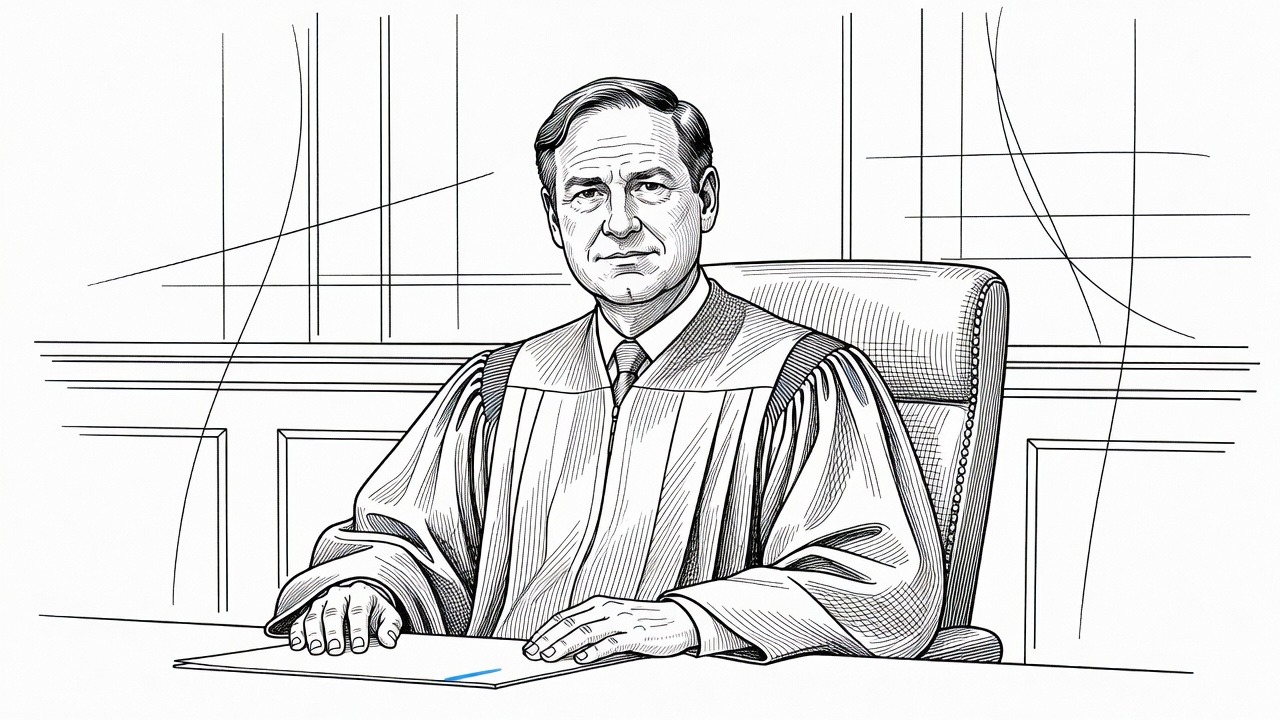
Justice Alito’s decision to step out of Suncor Energy v. County Commissioners of Boulder County is what judicial self-restraint is supposed to look like. He will not sit for the October 5 arguments, and the clerk has told the parties he is done with the case. A justice who concludes he should not continue participating protects the Court’s legitimacy. Recusal is not a ruling on the merits, and it is not a concession that Boulder’s theory of the case is sound.
What remains is the more important question: who gets to set energy policy in this country. Boulder and Boulder County want damages for injuries they allege were caused by greenhouse gas emissions and climate change, and they want those damages from energy companies under state law. The issue before the Court is whether federal law blocks that path. That is not a procedural quibble. If local governments can turn a global emissions dispute into state-law liability against producers of a lawful product, they will have found a way to impose costs and constraints that Congress never enacted and voters never directly approved.
That is government by lawsuit. It skips the hard work of legislation — open debate, measurable rules, and officials who can be thrown out — and substitutes plaintiffs, experts, and a damages award. Limited government does not require anyone to pretend emissions are irrelevant. It does require that sweeping economic choices be made by accountable institutions, not pieced together through municipal litigation and sympathetic state courts. Costs imposed this way do not stay neatly with corporate defendants. They move into fuel, power, transport, and the price of ordinary goods, while the political responsibility stays conveniently blurred.
The separate records fight belongs in the same cautionary frame, not as a proven conspiracy. Government Accountability & Oversight says its public-records requests are meant to examine what it describes as coordination between climate researchers and plaintiffs’ lawyers. The researchers say those filings disrupt their work and professional collaborations. Those are competing claims, not findings. But when scientific authority is deployed to move liability and public money through the courts, scrutiny is not an attack on inquiry. It is a demand that advocacy not hide behind the lab coat. Alito’s absence changes who hears the case. It should not change the standard: answer the preemption question as law, and do not let climate litigation become a back door for policy the political branches have not enacted.
How it may affect me
The immediate effect for most people is institutional, not a sudden change at the gas pump. One justice will not hear the October 5 arguments, so a smaller Court will decide whether federal law blocks Boulder and Boulder County’s state-law claims. If the remaining justices divide closely, the answer may be narrower and less settled than a full bench would have produced.
The practical stakes sit in the lawsuit itself. If courts let these damages claims proceed, other local governments may try the same route, and energy companies facing that exposure may pass costs into fuel, electricity, shipping, and goods households already buy. Taxpayers in communities that file or defend such suits may also pay legal bills for a national fight conducted through litigation rather than legislation. If federal law is held to block the claims, the pressure shifts back toward elected officials, where taxes, rules, and liability would have to be argued in public.
Either result may shape whether climate costs are assigned by lawmakers or by damage awards — and who ultimately pays. The records dispute may separately mean more, or less, public visibility into how climate suits are built: the requesters say they are examining alleged coordination, while the researchers say the requests already disrupt their work. Treat both as contested, not settled.