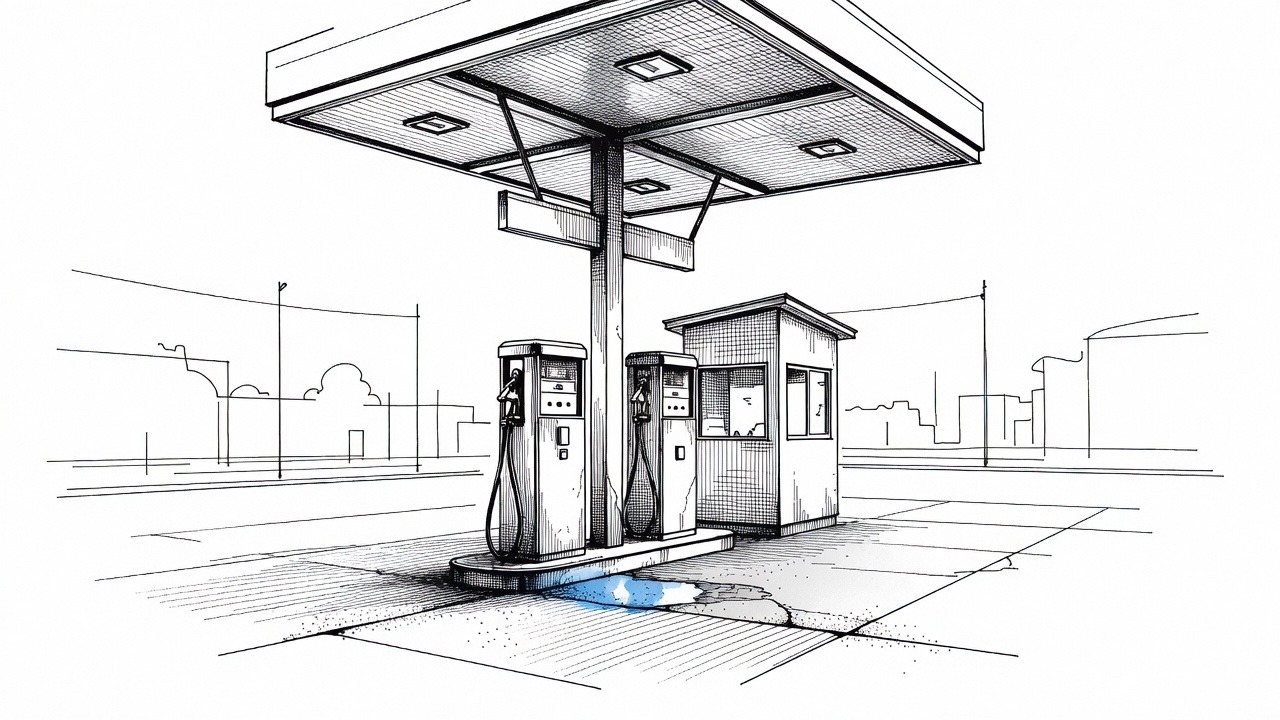
Thirty liters. That is what a Russian motorist may now buy, if the pump has gasoline at all. Rationing, in a country that is among the world's largest oil producers, is not a supply glitch. It is the bill for a war arriving at the kitchen table.
The Kremlin's bargain with its people was never freedom. It was stability: a full tank, a stocked shelf, and in return you keep quiet about where the money goes. For two decades that deal enriched a narrow class of oil barons, security-service veterans and Putin loyalists, while the rest of the country was told to be grateful. Now the same people who sold the invasion as costless are telling a driver in St. Petersburg to line up for diesel. The Leningrad governor blames drone strikes. Fair enough, but Russia's leaders chose this war, and they chose to leave their own refineries exposed to it.
Some on the Left will wince at Ukraine hitting refineries and say civilians shouldn't pay. I take that moral instinct seriously. But look at the asymmetry. Russia has spent years bombing Ukraine's power plants and substations, deliberately plunging cities into winter darkness. Ukrainians have lived for years with blackouts, not 30-liter limits. And refineries are not hospitals. They feed the fuel that moves tanks, trucks and aircraft, and they earn the revenue that pays for the killing. An anti-war Left that cannot tell the difference between an invader's economy and its victims has mistaken squeamishness for principle.
Nor should we gloat. The people queuing at Lukoil stations did not vote in a free election for this war, and many cannot speak against it without risking prison. Solidarity means being clear about who is responsible: not the commuter, but the system that treats ordinary Russians as a resource to be spent.
If the Kremlin wants the pumps full, there is a simple fix that requires no refinery repairs. Stop the war. That it will not tells you whose comfort it values.