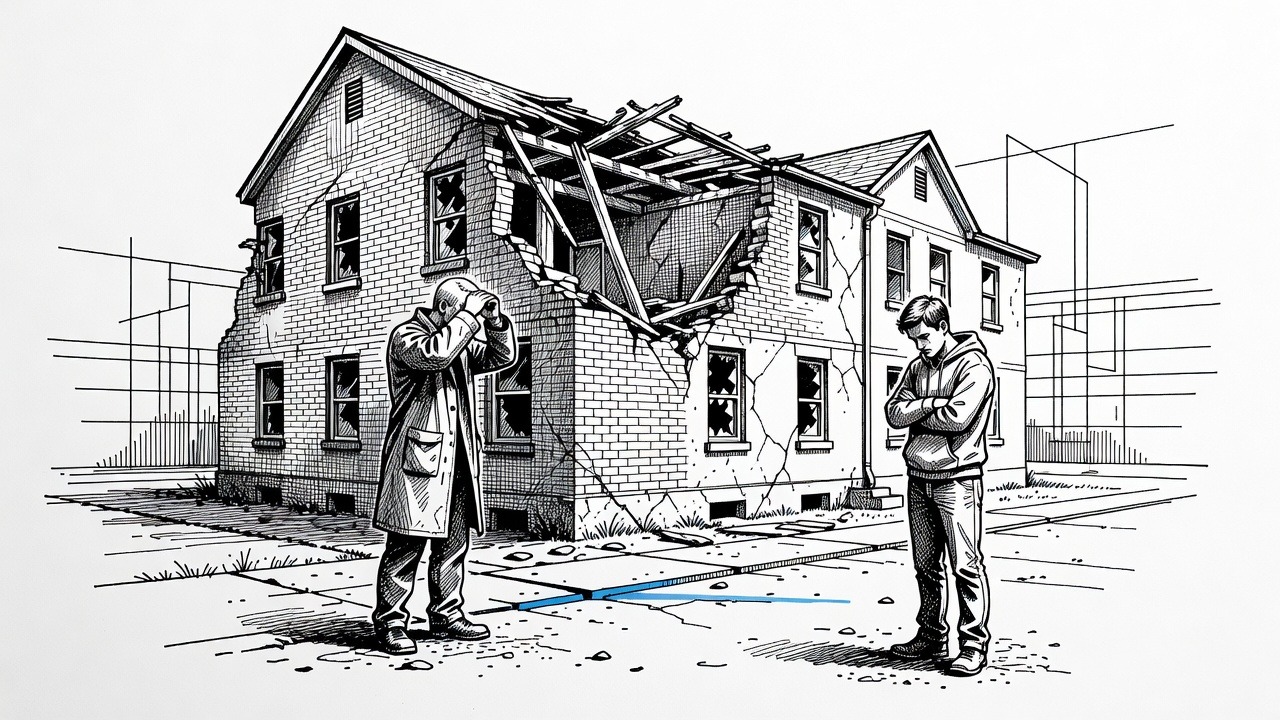
The dead in Starobilsk were 18 to 22 years old. They were asleep, or studying, or doing what students do in a dormitory. Twenty-one of them are in Russian state records as killed by military action. Those records come from a government that lies about this war as a matter of routine, so I treat them with suspicion. But suspicion is not refutation, and the Left should not pretend otherwise.
The principle is simple, and it is the one we invoke when Russian missiles hit apartment blocks in Kharkiv or Odesa: civilian lives do not count for less because of whose flag flies over the ground. Ukraine says it targeted the headquarters of Rubikon, a unit that works with drones and trains operators. That may be true. A legitimate military target is not a blank check. International humanitarian law asks about proportionality, about precautions, and about what was known of the surroundings. A claim that the target was military is where the inquiry starts, not where it ends.
None of this makes the two sides equivalent. Russia invaded, Russia occupies Luhansk, and Russia has flattened cities and killed far more civilians than Ukraine ever will. If a military unit operated near a dormitory, the occupier that put it there bears a share of the blame. Russian officials will exploit these deaths with theatrical grief, and they have no standing to lecture anyone on protecting children.
But this is exactly when principles are tested. Western governments that thunder about war crimes when Moscow strikes should apply the same standard when a Ukrainian strike kills students. Silence or reflexive deflection tells the world that our outrage is a team jersey. It also hands Moscow its best propaganda, because selective morality is easy to expose.
The obvious answer is independent investigation, and the obstacle is Russia, which blocks credible monitors from the territory it occupies. Demand access anyway. Demand the evidence of what the building held and what Ukrainian planners knew. Support Ukraine's defense and insist that it follow the laws of war, because those aren't in conflict. A cause that cannot withstand scrutiny of its own conduct is not worth the blood spent on it. Twenty-one young people are dead, and they are owed more than a press-release dispute.