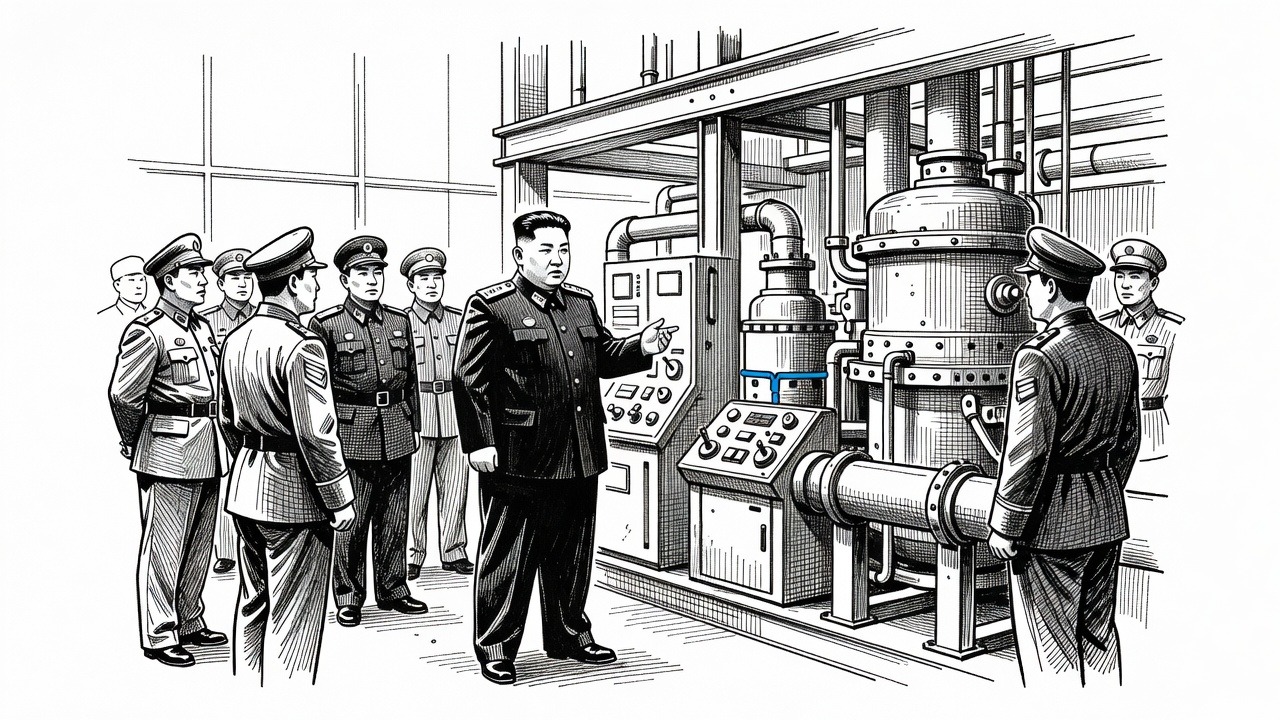
Four to five weapons' worth of nuclear material a year. That is what a nongovernmental analyst estimates the expanded Yongbyon site could yield, and it should end the fantasy that Washington has any working North Korea policy.
The record is bipartisan and damning. George W. Bush tore up the Agreed Framework and watched Pyongyang test its first bomb. Obama's "strategic patience" meant waiting while the program grew. Trump gave Kim two photo-op summits, then walked out of Hanoi with nothing, having refused even a partial sanctions-for-Yongbyon swap that might have capped the very site now being enlarged. Biden mostly ignored the problem. Each administration kept sanctions, threats and a demand for "complete denuclearization," a goal Kim has made clear he will not discuss. Every year the goal stayed fixed, the arsenal grew.
The lesson Kim draws is simple, and Washington keeps confirming it. Qaddafi gave up his program and was overthrown. Iran negotiated, and last year the United States bombed its nuclear sites anyway. Whatever one thinks of those decisions, ask what they teach a dictator with a bomb already built. Nobody in Pyongyang is going to read them as a reason to disarm.
The cost is also higher than it was. North Korea no longer sits alone under sanctions, because it has a patron. Moscow has taken Pyongyang's shells and soldiers for the war in Ukraine, and Kim gets cash, food and, almost certainly, technical help in return. Sanctions that depend on Russian and Chinese cooperation are now closer to theater than to policy.
The hawks will say talking rewards bad behavior. But the alternative has rewarded it far more. Refusing to negotiate hasn't denied Kim anything. He has used the time to build.
The adult position is to treat the program as a fact and bargain over its limits. That means a verifiable freeze on fissile material production, restraints on testing and missile deployment, and crisis hotlines between Seoul, Washington and Pyongyang. In return, offer real sanctions relief and a path to normal relations. Denuclearization can stay a distant aspiration. It cannot remain the price of admission to talks.
Democrats should say this plainly, rather than hide behind the standard line that "all options remain on the table" while doing nothing. A freeze would not be pretty, and it would not satisfy those who want moral clarity. It would, however, be better than watching a hostile government add weapons every year while we congratulate ourselves on our toughness.
Diplomacy is not appeasement. Drift is.