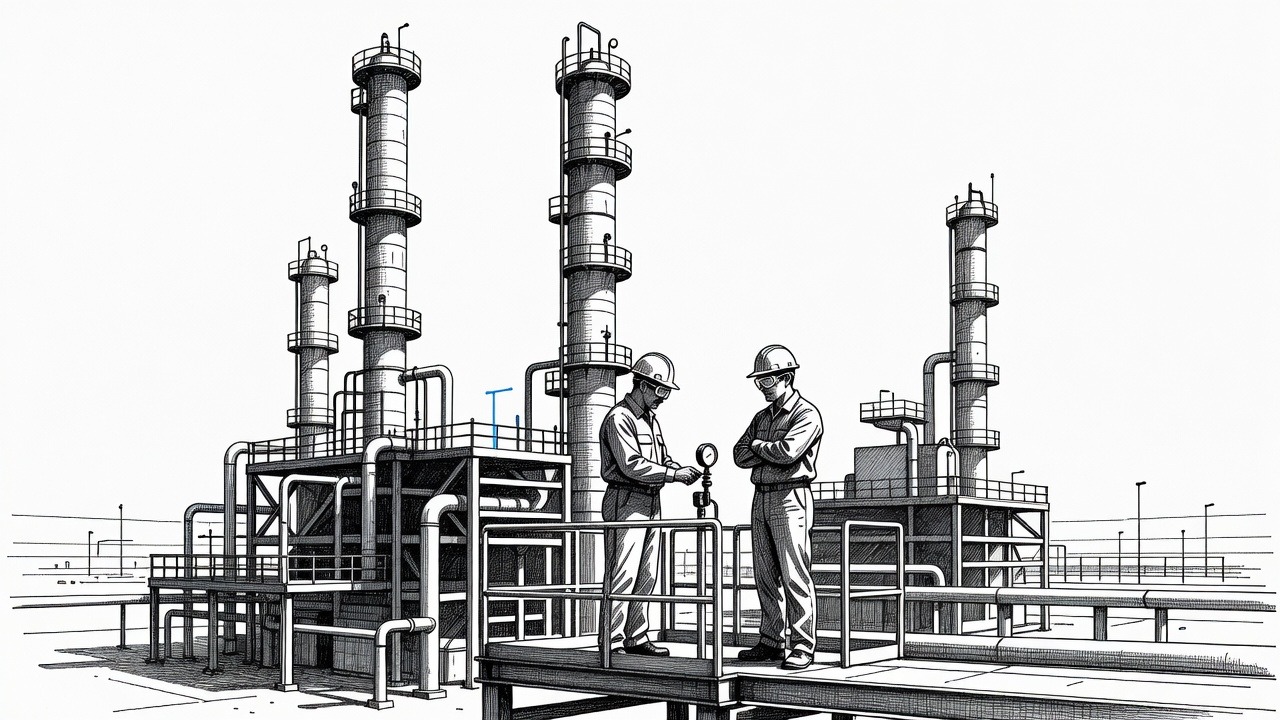
The story gives us the refinery's capacity to the barrel. It does not give us the dead man's name. He was Nepali, which tells you most of what you need to know about who pays for the Gulf's wars.
Saudi Arabia's economy runs on foreign hands: millions of South Asian and African workers who staff refineries, construction sites and kitchens. Under the kafala system, many have had their ability to change jobs or leave tied to an employer's consent. Saudi reforms in 2021 loosened some of those rules, but the dependence remains. Nepal, where remittances make up about a quarter of the economy, exports its young men because it has little else to sell. They go to the Gulf to earn a wage, and some come home in a box. A missile does not check passports, but the system that put him within range did.
None of this requires romanticizing the Houthis. A movement that fires projectiles at facilities where civilians work, then announces targets like a quarterly earnings call, is not a liberation army. The Saudi-led coalition blames the Houthis, and the Houthis claimed attacks on Ras Tanura and ports the day before. If the attribution holds, a Nepali laborer died for a militia's leverage.
But the Saudi government and its Western arms suppliers should drop the pose of surprised victim. Since 2015, the coalition's air war and blockade have helped produce one of the world's worst humanitarian catastrophes, with civilian markets, weddings and water infrastructure among the documented tragedies. Washington armed it, refueled it and looked away. Democrats are not clean here. Joe Biden promised to make Riyadh a "pariah," then flew there and fist-bumped the crown prince. Oil prices won that argument, as they usually do.
This is what "stability" means in the Gulf: a security order built on arms sales and cheap oil, defended by people who never get a say in it. When it works, Western consumers get fuel and Gulf elites get protection. When it fails, the bill goes to a Yemeni child, a Nepali welder, a family in Pokhara waiting on a repatriation flight.
The lesson is not that the refinery needs better air defense. It is that a war with no political settlement keeps producing victims at both ends of the border, and the least powerful are always nearest the fire. Any serious Western policy should start by ending the arms-for-oil bargain, pressing for a real Yemeni peace, and demanding that the Gulf's labor model treat the people who keep it running as human beings. Otherwise we will keep reading the barrel counts and never learn the names.