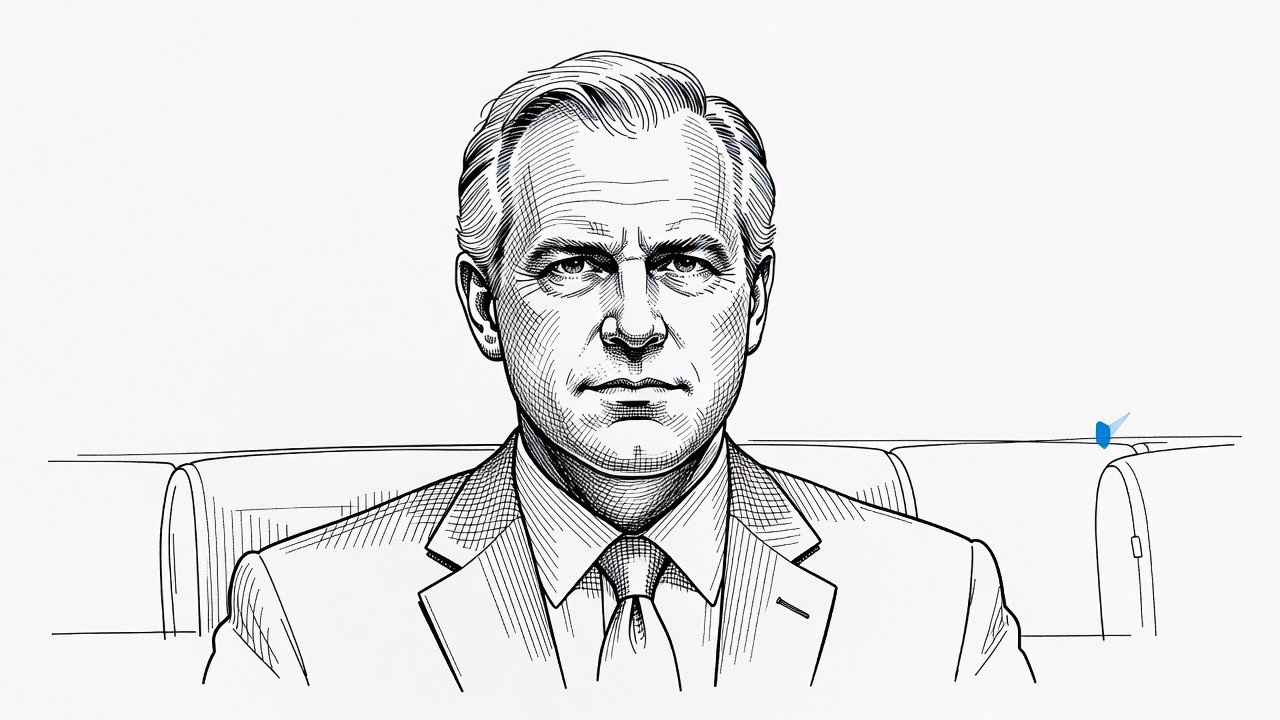
Listen to how the man negotiating the future of a European country describes its war. The obstacle, Jared Kushner says, is a territorial dispute. A dispute, as if two neighbors disagree over a fence line. Then comes the warning that the conflict risks becoming a proxy war, with Europeans financing and arming Ukraine. In that telling, Russia's invasion is a regrettable standoff, and the country that was invaded is somebody's puppet.
"Proxy war" is the Kremlin's preferred phrase. It turns a nation defending its own towns into a pawn of foreign capitals, so that its resistance counts as an imposition rather than a choice. Ukrainians did not need Brussels's permission to refuse to be conquered. An American envoy who adopts the vocabulary of the aggressor before he has gotten anything from the aggressor is not mediating. He is softening the ground.
Then there is the matter of Putin's residence. Kushner says an alleged Ukrainian attack in December made Putin step back from talks. Sergei Lavrov made the claim, Zelensky denied it, and Donald Trump himself said he did not believe it happened. So the president doubts the incident, and his negotiator cites it as a reason Moscow cooled. Either Kushner is repeating a story his boss thinks is false, or the White House has no coherent view of why talks stall. Worst of all, it shows that a claimed grievance, however thin, is enough to make Putin's pause the diplomatic reality that everyone else must work around. Any government that wants a reason to walk away now knows how to get one.
The territory itself is not an abstraction. Russia's demand, as widely reported, is that Ukraine hand over the part of Donetsk it has failed to capture in years of grinding war, including cities where Ukrainians still live and a defensive belt that has kept the front from rolling west. Asking Ukraine to give up what Russia could not take, and promising a postwar security framework to cover the gap, is a bad trade. Anyone who has watched Ukraine's history understands why. Kyiv surrendered its nuclear weapons in 1994 for assurances that proved worthless. Now it is being asked to accept assurances again, after giving up the ground that makes them credible.
Nor should we pretend that who is sitting at this table is incidental. Kushner and Steve Witkoff are real estate men. Their instincts are those of dealmakers who believe every conflict is a negotiation between parties who each want something and will split the difference. Kushner's investment firm also runs on billions from Gulf sovereign wealth, so he lives in a world where relationships with strongmen are assets. That is not proof of corruption, but it is a reason the public should ask whose interests animate a settlement, and why this envoy's role is not a job for career diplomats with institutional memory and legal accountability.
Some on the left will say that anything short of endless war is a failure of imagination, and that Ukrainians are dying while Washington dithers. They have a point about the dying. Peace matters, and any serious progressive wants this war ended. But a ceasefire that rewards conquest does not end wars. It schedules the next one. Ending the killing and ratifying the land grab are different things, and the people most eager to blur them are not the ones living near the line.
Democrats should say this plainly rather than hiding behind complaints about process. Support for Ukraine was never charity. It rested on the principle that borders cannot be redrawn by force, a principle that protects small countries everywhere. Abandoning it because the envoy finds the territory file difficult would tell every strongman with a map and a grievance that patience pays.